Portuguese
  Spanish


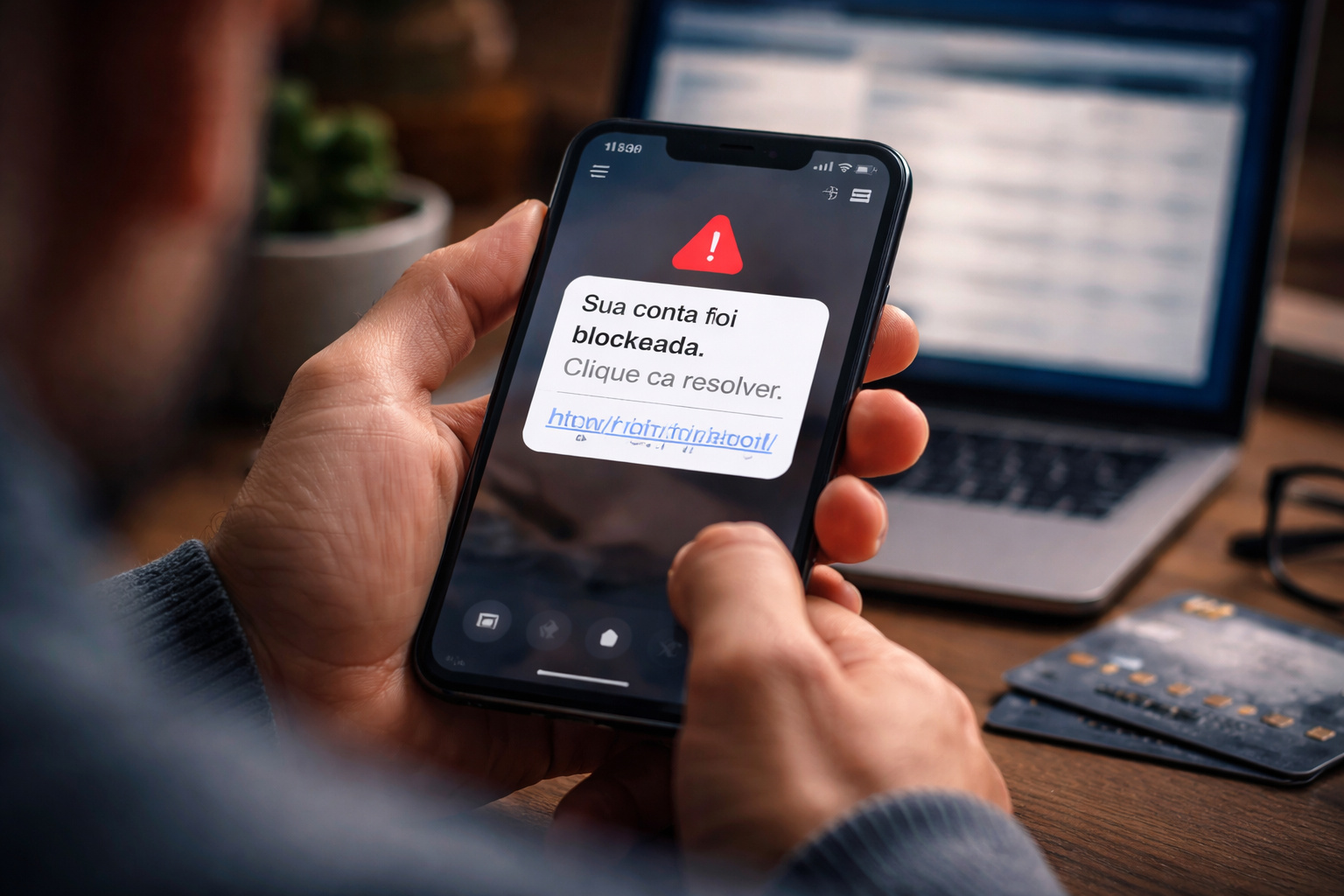


SMS Scams Increase In The Country, Simulate Bank Communications And Have Already Caused Billions In Financial Losses, According To Official Data
In the era of smartphones, deceptive messages sent via SMS have become a point of concern for users of digital financial services. Right from the first contact, these communications exploit a sense of urgency. Anyone with a mobile phone can be impacted, especially in Brazil, where the use of banking apps has consolidated up to 2024.
In this scenario, unofficial communications appear to be from banks, operators, or digital platforms. They usually mention temporary account restrictions or unusual transactions. Therefore, the urgent tone encourages quick responses, which reduces careful analysis by the user.
Then, when accessing the indicated address, the user is directed to digital environments that replicate familiar interfaces. These pages simulate legitimate systems. Thus, personal and financial information, such as documents and credentials, can be entered without the irregularity being immediately perceived.
-
How Much Does Starlink Satellite Internet Cost for Cars, Trucks, and RVs? Prices for Antenna, Accessories, and Plans

-
Scientists Convert Food Waste into Aviation Fuel, Successfully Test 50% Blend with Conventional Kerosene to Cut Emissions and Promote Sustainable Flights
-
OnePlus N6 Smartphone to Launch in India with 8,000mAh Battery and 45W SuperVOOC Charging, Lasting Up to Three Days
-
Scientists Plan to Release Air Bubbles Underwater to Protect Antarctica’s “Doomsday Glacier” from Melting





How Deceptive SMS Communications Work In Brazil
Firstly, these messages utilize references to well-known institutions. Additionally, they use logos and standardized texts. This way, they build a familiar visual scenario. Shortly after sending the information, unrecognized transactions by the account holder can occur rapidly.
According to consolidated data from 2024, financial impacts associated with irregular digital practices amounted to R$ 10.1 billion in Brazil. This data was presented by studies from the financial sector and consumer protection agencies, such as Procon, as well as entities linked to the national banking system.
However, the effectiveness of these practices is not related to technological complexity. On the contrary, the outcome depends on the emotional response generated by the communicated urgency. Thus, digital persuasion techniques play a central role in this type of approach.
Indicators To Recognize Unofficial Messages
First of all, these messages often contain unusual email addresses. In addition, they frequently request confirmation of personal information. In many cases, the links use URL shorteners or domains that do not correspond to the institutional address of the mentioned company.
Moreover, the language tends to be generic. That is, there is no direct identification of the user. At the same time, the content presents tight deadlines and a tone of alert. Therefore, the guidance is to check any notification directly in official apps or institutional channels, a practice reinforced by Brazilian banks since 2023.
Essential Prevention and Response Measures
First of all, avoiding accessing links received via SMS is a recommended measure. Similarly, it is not advisable to provide personal information outside of official channels. Thus, adopting these practices significantly reduces unnecessary exposures.
However, if any unexpected situation occurs, certain actions should be prioritized. Updating credentials, reviewing access permissions, and activating additional verification mechanisms contribute to limiting impacts. Additionally, contacting the involved financial institution quickly allows for guidance and preventive procedures, according to recent communications from banks and the Central Bank of Brazil.
Finally, maintaining continuous attention, questioning emergency communications, and prioritizing official channels remain effective strategies to protect personal information and financial operations in light of the increase in deceptive SMS messages.