






 Portuguese
  Spanish
  3 min of reading
  0 comments


China has developed a new solution to enhance the safety of electric vehicles with a 2.3 mm thick insulating sheet capable of withstanding up to 1,300 °C. The material was created by a team from Nanjing University of Technology and focuses on delaying the spread of heat within batteries, reducing the risk of fires.
The advancement gains significance at a time when the global electric vehicle market remains focused on range and cost reduction, while China accelerates solutions aimed at fire prevention. In March 2026, battery installations in the country reached 56.5 GWh, with LFP technology representing over 80% of the total, in a scenario of alignment between technology and safety.
Greater safety for electric vehicle batteries
The main innovation is a silica aerogel-based insulating sheet, developed to function as a thermal barrier between battery cells. This way, a localized failure does not spread as easily to other parts of the system, reducing the chance of a widespread fire.
-
Unprecedented achievement in India: a colossal 650-ton, nearly 3,000 hp excavator is transformed into 100% electric, marking a new phase in heavy mining.

-
Frightened by the speed of Chinese manufacturers, Renault decided to mimic the pace, made the new electric Twingo in just 21 months, wants to repeat the feat with 36 models by 2030, and along the way, will cut up to 2,400 engineering positions.

-
Chinese battery from Dongfeng promises to exceed 1,000 km without relying on liquid electrolyte, and the detail behind the technology could change the electric car competition.

-
The end of the automotive combustion era has already begun, but many in Brazil have not yet realized the magnitude of the shift towards Chinese electric cars.
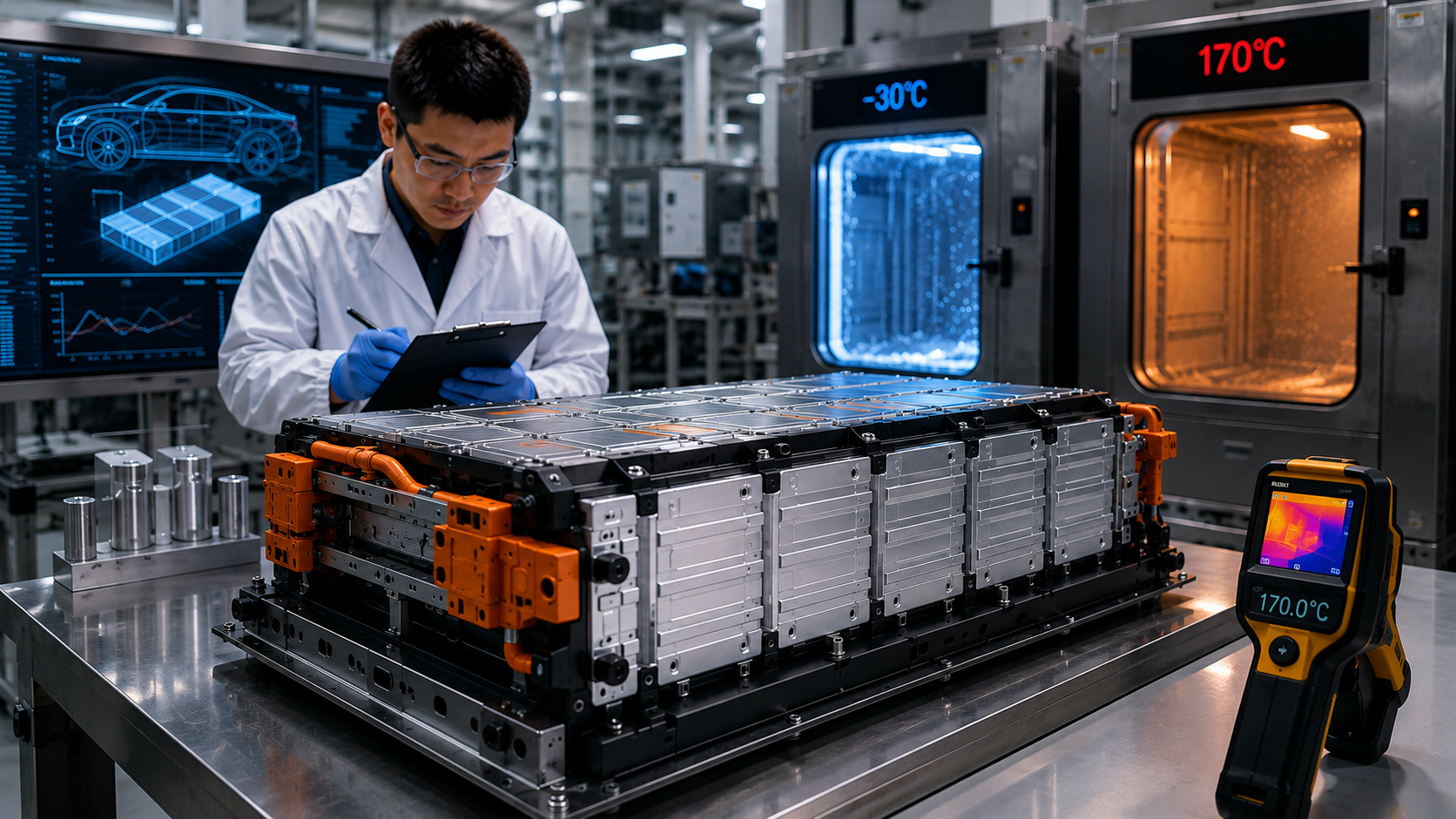
In tests conducted, a layer of just 2.3 mm was exposed to 1,000 °C for five minutes. Even under these conditions, the opposite side remained below 100 °C, indicating effective performance in situations close to real critical use conditions.
This result represents a leap compared to previous technologies, which could withstand around 300 °C. The new level is closer to actual combustion peaks, which range between 650 °C and 1,000 °C, expanding the safety margin in scenarios where heat confinement is crucial.
Reinforced structure increases thermal and mechanical resistance
The composition of the material also helps explain its performance. The structure of the aerogel is made up of 99% air, which reduces thermal conduction and strengthens its function as an insulator within electric vehicle batteries.
The researchers optimized the composition by reinforcing the nanoporous network and adjusting the catalysts. The result was a structure with greater heat resistance and more stability, two central points for practical application in battery systems.
In addition to the thermal gain, the new material was designed to withstand over 90% elastic compression without losing structural integrity. This feature is relevant because batteries undergo constant cycles of expansion and contraction during use, a factor that limited previous applications of this type of insulator.
Scale production accelerates market adoption
The manufacturing process has also advanced with the use of techniques such as CO2 drying, which have increased industrial efficiency and helped reduce costs. Another achievement was the reuse of more than 99.5% of the ethanol used in the process, allowing for a reduction of more than half of the raw material costs.
These gains have paved the way for the transition from laboratory to large-scale production, removing one of the main bottlenecks of this technology. In this scenario, industrial viability has come to weigh similarly to technical innovation, as the material has ceased to be merely experimental.
Adoption has already begun among major Chinese manufacturers. CATL, BYD, and Xiaomi have started to integrate the material into their battery systems, signaling that the technology has already entered the market and reinforcing the Chinese strategy to lead not only in production volume but also in safety standards for electric cars.
This initiative is part of a broader industrial plan, in which China has defined advanced materials as a priority sector, especially in conjunction with the energy transition. With the expansion of LFP batteries and the entry of this new insulator into the market, the country is consolidating a front aimed at enhancing the safety of electric cars.








-

1 person reacted to this.