






 Portuguese
  Spanish
  5 min of reading
  0 comments


Old tunnels helped bring water from the Gulf of Finland to the cooling system
The Google data center in Hamina uses a cooling system that takes advantage of the cold water from the Gulf of Finland. This system is considered innovative because it uses existing infrastructure, such as old tunnels, to transport the water.
This method of cooling is not only efficient but also environmentally friendly, as it reduces the need for electricity to cool the servers.
By using the natural resources available in the region, the data center minimizes its environmental impact and showcases a sustainable way to repurpose industrial sites.
-
Trump administration entered the fray to defend Elon Musk’s xAI in a lawsuit over data center turbines, air emissions, affected communities, and national security in the United States.

-
SpaceX receives investment grade for the first time, sees Starlink become a cash engine, and reaches a valuation exceeding 2 trillion dollars.

-
Germany and Japan expand defense amid tensions with China, Russia, and doubts about the US

-
OpenAI accelerates the race for the post-cellular future with several acquisitions in the first few months of 2026 and bets $6.5 billion on the startup of the former iPhone designer to create the device that could challenge the reign of smartphones.



The transformation of the Summa paper mill into a data center is an example of how industrial spaces can be adapted for new technological purposes, contributing to the digital economy.
Ancient tunnels helped bring water from the Gulf of Finland to the cooling system
The most curious point of the project is the ancient tunnels. They were already part of the factory’s industrial structure and were repurposed for a new function.
WIRED, a magazine about technology, business, science, and culture, detailed that the old factory had an underground tunnel used to draw water from the Gulf of Finland. This cold water became part of the system used to cool servers.
The report noted that the tunnel was 450 meters long and passed through granite rock. This detail shows that the project was not just a machine swap but an adaptation of a complex industrial structure.
In practice, the cold water helps remove some of the heat generated by the equipment. The idea is simple: the servers heat up, and the system needs to take this heat away to keep everything running.
Why data centers need so much cooling
Servers are machines designed to process a large amount of data. They support searches, videos, files, maps, cloud services, and digital tools used every day.
When many machines work together, the heat increases. If this heat is not controlled, the environment becomes unsuitable for the equipment.
Therefore, cooling is a central part of any data center. It is not a hidden technical detail but a condition for the service to continue functioning.
In the case of Hamina, the use of water from the Gulf of Finland gained importance because it helps explain why cold regions can be attractive to large tech companies.
Cold has become an advantage for the new data industry
In cold places, controlling the temperature of the equipment can be easier. This does not mean that operating a data center is simple, cheap, or without impacts, but it helps to understand the interest in regions like Finland.
Google notes that Hamina was chosen for three main factors: qualified local workforce, an existing paper mill that could be repurposed, and a suitable combination of energy infrastructure.
This set shows that the decision did not depend solely on the climate. The location needed to have the structure, workers, and conditions to host a large-scale operation.
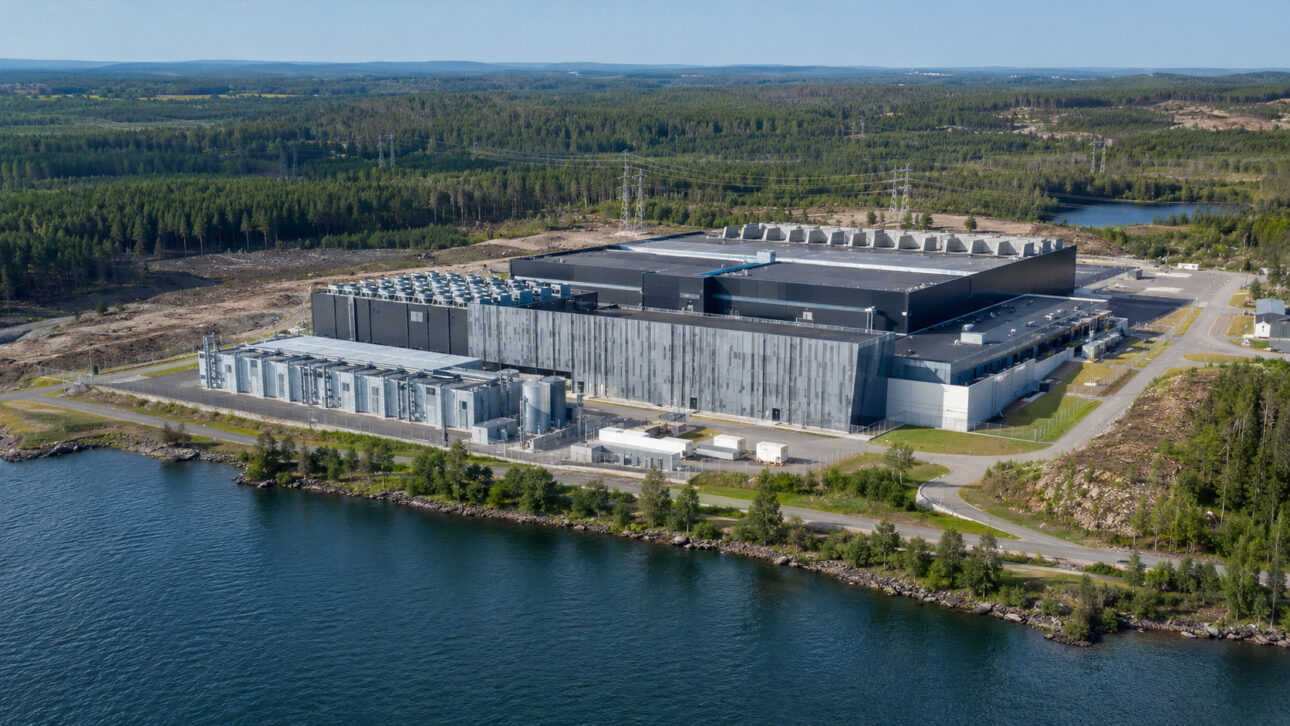
For those looking from Brazil, the case also shows how old industrial areas can gain new uses. But this doesn’t mean that any closed factory can become a data center. Each project depends on energy, connection, licensing, security, and adaptation costs.
The project was born before the artificial intelligence boom, but returned to the center of the conversation
The purchase of the factory occurred in 2009 and the first data center in Hamina opened in 2011. This happened long before the current race for artificial intelligence dominated technology discussions.
Even so, the case gained new interest because AI requires great computing power. In simple terms, this means more machines working to train, respond, and operate digital systems.
The official page of Hamina also records that Google announced, in 2024, the construction of a seventh data center in the city. In the same year, the company announced €1 billion in investment in Finland aimed at sustainability and AI goals.
Another cited data is the accumulated investment of €3.5B in the region. These numbers help show that the old Summa factory became part of a larger structure, linked to the growth of data centers.
The reuse of the factory shows that the cloud also occupies physical space
The internet seems invisible to those using a cellphone, but it relies on buildings, cables, water, energy, machines, and workers. The cloud is not in the air. It operates within real structures.
The case of Hamina shows this material side of technology. A closed paper factory became a data center because it had part of the necessary structure to accommodate another activity.
The official page also records 98% use of carbon-free energy by Google in Finland in 2023. The same page mentions a heat recovery initiative estimated to meet 80% of demand.
These data reinforce how data centers have become part of debates about energy, city, industry, and the environment. They are not just technical buildings. They influence territory, investment, and planning.
The transformation of the old Summa factory shows how a facility created for the paper industry came to serve a data-driven economy. The same space gained another function, without completely erasing the industrial logic that already existed there.
The case also helps to understand why data centers have ceased to be a topic restricted to technology. They now involve cooling, energy, repurposing of structures, local impact, and the expansion of artificial intelligence.
If a closed factory can gain a new role in the digital economy, which old industrial structures in Brazil could be repurposed without losing their history and without creating false promises?








Be the first to react!