






 Portuguese
  Spanish
  7 min of reading
  0 comments


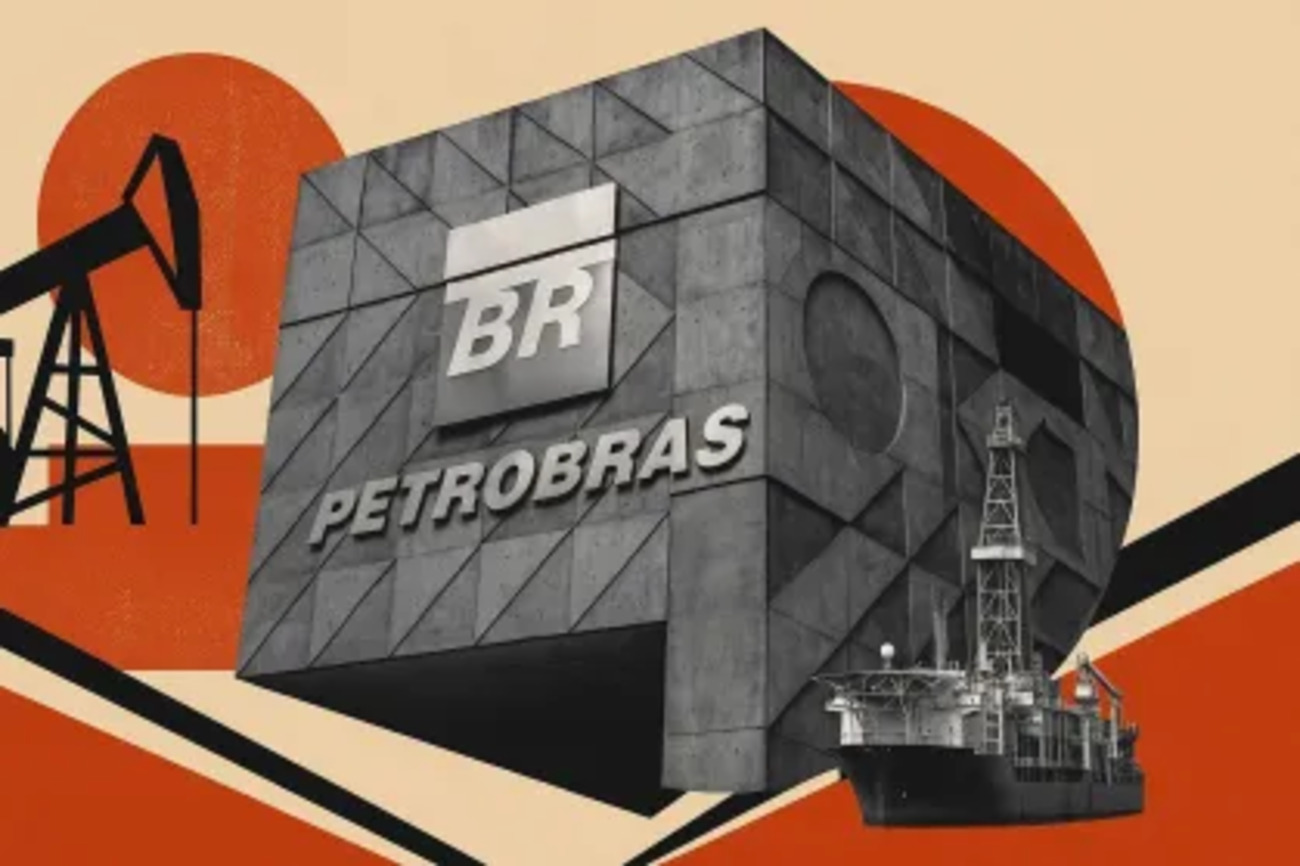
The Federal Government plans to resume control of the state-owned BR Distribuidora to curb the rise in fuel prices and ensure greater economic stability in the face of the international barrel quotation.
The federal administration is studying legal and financial measures to reestablish the state-owned BR Distribuidora as the strategic logistical arm of Petrobras in the retail fuel market.
The initiative arises at a time when Brent crude oil breaks the $100 barrier, directly pressuring the cost of living for Brazilians and national inflation.
The plan involves creating a new entity or repurchasing shares from the current Vibra Energia so that the Union can regain the power to influence the distribution chain.
-
Oil production grows in Rio, but reserve replacement raises a warning sign

-
Petrobras is expected to complete the drilling of the Morpho well in the Foz do Amazonas in August 2026, the first well in the Equatorial Margin, an oil frontier that the ANP estimates at more than 30 billion barrels and could redraw the map of Brazil.

-
Oil returns to the center of concerns with tension between the US and Iran

-
IEA reduces forecast for global oil demand in 2026 after impacts of the Middle East crisis


The government believes that the absence of a proprietary network of gas stations limits public price control tools, leaving the final consumer vulnerable to sharp fluctuations in the external market.
By reviving the historic brand, the country seeks to strengthen energy security and ensure that national oil production benefits the population with more affordable prices at the pumps.
The strategic plan to resume the state-owned BR Distribuidora
The discussion about the return of the state-owned BR Distribuidora is gaining momentum in the halls of the Ministry of Mines and Energy and in the Palácio do Planalto. Federal administration technicians assess that the privatization of the company, completed a few years ago, reduced the State’s ability to intervene positively in times of global crisis.
Without control over distribution, Petrobras delivers fuel at refineries but lacks veto power over the profit margins applied by private distributors and resellers.
The government intends to use the structure of the new company to act as a natural regulator of the market. If the state-owned company offers more competitive prices, competitors will need to adjust their prices to avoid losing market share.

This strategy does not aim for a monopoly but rather the creation of a price anchor that protects drivers and the transportation sector. The initial focus is on diesel fuel, which drives the Brazilian economy and directly impacts food prices.
The impact of oil at $100 on the Brazilian economy
The international oil price exerts extraordinary pressure on Petrobras. When the barrel reaches US$ 100, the price parity policy forces the company to pass on costs to gasoline and diesel. This scenario creates a domino effect that raises freight costs, industrial inputs, and consequently, the grocery bill.
The attempt to revive the state-owned BR Distribuidora seeks to break this cycle of absolute dependence on market variations in London and New York. The government argues that a self-sufficient oil country cannot punish its citizens with import prices.
The new public distributor would purchase fuels directly from Petrobras under differentiated contractual conditions, focused on national production costs and not just on international pricing.
The legacy of the BR brand at Brazilian gas stations
The BR brand still boasts immense recognition among Brazilians. Even after the privatization and the company’s name change to Vibra Energia, many consumers still associate the green and yellow colors of the gas stations with the reliability of Petrobras.
The state-owned BR Distribuidora dominated the national market for decades, owning the largest network of service stations in all states of the country.
The logistics of the former state-owned company reached remote areas in the interior of the Amazon and the northeastern hinterland, where smaller distributors had no commercial interest in operating. This social and strategic role is what the government wishes to recover.
The idea of “national presence” ensures that fuel reaches all corners of the territory with the same quality and standardization, serving as a tool for national integration.
Legal challenges and the relationship with Vibra Energia
The process to revive the state-owned BR Distribuidora does not present a simple path. Currently, Vibra Energia is a private company with capital spread across the stock market. The government needs to navigate a maze of brand licensing contracts and shareholder agreements to reclaim the name “BR” or create a parallel structure that does not infringe competition laws.

Experts in administrative law believe that the government may opt for the creation of a new subsidiary of Petrobras focused exclusively on retail.
This new unit would start operations from scratch or seek partnerships with independent gas station networks called “white flag.” This maneuver would allow the State to have its own network without necessarily needing to repurchase shares from Vibra, which would require a colossal financial outlay from public coffers.
Distribution logistics as a weapon against inflation
Logistics represents a considerable slice of the final price of fuels. Transportation by tank trucks, storage in regional bases, and the blending of biofuels add costs that state-owned BR Distribuidora could optimize. By controlling this stage, the Union eliminates intermediaries who seek only to maximize quarterly profits for shareholders.
A public distributor operates with social efficiency goals. This means that, during periods of absurd oil price hikes, the company can reduce its profit margins to cushion the shock on internal prices.
This financial “cushion” acts as a buffer, preventing a 10% increase in the barrel from immediately translating into a 10% increase at the fuel pump.
The role of Petrobras in the new phase of distribution
Petrobras is once again at the center of the country’s strategic decisions. Vertical integration, which goes from extraction in the pre-salt to delivery at the car’s tank, is the model that the government advocates to consolidate energy sovereignty. If Petrobras produces the oil and state-owned BR Distribuidora delivers the product, the State closes the energy value cycle.
This integration allows for much more robust long-term planning. The refinery knows exactly who it will sell to, and the distributor ensures a constant flow of products to the consumer.
Furthermore, the state-owned company can invest in new technologies, such as electric charging stations and green hydrogen refueling, preparing Brazil for the global energy transition in a coordinated manner.
Real impact for the end consumer and truck drivers
For app drivers and independent truckers, the return of state-owned BR Distribuidora represents a hope for predictability. The cost of fuel is the main input for these professionals. When the price changes every week, families’ financial planning collapses.
The existence of a state network with stable prices forces the private market to hold back on adjustments. If a BR station maintains the old price for a few more days, the neighboring station cannot raise the price at the risk of being empty.

This indirect regulation by the market is what technicians call a “reference price.” The real impact is the maintenance of the population’s purchasing power and the reduction of freight costs, which lowers prices for products across the country.
Criticism and opposing views on the re-nationalization
Not everyone in the financial market views the plan to revive state-owned BR Distribuidora positively. Critics argue that public management can be less efficient than private management and that using the company to control inflation could lead to long-term financial losses.
They argue that the government should focus on direct subsidies for the needy instead of intervening in the market structure.
However, supporters of the measure point out that developed countries and major oil powers maintain state control over their energy chains.
They claim that oil is too strategic a resource to be entirely subjected to the short-term profit interests of foreign investment funds. The technical debate continues to be intense in the committees of the National Congress and at economic analysis tables.
Sustainability and the future of renewable fuels with state-owned BR Distribuidora
The new state-owned BR Distribuidora would not focus solely on fossil fuels. The government’s plan includes leading the distribution of biofuels such as biodiesel and ethanol. Brazil already has one of the cleanest energy matrices in the world. And the state network of gas stations would further boost the use of renewable fuels produced by the national agribusiness.
The state-owned company would play a role in encouraging the blending of cleaner fuels and developing infrastructure for electric vehicles. With BR’s extensive reach, the government could install fast charging points on federal highways.
This would remove one of the main obstacles to the popularization of electric cars in Brazil. Thus, the company would unite the immediate need for low prices with the future goal of a low-carbon economy.
The intention to revive state-owned BR Distribuidora in a scenario of oil at $100 symbolizes a shift in Brazilian energy policy. The government seeks to recover management tools that ensure stability for the economy and protection for the average citizen.
Although the legal and market challenges are significant, the political will to regain control of distribution signals that energy is treated as a top state priority.
The success of this endeavor will depend on efficient technical management and a business model that balances the company’s financial health with its social function. If realized, the return of BR to gas stations will mark the return of a national symbol to the roads, promising to be Brazil’s shield against the storms of international oil price fluctuations.






Be the first to react!