Portuguese
  Spanish


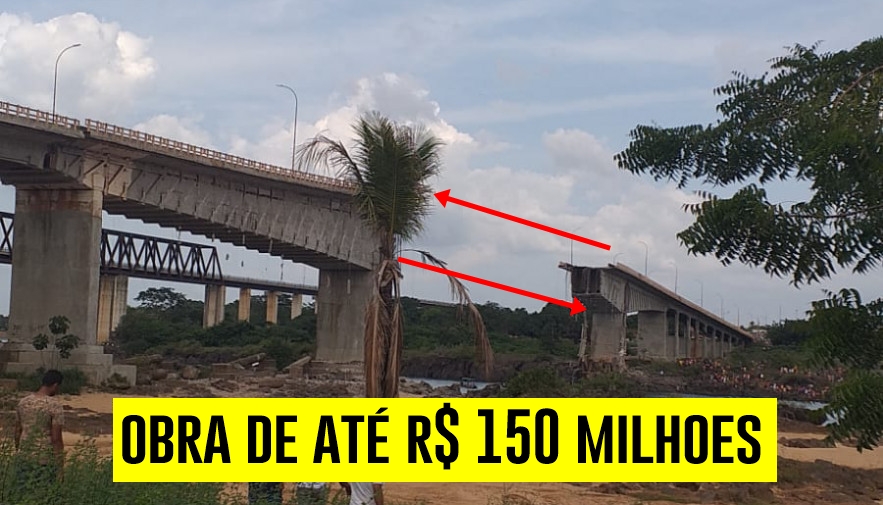

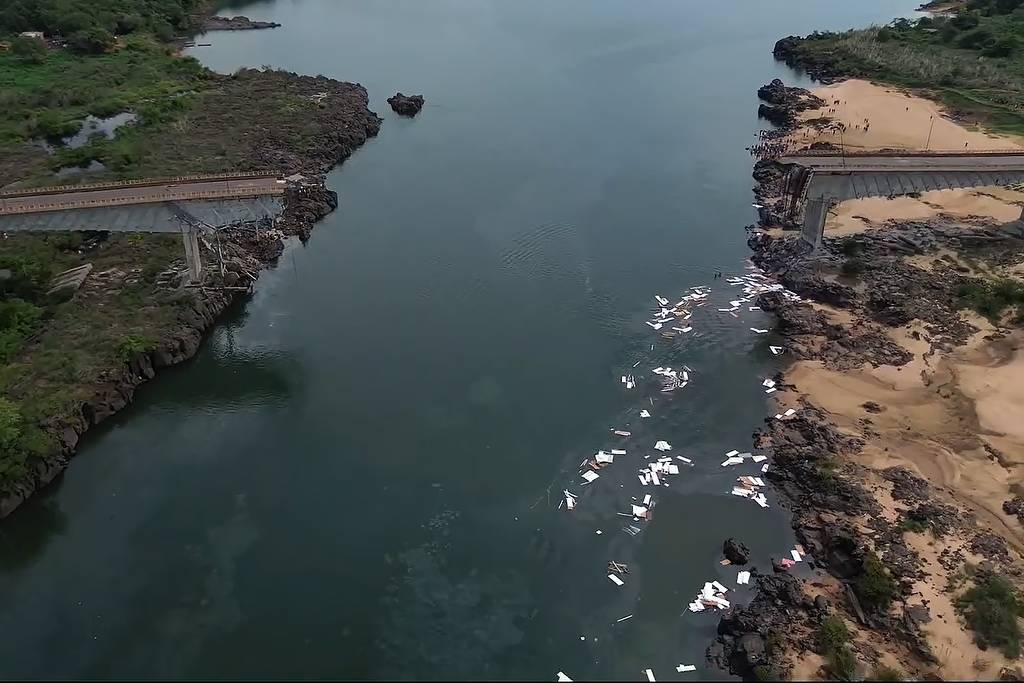
The Juscelino Kubitschek bridge, which connects the states of Tocantins and Maranhão, suffered a partial collapse on Sunday (22), resulting in at least one confirmed death and 15 missing people. Among the victims are two children, as well as drivers and passengers of vehicles that were on the structure at the time of the accident.
The Minister of Transport, Renan Filho, announced on Monday (23) that the reconstruction of the bridge is expected to cost between R$ 100 million and R$ 150 million. He also confirmed that the works are scheduled to begin in early 2025, after the removal of debris and technical assessments of the submerged damage.
Strategic Bridge Over 60 Years Old
Built in the 1960s, the bridge is a vital link between the Belém-Brasília and Transamazon highways, connecting the municipalities of Aguiarnópolis (TO) and Estreito (MA).
-
Couple Converts 1925 Detroit Bank into Home, Earns $40,000 Annually on Airbnb

-
Tired of Seeing People Sleep in the Cold, London, Canada Opens First Modular Shelter for Homeless with 60 Cabins, Heating, Meals, and Dog Area
-
Brazil’s $1.3 Billion, 870-Meter Immersed Tunnel to Be Latin America’s First of Its Kind, Featuring Special Public Facilities and Information Center
-
Brazilian Innovator Develops Concrete Blocks from Recycled Plastic, Eliminating Mortar and Reducing Construction Costs


The National Department of Transport Infrastructure (Dnit), responsible for maintenance, will be investigated through an inquiry initiated by the Ministry of Transport to determine the causes of the collapse and possible negligence.
The strategic importance of the bridge became even more evident with the immediate impact on traffic. Governors of the two affected states, Carlos Brandão (Maranhão) and Wanderlei Barbosa (Tocantins), coordinated an emergency plan to redirect traffic via Imperatriz (MA), despite existing reports of congestion in the area.
Socioeconomic and Environmental Impact
In addition to the impact on mobility, the socioeconomic consequences for the two states are evident. “The commerce will suffer from the partial isolation, but it is a challenge we need to face with planning,” stated Governor Carlos Brandão.
However, the search for the missing faced an additional obstacle. Two trucks that fell during the collapse were carrying sulfuric acid, contaminating the Tocantins River. The rescue operation was temporarily suspended, and the local population was advised to avoid contact with the water.
Other vehicles involved in the accident were carrying materials such as agricultural pesticides and MDF boards. The combination of environmental impact with human tragedy requires a coordinated response among federal, state, and municipal authorities.
Residents Report Structural Problems
Reports of structural problems with the bridge are not new to local residents. The councilman of Aguiarnópolis, Elias Cabral Júnior, captured a video shortly before the collapse, showing visible cracks and warning about the imminent risk. “This bridge is over 60 years old and cannot support the heavy vehicle flow,” he stated.
Victor Costa, a resident of Aguiarnópolis, used a drone to capture aerial images showing the state of the bridge before and after the accident. “Numerous complaints have already been made by the population, both about potholes and about the compromised structure. We passed with fear, but without alternatives,” he commented.
Reconstruction and Future Measures
During a speech in Maranhão, Minister Renan Filho highlighted the complexity of the necessary works. “In addition to the reconstruction, it will be necessary to remove the debris and assess the additional costs. We want to deliver this bridge in 2025 with the commitment to prevent future tragedies,” he declared.
The plan includes incorporating the works into the 2024 budget and starting the work early in the following year. For this, technical teams have already begun preliminary surveys on site.
As the search for the missing continues, the tragedy of the Juscelino Kubitschek bridge exposes the fragility of Brazilian road infrastructure and reinforces the need for preventive maintenance on strategic structures for the country.