






 Portuguese
  Spanish
  3 min of reading
  1 comment


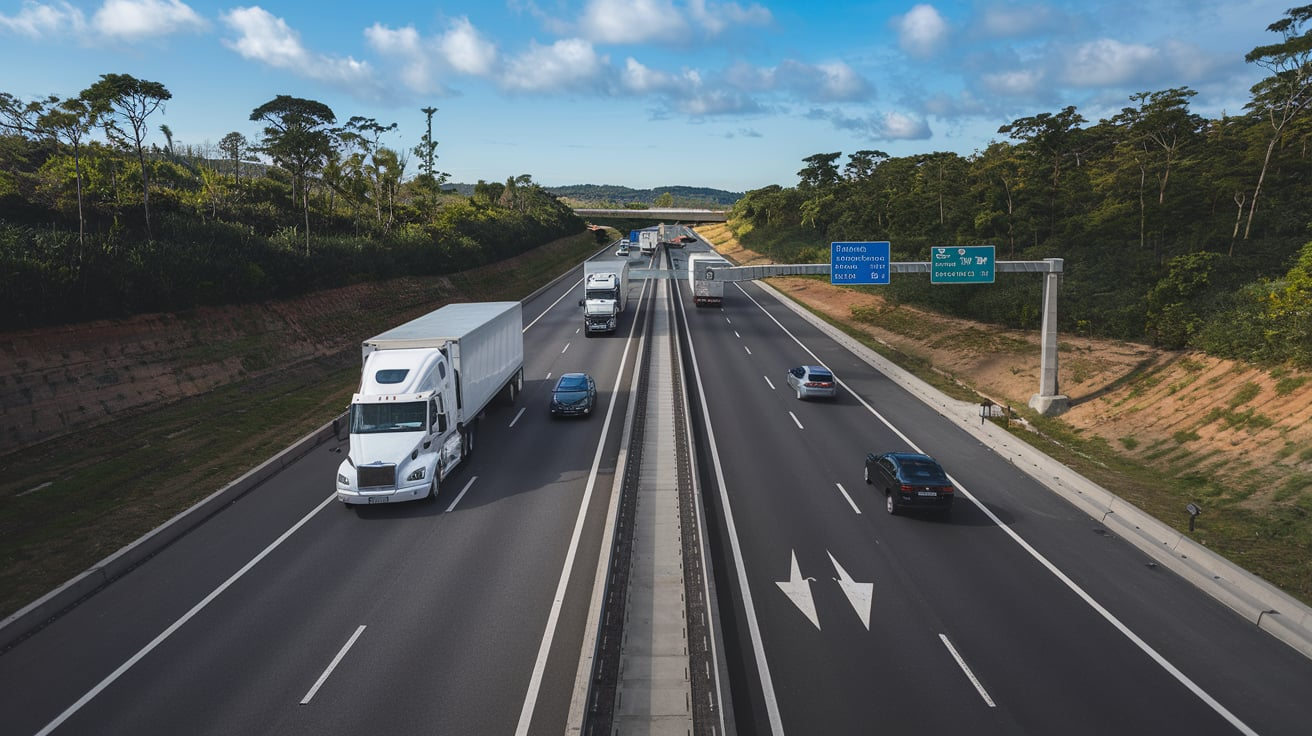

Brazil Never Had Such Good Roads: 75.1% of the Federal Network Is Considered “Good”. Investments of R$ 26 Billion Between 2023 and 2024 Were Decisive, According to the Federal Government.
Brazil Reaches Historic Quality in Roads: Over R$ 26 Billion Invested by the Federal Government Transforms Highways Into National Reference
When you think of traveling on Brazilian roads, does the image of potholes and poorly maintained stretches still prevail? That perception is becoming a thing of the past.
The federal government announced a historic achievement that promises to change how Brazilians see highways: Brazil has never had roads in such good conditions as today. But what is behind this significant change?
-
Brazilian Joins Homeownership Consortium, Faces Decade of Dual Payments Totaling $141,000, Surpassing Traditional Mortgage

-
Land Rover to Halt Production in July, Putting 371 Jobs at Risk, as Chinese Automaker Negotiates to Convert Factory to 100,000 Vehicles Annually by 2027

-
Bolivian Female Construction Workers Form Association to Combat Discrimination and 38% Pay Gap in the Industry
-
Mexican Pest Threatens U.S. Cattle Herds at Historic Lows, Potentially Boosting Brazilian Beef Exports as Burger Prices Soar


According to official data, over R$ 26 billion were allocated for the maintenance, conservation, and construction of highways between January 2023 and October 2024.
These resources enabled a historic breakthrough: 75.1% of federal public roads were classified as “good” on the Maintenance Condition Index (ICM), the highest percentage ever recorded.
Technology as an Ally for Improvements
The result is not only due to financial investment but also the strategic use of technology.
The Maintenance Condition Index (ICM), a tool adopted by the National Department of Transport Infrastructure (DNIT) since 2016, measures highway quality in a scientific and precise way.
The system uses high-precision cameras to film the roads and software based on artificial intelligence (AI), such as DNIT-ICM, to process the data without human interference.
The development of this system was carried out by Labtrans at the Federal University of Santa Catarina and scientifically validated, ensuring that the results reflect the reality of the national road network.
Unlike older methods that relied on sampling, data collection covers the entire length of federal highways.
This detailed approach allows for the assessment of each kilometer of the road network and identifies areas needing priority intervention, ensuring transparency and efficiency in the management of public resources.
Reduction of Highways in Terrible Conditions
Among the most impressive results is the reduction of highways classified as “terrible”.
In December 2022, 11% of roads were in this condition. In less than two years, this number has drastically fallen to 1.8%, and the government’s goal is to eliminate the index of highways in terrible conditions.
The general director of DNIT, Fabrício Galvão, highlighted the importance of resuming investments in infrastructure for these advances.
“With the released resources, it was possible to tender previously neglected stretches, ensuring that 100% of the federal road network receives regular maintenance. Moreover, users’ perception while driving has improved significantly,” said Galvão.
The Landscape by Regions
The improvements were not homogeneous but reached all regions of Brazil. According to the ICM from October 2024, the Midwest leads the national ranking, with 80.5% of roads considered good. This corresponds to about 7,300 kilometers of road network.
The North and Northeast also recorded impressive advances, with 77.7% and 77.2% of their highways in good conditions, respectively. In 22 months, these regions jumped from indices below 55% to unprecedented levels.
States like Bahia, Minas Gerais, Pará, and Mato Grosso stood out individually, with significant increases in road quality:
| State | “Good” Index in Dec/2022 | “Good” Index in Oct/2024 |
| Bahia | 46.1% | 79% |
| Minas Gerais | 42.2% | 58% |
| Pará | 54% | 85% |
| Mato Grosso | 67.2% | 80% |
Overcoming Challenges and Next Steps
States like Acre, Amazonas, and Maranhão faced greater challenges due to their geographic and climatic conditions.
However, all showed substantial improvements, such as Amapá, which jumped from less than 40% to 98.4% of its network classified as good.
Despite the advances, constant maintenance is essential to prevent road deterioration, especially in states where highways are critical for the flow of agricultural products and other essential goods.
The Impact for Brazil
The improvement in the quality of roads not only facilitates the lives of drivers but also represents significant economic advances.
Better highways reduce logistics costs, increase road safety, and stimulate domestic tourism, in addition to attracting investors for concession projects.
With the numbers presented, Brazil takes an important step toward modernizing its infrastructure and competing with other countries on road quality.
And what do you think of this advancement? Are the improvements sufficient, or are there other aspects of infrastructure that need more attention?





Que piada… Matéria paga ou quinta coluna do PT… As estradas federais estão um lixo e não houve qualquer investimento nestes dois anos!