Portuguese
  Spanish


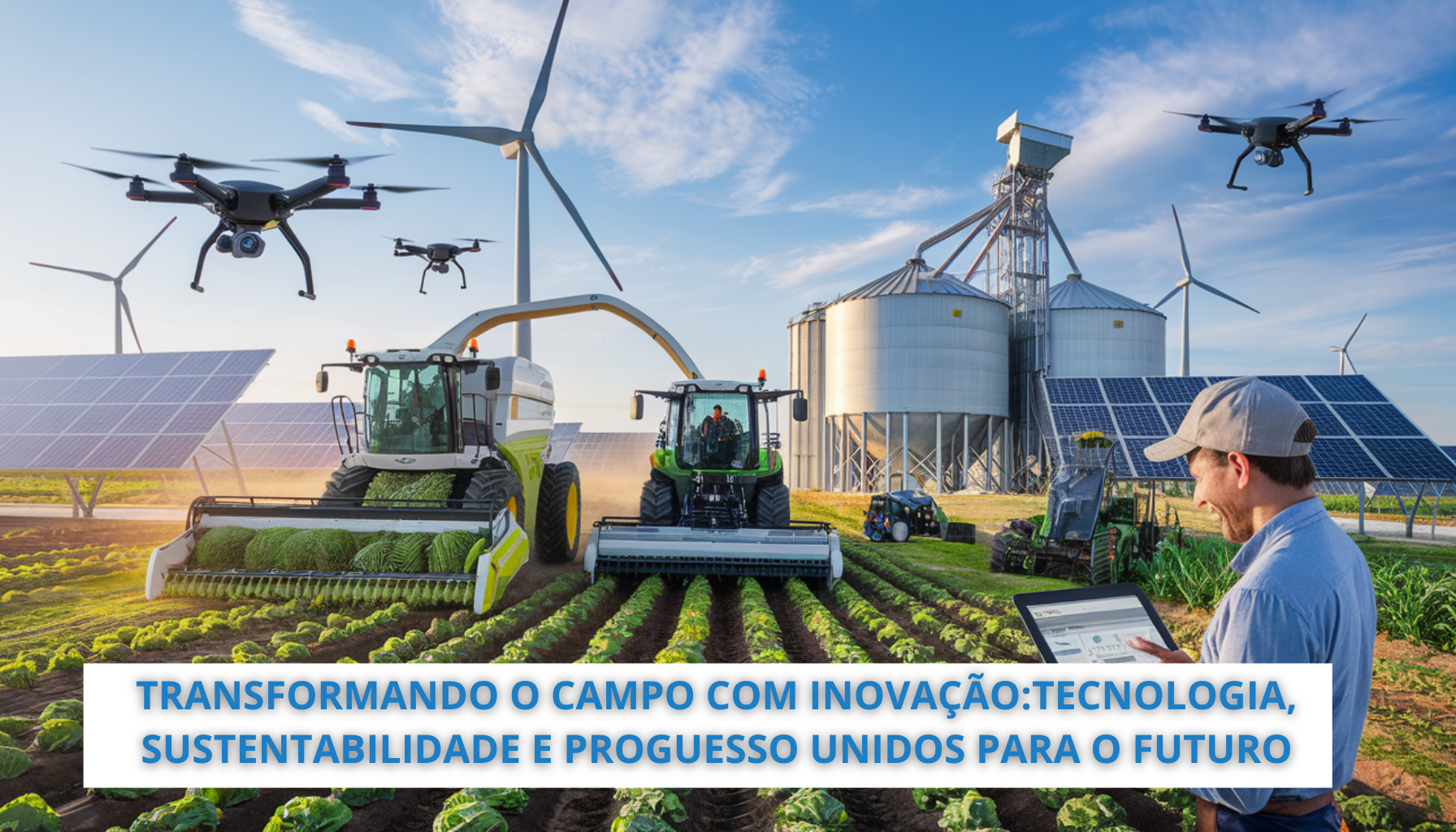

With a historic package of R$ 546.6 billion, Brazil begins its biggest bet on sustainable industrialization. Bold goals aim to modernize agriculture and create cutting-edge production chains. Is the country ready to lead in innovation and global competitiveness? Discover everything about the New Industry Brazil and its impact on the future!
If a country wants to lead on the global stage, it needs to invest in its main economic engines. Brazil, already recognized as one of the largest agricultural producers in the world, is now aiming for an even bolder horizon: integrating sustainability, technology, and innovation into its industrial and agricultural base.
With the New Industry Brazil program, the federal government announced an impressive package of R$ 546.6 billion in public and private investments to transform agriculture and industry in the coming years.
But what are the details of this policy that promises to change the country’s future? Follow along in this complete article.
-
Northern Brazilian ports surpass the South as the country’s largest grain corridor amid record harvest

-
Amazon launches its own brand in Brazil a week before Prime Day, following a $3.7 billion investment and the establishment of over 300 distribution centers nationwide by 2025.

-
Trump’s 50% Tariff on Brazilian Goods Cuts U.S. Exports by 30%, Brazil Sets Records in 42 Countries and Germany Becomes Top Coffee Buyer
-
Brazil Harvests Record 358 Million Tons of Grain but Lacks Storage for 134 Million Tons


New Industry Brazil: A Historical Introduction
The New Industry Brazil (NIB) program was presented as one of the federal government’s most ambitious industrialization strategies in decades.
It represents not just a modernization of production chains, but also a response to global challenges related to sustainability and food security.
According to the Ministry of Development, Industry, Commerce and Services (MDIC), the NIB aims to reposition Brazil as a global player in industrial and agricultural innovation.
This includes, for example, the development of more technological production chains that are less dependent on external inputs.
The launch ceremony, held in Brasília, brought together political leaders and representatives from strategic sectors. For the National Confederation of Industry (CNI), the program is a milestone in the country’s history.
“This policy redefines the role of Brazilian industry and places sustainable development at the center of economic decisions,” said Rafael Lucchesi, director of Industrial Development at the entity.
Investment Structure: Public and Private Hand in Hand
One of the highlights of the program is the balance between public and private investments. The resource division is as follows:
- R$ 250.2 billion will come from public resources, with R$ 198.1 billion already allocated between 2023 and 2024.
- R$ 52.1 billion additional will be available until 2026.
- R$ 296.3 billion is expected as investments from the private sector until 2029.
These figures place the program among the largest economic stimulus initiatives in Brazil in recent decades.
Bold Goals for the Future
The goals set by the National Industrial Development Council (CNDI) highlight the project’s ambition:
- Growth of Agricultural Industry GDP: increase by 3% per year until 2026 and 6% until 2033.
- Mechanization of Family Agriculture: increase from 23% to 28% by 2026 and reach 35% by 2033.
- Agricultural Technification: achieve 43% technification by 2026 and 66% by 2033.
Additionally, the program includes strengthening key areas, such as the national production of agricultural machinery, bio-fertilizers and precision agriculture drones.
Family Agriculture in the Spotlight
The role of family agriculture is essential in this plan. During the launch ceremony, President Luiz Inácio Lula da Silva signed the decree creating the National Research and Innovation Program for Family Agriculture and Agroecology.
The goal is to ensure that small producers have access to the necessary technologies to improve their productivity and adopt sustainable practices.
According to the Ministry of Agrarian Development (MDA), the agroecological transition is one of the priorities of this new policy. This includes research aimed at more resilient planting systems that reduce the use of chemical pesticides.
Moreover, the government signed a technical cooperation agreement with the Brazilian Association of Machinery and Equipment Industry (Abimaq) to expand access for family farmers to modern and efficient equipment.
The Role of Banco do Brasil and Other Financial Partners
Another highlight of the NIB is the inclusion of the Banco do Brasil as one of the main financial arms of the project. With R$ 101 billion in exclusive credit lines, the bank reinforces the government’s commitment to provide direct financial support to agricultural and industrial modernization initiatives.
Additionally, there are partnerships with other banks and financial institutions that should complement the resources available for entrepreneurs and farmers.
Sustainability and Innovation: Pillars of the Program
One of NIB’s major bets is sustainable development. This includes:
- National production of bio-fertilizers, reducing Brazil’s dependence on imported inputs.
- Encouraging the use of drones and precision technologies, allowing for greater efficiency in planting and harvesting.
- Support for the manufacture of agricultural machines with lower environmental impact.
According to the CNN Brasil, these efforts align with global decarbonization and energy transition goals, making Brazil an example of a country seeking to align economic growth with environmental preservation.
Economic and Social Impacts
The expected benefits go far beyond GDP growth. The New Industry Brazil seeks to:
- Create thousands of jobs in industrial and agricultural sectors.
- Encourage the development of small and medium enterprises that provide services and technologies for agriculture.
- Increase Brazil’s competitiveness in the international market.
Challenges Ahead
Despite the optimism, experts point out important challenges:
- Bureaucracy: executing the goals depends on efficient management and the simplification of processes.
- Private Partnerships: although the volume of private investments is significant, there are uncertainties regarding full sector engagement.
- Poor Infrastructure: the lack of an adequate logistics network can limit positive impacts, especially in more isolated regions.
The New Industry Brazil promises to revolutionize the agricultural and industrial sector, positioning Brazil prominently on the global stage.
But the success of the program will depend on well-planned execution and alignment between government and the private sector.
Do you believe this program can truly transform the Brazilian economy? Share your opinion in the comments!