






 Portuguese
  Spanish


Brazil Launches Tax Exemption to Attract Data Centers, Expects R$ 2 Trillion in Investments by 2035 and Aims to Become the Digital Heart of Latin America.
Brazil has fully entered the global race for digital infrastructure. In September 2025, the government announced a package of tax incentives that exempts federal taxes on the import of information technology equipment destined for mega data centers. The measure, presented alongside a proposal for regulation of digital platforms, aims to attract multinationals in the sector and transform the country into a digital hub for Latin America, generating up to R$ 2 trillion in investments over the next decade.
The bet is not small: data centers are the heart of the digital economy, housing servers that process and store everything from social media to cloud services, artificial intelligence, and financial operations. Brazil wants to become the preferred destination for these giants, competing with markets such as Mexico, Chile, and Colombia.
The Package of Exemptions for Data Centers
The federal government announced that IT equipment, such as servers, processors, advanced cooling systems, and high-capacity cables, will be exempt from federal taxes when destined for data center projects.
-
Brazil’s 2026 Tax Refund: Record 9.58 Million Filers in Largest Payout Ever, But a Key Detail on Priority Recipients Draws Nationwide Attention

-
Itaú Alters Hybrid Work Model, Increasing Office Days from 2028, Prompting Employees to Adjust to New Routine
-
Facing Labor Shortage, Japan Plans to Invest $34 Million to Attract Foreign Workers in Construction, Healthcare, Industry, and Commerce

-
Brazilian City Makes Remarkable Leap, Becomes 4th Wealthiest in the Country with GDP of R$ 134.1 Billion




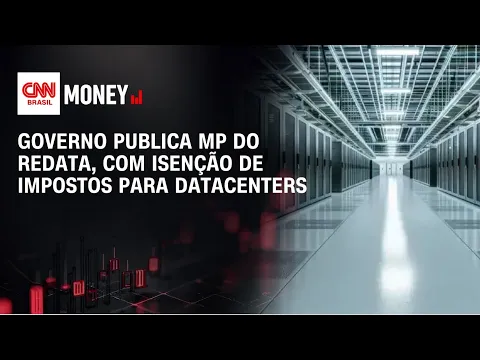

According to technicians from the Ministry of Finance and the Ministry of Communications, the tax waiver has a strategic nature: the goal is to attract new foreign direct investments and create conditions for Brazil to establish itself as the main digital hub in the region.
Initial forecasts indicate that, by 2035, the policy could generate R$ 2 trillion in private investments, considering the installation of new complexes, the expansion of fiber optic infrastructure, the creation of direct and indirect jobs, and the modernization of the country’s digital matrix.
The Strategic Importance of Data Centers
Data centers are key components of the new economy. They manage data that moves trillions of dollars globally. With the explosion of artificial intelligence, cloud computing, and the Internet of Things (IoT), the demand for high-performance processing centers is growing at an accelerating pace.
Currently, Brazil already has dozens of medium and large data centers, primarily in São Paulo.
However, capacity is still limited compared to the potential of the Latin American market. The government’s expectation is to transform the country into the preferred destination for investments from global technology giants like Google, Microsoft, Amazon, and Oracle, along with new Asian and European players.
R$ 2 Trillion in a Decade
The projection of R$ 2 trillion in investments by 2035 does not only pertain to the physical construction of data centers. This amount includes:
- Civil and infrastructure works: land, buildings, advanced cooling systems.
- Cutting-edge equipment: servers, processors, and high-speed cables.
- Electricity: data centers require energy stability, encouraging new investments in renewables and backup systems.
- Connectivity: expansion of submarine cables and fiber optic networks.
- Job creation: it is estimated that tens of thousands of direct and indirect job vacancies will be created throughout the investment cycle.
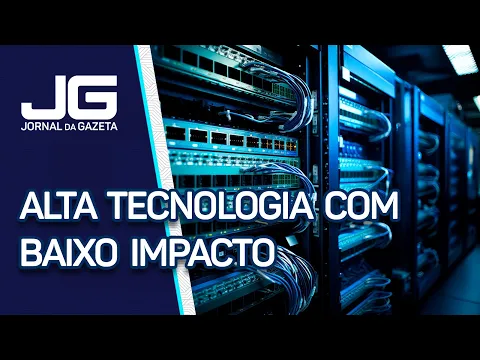
This impact can alter the map of the Brazilian digital economy, creating a virtuous circle of innovation, income, and revenue.
Competition with Latin American Neighbors
Brazil is not alone in this race. Countries like Chile and Mexico have already advanced with aggressive policies to attract data centers, offering differentiated energy tariffs, stable regulatory frameworks, and greater openness for connectivity infrastructure.
Chile, for instance, stands out for direct access to Pacific submarine cables, connecting South America to Asia. Mexico takes advantage of its proximity to the United States to position itself as a digital corridor.
However, Brazil relies on its huge consumer market — with over 200 million people and one of the largest online populations on the planet — as its trump card to convince companies that it’s worthwhile to establish operations on its territory.
Energy and Sustainability: A Central Challenge
The expansion of data centers demands a huge amount of electricity. It is estimated that a single large complex consumes the equivalent of a mid-sized city.
In Brazil, the advantage lies in the clean energy matrix, with over 80% of renewable sources (hydroelectric, wind, and solar). This can be an important competitive differential, as large global companies seek to reduce their carbon footprint.

On the other hand, the need to ensure stable supply will require additional investments in transmission, energy security, and partnerships with power generators. The government is already evaluating new energy auctions targeted for high-demand consumers, such as data centers themselves.
Impact on Employment and Innovation
In addition to indirect revenue, the arrival of mega data centers could transform the Brazilian innovation ecosystem.
Local technology companies, startups, and universities will have quicker access to cutting-edge services, stimulating sectors such as artificial intelligence, 5G, Industry 4.0, and digital government.
In practice, this means more skilled jobs in fields such as IT, electrical engineering, data architecture, and cybersecurity. Preliminary estimates suggest tens of thousands of high-skilled job vacancies over the next decade.
Challenges to Overcome
Despite the optimism, experts highlight challenges that need to be overcome:
- Transmission Infrastructure: avoid bottlenecks in the electrical grid.
- Regulatory Bureaucracy: simplify environmental and urban licenses.
- Brazil Cost: reduce logistical, tax, and labor barriers.
- Professional Training: train technicians and engineers at sufficient scale to meet demand.
Without these adjustments, the country risks losing competitiveness to more agile neighbors.
Brazil as the Digital Heart of Latin America
With the billion-dollar tax exemption offensive and the promise of R$ 2 trillion in investments by 2035, Brazil seeks to write a new chapter in its economic history.
If it can attract technology giants and establish itself as a regional hub, it could not only create jobs and revenue but also redefine its role on the global digital map.
The competition is tough, but the potential is enormous. The future of the Latin American digital economy may be increasingly likely to pass through Brazil.









A promessa é muito bonita. mas as empresas devem se blindar, pois dá para confiar nesse governo, se eles estão dando vantagem agora estão de olho em algo maior, essa **** é especialista em sugar.
Brasil precisa zerar impostos para vários setores para atarir investimentos em várias áreas como tecnologia ,infraestrutura , educação, saúde agronegócio em geral e moradia para as pessoas.
KKK Quero ver convencer qualquer investidor honesto e sem segundas intenções a se arriscar nesse mar de insegurança. China e Irã não contam. Esses querem transformar nos em quintal deles e tomar posse da nossa tão falada soberania.