Portuguese
  Spanish


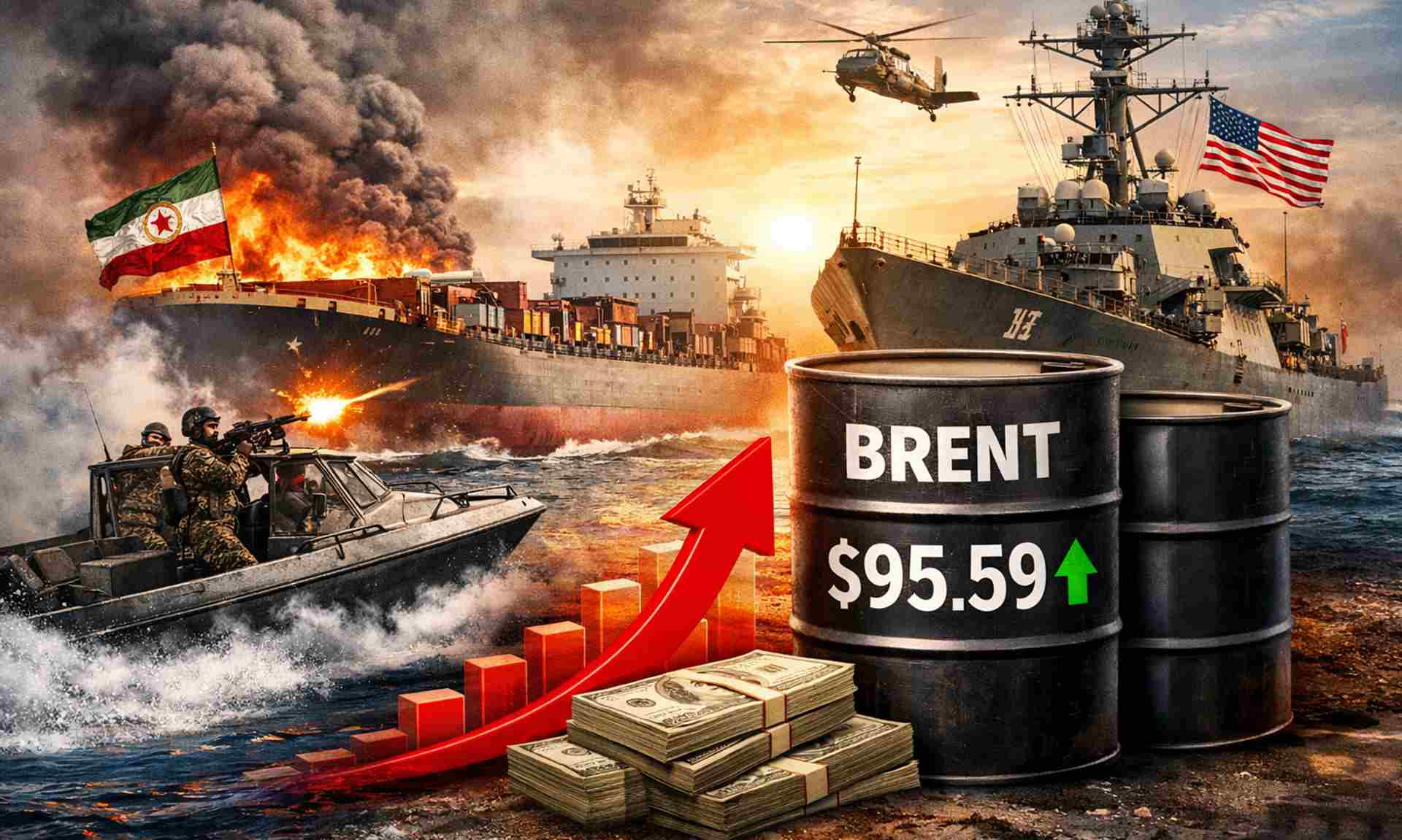

Oil prices have risen strongly again after attacks on commercial ships in the Strait of Hormuz, military advances between Iran and the United States, and new threats from Donald Trump increasing the risk of war and pressuring the international market this weekend
Oil prices surged on Sunday after attacks on commercial ships in the Strait of Hormuz raised tensions between Iran and the United States, bringing the two countries to the brink of a new war. May crude oil futures rose about 7%, reaching $89.74 per barrel at 6:45 PM Eastern Time.
Brent, the international benchmark, also advanced in the same upward movement. June delivery prices rose nearly 5.8%, reaching $95.59 per barrel.
Attacks on ships raise tensions in the Strait of Hormuz
The new escalation occurred after a series of military actions over the weekend. On Saturday, Iran attacked a tanker in the Strait of Hormuz, while Revolutionary Guard boats fired on the vessel and a container ship was hit by an unidentified projectile, according to the UK Maritime Operations Center.
-
As Brazil Expands Social Welfare, Survey Reveals 40% Blame Poverty on Laziness, While 58% Cite Lack of Opportunities

-
China Tightens Control on Antimony, Driving Prices from $22,000 to Nearly $40,000 per Ton as U.S. Rushes to Bolster Strategic Reserves

-
BlackRock Freezes $1 Billion in Brazilian Renewable Energy, Impacting 1.5 GW of Planned Projects and Highlighting Investor Concerns Over Infrastructure Bottlenecks Cutting Up to 25% of Solar and Wind Generation
-
Labor Shortage: Despite Record Average Salary, 90% of Brazilian Bar and Restaurant Owners Struggle to Hire Key Roles Like Sushi Chefs and Head Cooks


On Sunday, the United States Navy fired on an Iranian container ship in the Gulf of Oman. After that, Marines took custody of the vessel, according to a statement from President Donald Trump.
Trump stated in a post on Truth Social that the ship attempted to breach the U.S. naval blockade of Iranian ports. The seizure occurred a day after the Iranian attack on vessels in the region.
Oil prices react to escalation of conflict
The market’s reaction was immediate, with oil prices rising again after the deterioration of the situation over the weekend. The increase came after a Friday marked by falling prices, when Iran suddenly declared that the strait was fully open to commercial traffic.
This initial signaling came in response to a ceasefire agreement mediated by the United States in Lebanon. Shortly after, however, it became clear that Tehran maintained the same previous conditions for transit through the strait.
Peace negotiations remain uncertain
The ceasefire agreement between the United States and Iran expires this week. On Sunday, Trump again threatened to blow up all of Iran’s power plants and bridges if Iranian leaders do not accept an agreement with the United States, also labeling the Iranian attacks on ships as a “total violation” of the truce.
It is still unclear whether there will be a second round of peace negotiations in Pakistan. Trump said the two countries would meet in Islamabad on Monday, but Iran stated, through the state agency IRNA, that it would not attend due to the ongoing U.S. naval blockade and other grievances.
Last week, both sides seemed close to an understanding. Now, with the blockade maintained by the U.S. and Tehran stating that the strait will remain closed until this measure is lifted, oil prices continue to be pressured by the new escalation.