





 Portuguese
  English
  Spanish
  3 min of reading
  0 comments


Use of New Legal Mechanism Allows Simplification of Environmental Licensing and Speeds Up Works on the Central Section of the Highway Between Manaus and Porto Velho, Aiming at Regional Integration and Overcoming Logistics Barriers
The federal government intends to use the new General Environmental Licensing Law to accelerate the paving of BR-319, which connects Manaus to Porto Velho, aiming to obtain licenses in 2026 to integrate the Amazon region under intense environmental pressure.
Paving Strategy for the Highway
The plan seeks to take advantage of article 11 of law 15,190/2025 to expedite works in the forest. This part of the legislation allows for the simplification of licensing in pre-existing installations, as is the case with BR-319.
The modality is called Special Environmental License, a mechanism that tends to accelerate official release.
-
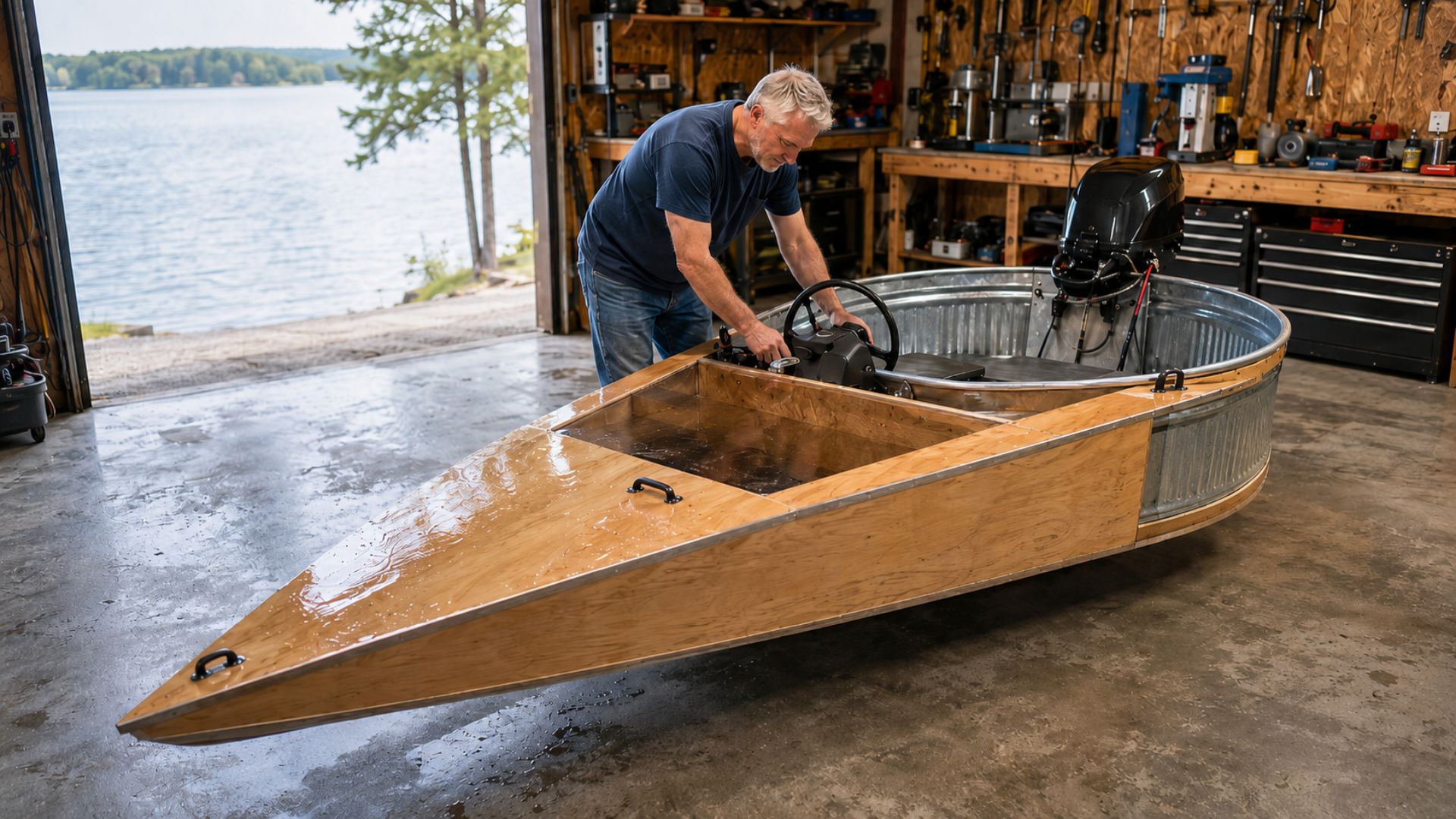
A man takes a simple farm cattle trough and transforms it into a fully motorized boat by lining the tank with plywood, sealing everything with epoxy, and installing an outboard motor.

-
In just 24 days, China erected 7,733 foldable houses alongside nearly 10,000 tents and sheltered over 47,000 residents in one of the highest and most inhospitable regions on the planet, in what is considered the fastest housing deployment in history.
-
With an eye on consumers from Santa Catarina, Paraná, Rio Grande do Sul, and Argentina, Havan is launching a mega store worth R$ 90 million on the side of a busy highway, in an investment that Luciano Hang classifies as one of the most important in the expansion.
-
Thousands of houses in Brazil have slabs and pillars concreted with construction site mixers, and most owners are unaware that, without strict control of the dosage, this can compromise the structure’s strength and create risks that only appear years later, according to engineers and technical standards.


President Lula vetoed the article, but Congress overturned the veto, enabling its use. Under the new rule, the license can be issued in less than 12 months.
The environmental viability was previously certified by a Preliminary License issued by Ibama in 2022.
Deadlines and Legal Procedures
Minister Renan Filho confirmed that the government is considering following this new legal path now. The administration also maintains the option for the traditional environmental licensing process in parallel.
The central goal is to ensure a faster license to start work on the central section. The Minister of Transport stated that he intends to obtain the necessary environmental license still in 2026.
In the common procedure, the government would need to seek the Installation and Operation licenses. The original Preliminary License was granted during Jair Bolsonaro’s presidency.
Political and Environmental Agreements
Paving BR-319 is treated as a priority by President Lula in the current term. The president stated that the paving would occur in mutual agreement with specialists and environmentalists.
Minister Marina Silva established an agreement between her ministry and the one led by Renan Filho. The joint understanding aims to facilitate the necessary studies and the socio-environmental plan of the large project.
Lula’s disposition is to guarantee asphalt access for the population of the state of Amazonas. The government’s expectation is to bid and start the works in the early months of 2026.
Reality of the Central Section of the Highway
The central section of BR-319 currently consists of over 400 kilometers of dirt road. The construction of the highway began in 1968, during the military dictatorship in Brazil.
The road took nearly ten years to be completed and was fully asphalted by 1976. The lack of adequate maintenance and low quality led to the total deterioration of the old pavement.
Currently, about 46% of the total 885 kilometers does not have any type of asphalt. The unpaved area is specifically located between km 250 and km 655.7.
Conservation Challenges
This central region is home to exactly 28 environmental conservation units protected by federal law.
The presence of these areas is the factor that usually delays licenses for infrastructure works. The BR-319 Observatory warns that asphalt could increase deforestation and land grabbing.
A survey from August indicated the existence of 2,240 kilometers of clandestine roads crossing the main highway.
Another 1,297 kilometers of illegal roads cross indigenous territories situated around BR-319.
Coordinator Marcelo Rodrigues advocates that society must pressure for the project to respect cultural assets.
Regional Context and History
The highway is fully navigable today, but many dirt sections have become totally impassable. National integration was the main objective when the road was inaugurated in the 1970s.
The BR-319 Observatory is composed of several organizations that generate technical information about the highway.
The illegal exploration of minerals is another risk highlighted by entities monitoring the Amazon region.
The federal government continues to analyze which legal avenue will ensure a faster start to the physical interventions.
Secondary information reinforces that the project involves long-standing logistical and historical complexities.
With information from Gazeta do Povo.








-

-

-

10 people reacted to this.