Portuguese
  Spanish


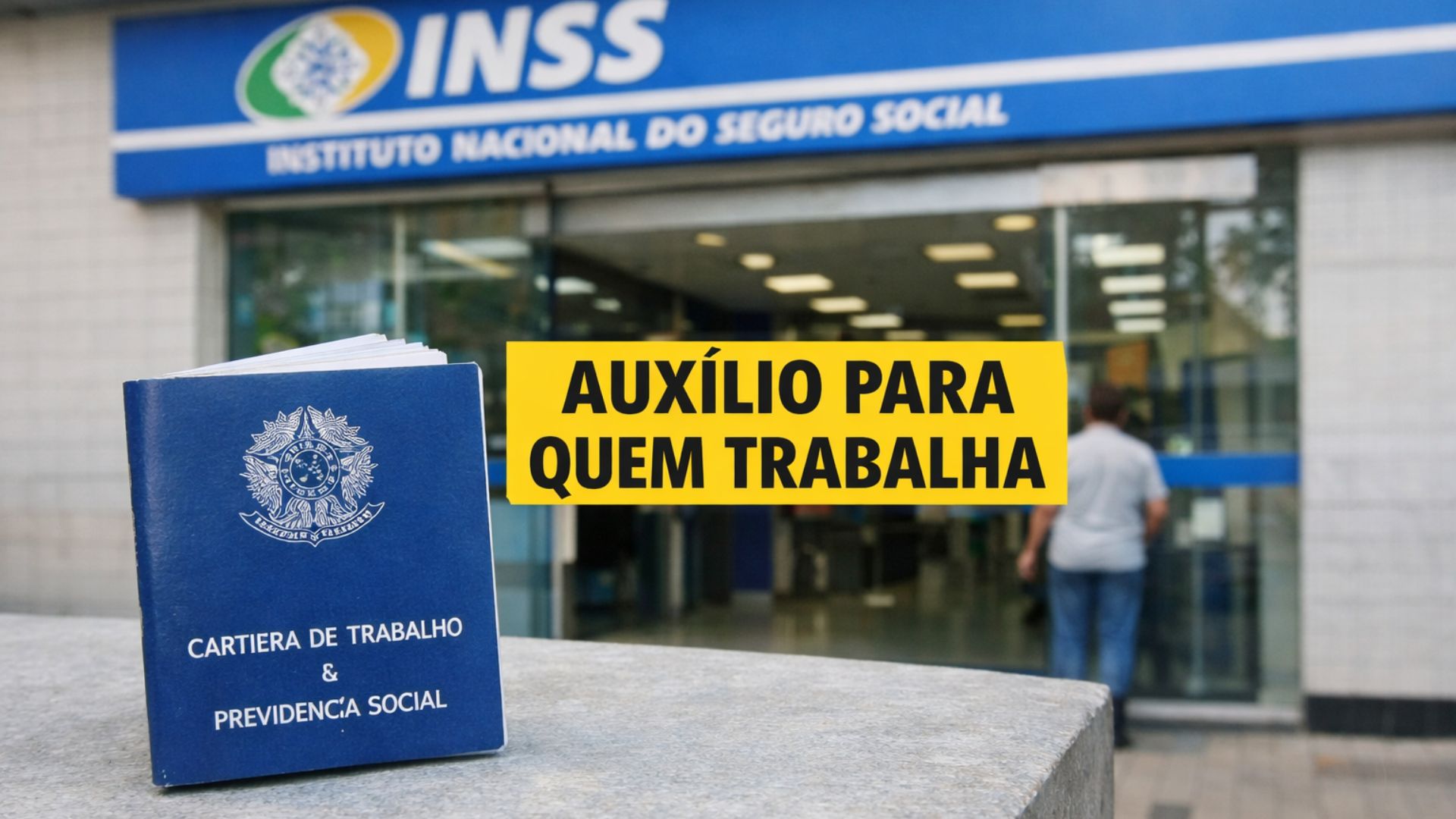


Change in BPC Rules Allows People with Disabilities to Receive R$ 810.50 When Entering the Formal Labor Market, with Automatic Conversion to Inclusion Aid and the Possibility of Reactivating the Assistance Benefit in Case of Dismissal, While Maintaining Income Criteria and Updated Registration.
The federal government plans to pay R$ 810.50 per month to low-income people with disabilities who start working with a formal contract, transitioning from BPC to Inclusion Aid, without an immediate cut in income for those formalizing employment.
This amount corresponds to half of the minimum wage set for 2026, at R$ 1,621, established by presidential decree, and serves as a reference for the substitute assistance benefit as long as the worker maintains a formal bond within the required rules.
Inclusion Aid and Transition from BPC to the Formal Labor Market
The Inclusion Aid was established in the Brazilian Inclusion Law and gained specific regulation in 2021, focusing on addressing the fear of losing benefits when accepting a job while maintaining a monthly income equivalent to half the minimum wage.
-
Havan Competitor Expands in Brazil with 170 Stores, Offering Everything from Stationery to Asian Food and Focusing on Affordable Products to Attract Shoppers

-
Norway’s $2 Trillion Dilemma: How Oil Revenue Created a Massive Savings Fund with Too Much Money to Spend

-
Microsoft Lays Off 4,800 Employees, Cuts 20% of Xbox Staff Amid AI Pressure on Major Tech Firm

-
Brazil’s ANP Opens 86 New Oil Blocks in the Equatorial Margin, Expanding the Amazon River Mouth Frontier





According to the law, the target audience is people with moderate or severe disabilities who have received BPC in the previous five years and had their benefit suspended for engaging in paid work, as outlined in the legislation.
Meanwhile, the salary limit for formal work to qualify for Inclusion Aid is up to two minimum wages per month, a condition that prevents the benefit from being used by those who have already surpassed the defined ceiling.
Automatic Grant by INSS
An operational change determined that, upon identifying that a BPC beneficiary started paid work, INSS will automatically grant Inclusion Aid, without requiring an immediate new request as a condition for benefit conversion.
The guideline is linked to the possibility of automatic granting as stipulated by law and was subsequently incorporated into the BPC management rules and procedures established in a joint ordinance by MDS and INSS published in the Official Gazette.
In practice, the change transforms what previously depended on a request into a process that starts from data cross-referencing, to reduce gaps without payment and prevent the formalization of employment from generating immediate financial insecurity.
Income Criteria, CadÚnico, and Family Calculation
To be eligible for Inclusion Aid, the beneficiary must meet BPC requirements related to registration and family income, with an updated CadÚnico and a valid CPF, in addition to remaining within the parameters required by social assistance.
The basic income criterion of BPC considers the limit per family member, and the legislation allows for specific treatment of vulnerability, but the most well-known rule remains the reference of low per capita income as the basis for analysis.
Furthermore, the law stipulates that, to calculate per capita family income, earnings obtained by the applicant should be disregarded when the total for the month is equal to or less than two minimum wages, which helps to avoid penalizing the return to work.
Another important provision is that income from supervised internships and apprenticeship programs may also be disregarded in the calculation, reinforcing the aim of encouraging formal experiences and paths to productive inclusion without automatic loss of social protection.
Reactivation of BPC in Case of Dismissal
If the formal bond ends, the return to BPC is not treated as a definitive end of the right because the legislation that created Inclusion Aid links the benefit to the work situation and provides for the possibility of resuming it under certain criteria.
Therefore, when there is a dismissal, the expected path is to request the reactivation of BPC at INSS, as long as the person again meets the legal and registration requirements, avoiding prolonged periods without assistance income.
The rationale of the mechanism is to function as a bridge, not as a permanent replacement, allowing formalization to be a less risky choice for families that depend on the benefit and have little margin to absorb income drops.
Income Variation and Maintenance of the Benefit
The joint ordinance that updated BPC procedures was also presented by the government as a way to deal with income fluctuations in the household, with criteria that consider assessment periods to maintain the benefit when the income remains within the limit.
Thus, the analysis can consider the income from the last evaluated month or the average of a period, which tends to reduce cuts due to sporadic variations and provides predictability for those with unstable income in the same household.
Still, practical functioning depends on updated registration and consistent income records, because automatic granting requires systems to recognize the bond and simultaneously confirm that the other requirements continue to be met.
With Inclusion Aid set at half the minimum wage of 2026 and the automatic conversion expected when INSS identifies income from work, the policy aims to reduce the fear of formalizing, but how many people will actually be able to turn this security into stable employment?