






 Portuguese
  Spanish




The Foreign Relations Committee of the Chamber of Deputies approved new rules for the naturalization of immigrants in Brazil, requiring four years of uninterrupted residence, proof of lawful means of support, and absence of criminal proceedings. Compliance with the requirements does not guarantee citizenship, as the final decision rests with the Ministry of Justice.
The Chamber of Deputies has just taken the first step to change the new rules for the naturalization of foreigners in Brazil. The project approved by the Foreign Relations and National Defense Committee modifies the current Migration Law and establishes stricter criteria for granting Brazilian citizenship. The three fundamental pillars of the proposal are uninterrupted residence for at least four years, absence of any criminal proceedings during the stay in the country, and proof of lawful means of support for oneself and one’s dependents.
The most significant change is that fulfilling all requirements does not guarantee an automatic right to citizenship. Deputy General Girão, the project’s rapporteur, reinforced that the final say on each naturalization request will continue to rest with the Ministry of Justice and Public Security, which will analyze the expediency of each case individually. The text still needs to pass through the Constitution and Justice Committee in a conclusive manner before proceeding to a vote in the plenaries of the Chamber and the Senate.
What changes with the new rules for naturalization in Brazil
The approved project is the rapporteur’s substitute for Bill 2523/19 and consolidates norms that are currently dispersed in decrees, offering greater legal certainty to the national migratory system. The new rules organize into three pillars what a foreigner needs to prove to apply for Brazilian citizenship, eliminating ambiguities that existed in previous legislation and creating objective criteria that the government can apply in a standardized manner.
-
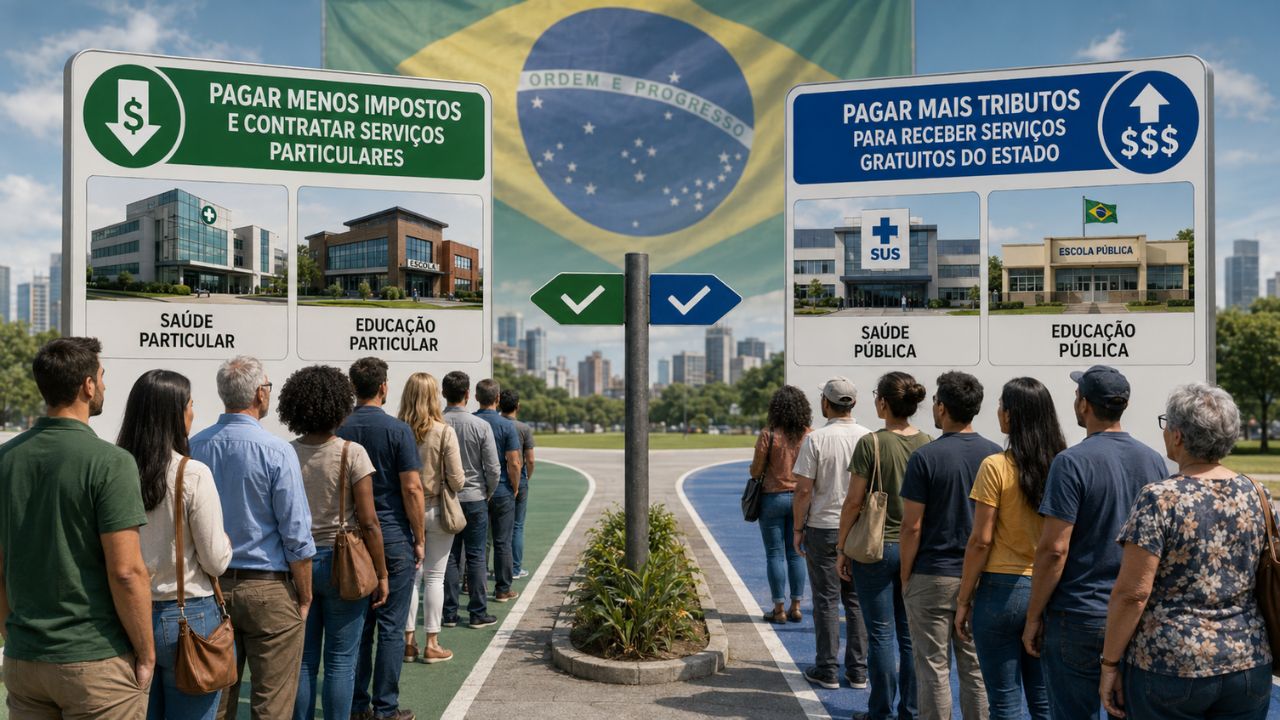
Half of Brazilians Prefer Lower Taxes with Private Health and Education, While 44% Opt for Higher Taxes for State-Provided Services, Datafolha Survey Reveals

-
Brazil’s Most Expensive Toll Rises to R$ 40.60 on Route from São Paulo to the Coast, Nearly Matching Bus Fare to Santos

-
As Brazil Expands Social Welfare, Survey Reveals 40% Blame Poverty on Laziness, While 58% Cite Lack of Opportunities

-
China Tightens Control on Antimony, Driving Prices from $22,000 to Nearly $40,000 per Ton as U.S. Rushes to Bolster Strategic Reserves



The residence pillar requires uninterrupted residency in Brazil for at least four years before the application. The conduct pillar prohibits the naturalization of foreigners who are subject to any criminal proceedings, a restriction that was not as explicit in the current law. The third pillar, that of subsistence, obliges the applicant to demonstrate that they possess lawful means of support for themselves and their dependents, preventing citizenship from being granted to those who cannot prove their ability to support themselves in the country.
Who can have the residence period reduced
Despite the rigor, the new rules foresee situations where the minimum four-year residence period can be shortened. Foreigners originating from Portuguese-speaking countries will have access to shorter deadlines, recognizing the cultural and linguistic proximity that facilitates integration into Brazilian society. Immigrants with Brazilian children also benefit from the reduction, except in cases of provisional naturalization.
Another point that flexibilizes the deadline caters to the economic sector. Owners of companies that employ at least 20 Brazilian workers may apply for citizenship in less time, a rule that seeks to attract entrepreneurs who generate employment and income in the country. The reduction in the deadline does not eliminate the other requirements: even with a shorter residence period, the applicant still needs to prove a clean record and lawful means of support.
Why fulfilling all requirements does not guarantee citizenship
The decision to grant or deny naturalization remains a discretionary act of the federal government. This means that the Ministry of Justice can analyze each application considering criteria of convenience and opportunity, evaluating whether the granting of Brazilian citizenship serves the national interest, even when the foreigner meets all formal requirements provided for in the new rules.
This characteristic differentiates ordinary naturalization from extraordinary naturalization, which is granted to foreigners with more than 15 years of uninterrupted residence and no criminal conviction. In the ordinary modality, which is regulated by the approved project, the government retains the prerogative to refuse the application even with complete documentation, a safeguard that the rapporteur justified as necessary to preserve the State’s sovereignty in managing its migratory policy.
The path the bill still needs to take to become law
Approval by the Foreign Relations Committee was the first step. The bill now proceeds to the Chamber’s Committee on Constitution and Justice and Citizenship, where it will be analyzed in a conclusive manner. If approved by the CCJ without the need for a plenary vote, the text goes directly to the Federal Senate. Should any deputy request appreciation by the Chamber’s plenary, the process could take longer.
After eventual approval by the Senate, the bill will be sent to the Presidency of the Republic for sanction or veto. The process could take months, and the text is still subject to amendments that alter points such as the minimum residency period or the reduction criteria for specific groups of foreigners. Until the law is sanctioned and published, the current naturalization rules provided for in the 2017 Migration Law remain valid for all pending applications.
What the new rules mean for foreigners living in Brazil
For the millions of immigrants residing in Brazil, the new rules represent more clarity on what is required, but also more rigidity. The consolidation of criteria into a single legal text eliminates the insecurity of depending on scattered decrees, but the requirement for an absolute clean record and proof of income may exclude foreigners living in vulnerable conditions who cannot formally document their means of support.
On the other hand, the predictability of the requirements can benefit those who plan long-term. Knowing that four years of residency, proven income, and absence of criminal proceedings are required allows the foreigner to prepare in advance and organize their documentation before submitting the application. The uncertainty that remains is precisely what the bill intentionally maintains: the government’s discretion in the final decision, which transforms naturalization into a possibility, not a guarantee.
Do you think the new naturalization rules are fair or excessively rigorous for those who want to become Brazilian? Leave your opinion in the comments; we want to know if you agree with the four-year residency requirement and if the final decision should be automatic for those who meet all requirements.


