Portuguese
  Spanish


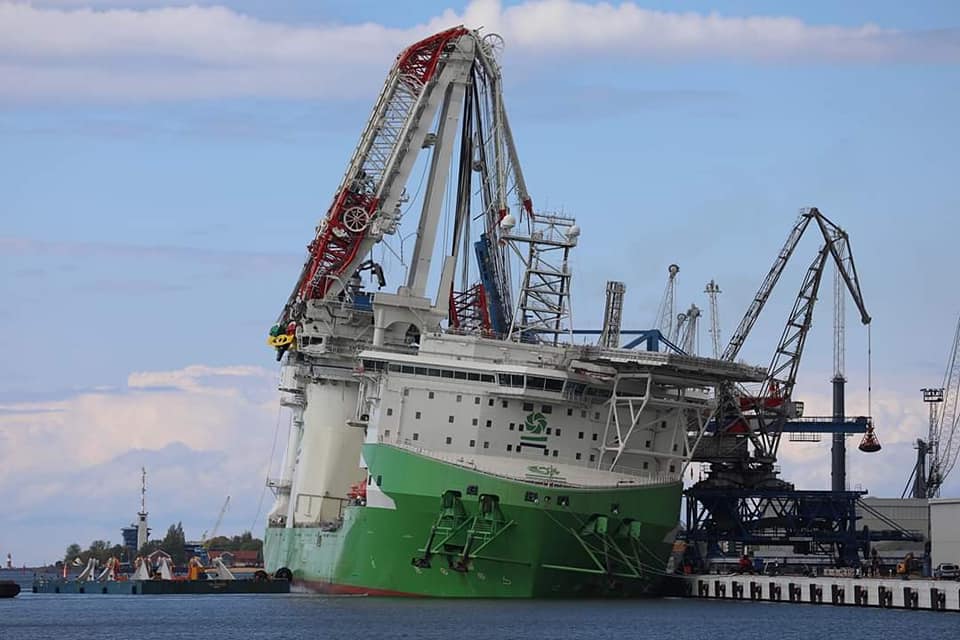

The Operational Incident Occurred at the Port of Rostock, Germany. The Broken Crane Hook Was the Cause of the Accident, According to Local Authorities
The heavy-lift crane ship HLC 295000 was severely damaged after an accident during a test run on May 2, 2020, at the international port of Rostock, Germany.
- The Week Closes with Job Openings for Technician, Boiler Maker, Welder, and More at the Pecém Steel Company
- Free Online Courses with Certification Offered by SENAI and SESI
- Operator, Welder, Toolmaker, and More Job Openings at an Industry This May 09
According to the OEM ‘Liebherr’, comprehensive investigations are underway into the cause and course of the accident.
During a load test of the offshore crane HLC 295000 from Liebherr-MCCtec Rostock GmbH, a serious accident occurred, resulting in two people injured being taken to the hospital for treatment. Ten other people were treated by paramedics on-site.
-
Venezuela Earthquakes: 1,430 Dead, Widespread Destruction, and International Task Force Deployed for Survivors

-
Magnitude 6 Earthquake Strikes Afghanistan, Notable Detail Emerges as Tremor Reaches Pakistan
-
Beijing Investigates Possible Collision After Smoke and Debris Seen Near City’s Tallest Building, Citic Tower.
-
Venezuela Earthquakes Could Result in Over 10,000 Deaths: Twin Quakes of Magnitude 7.2 and 7.5 Collapse Over 100 Buildings, Killing 920 and Injuring 3,360, as International Teams Rush to Find Survivors



At this stage of the investigations, the responsible authorities and experts unanimously agree that a broken crane hook was the cause of the accident, said Liebherr.
The exact reasons why the hook did not withstand the load are unclear at this stage of the investigations.
The design and manufacture of the crane hook were sourced from an external supplier.
A design or production error of the Liebherr crane can, therefore, be ruled out.
The overload test for the HLC 295000 was planned for a load scenario of 5,500 tons. The lift was supposed to be performed by raising a barge. Conducting an overload test is a typical procedure for the industry, where the crane is tested for its maximum lifting capacity.
Currently, known facts indicate that the incident occurred at a load of around 2,600 tons, causing a chain reaction that led to the accident.
At the moment, the accident does not affect the daily operations of the Port of Rostock. According to initial estimates, the projected cost is nearing 7 digits in dollars.