Portuguese
  Spanish




Petrobras Faces Strong Mobilization After Oil Workers Approve National Strike to Demand Progress on ACT, Solution for the PEDs from Petros and Recomposition of Salaries Still Under Discussion
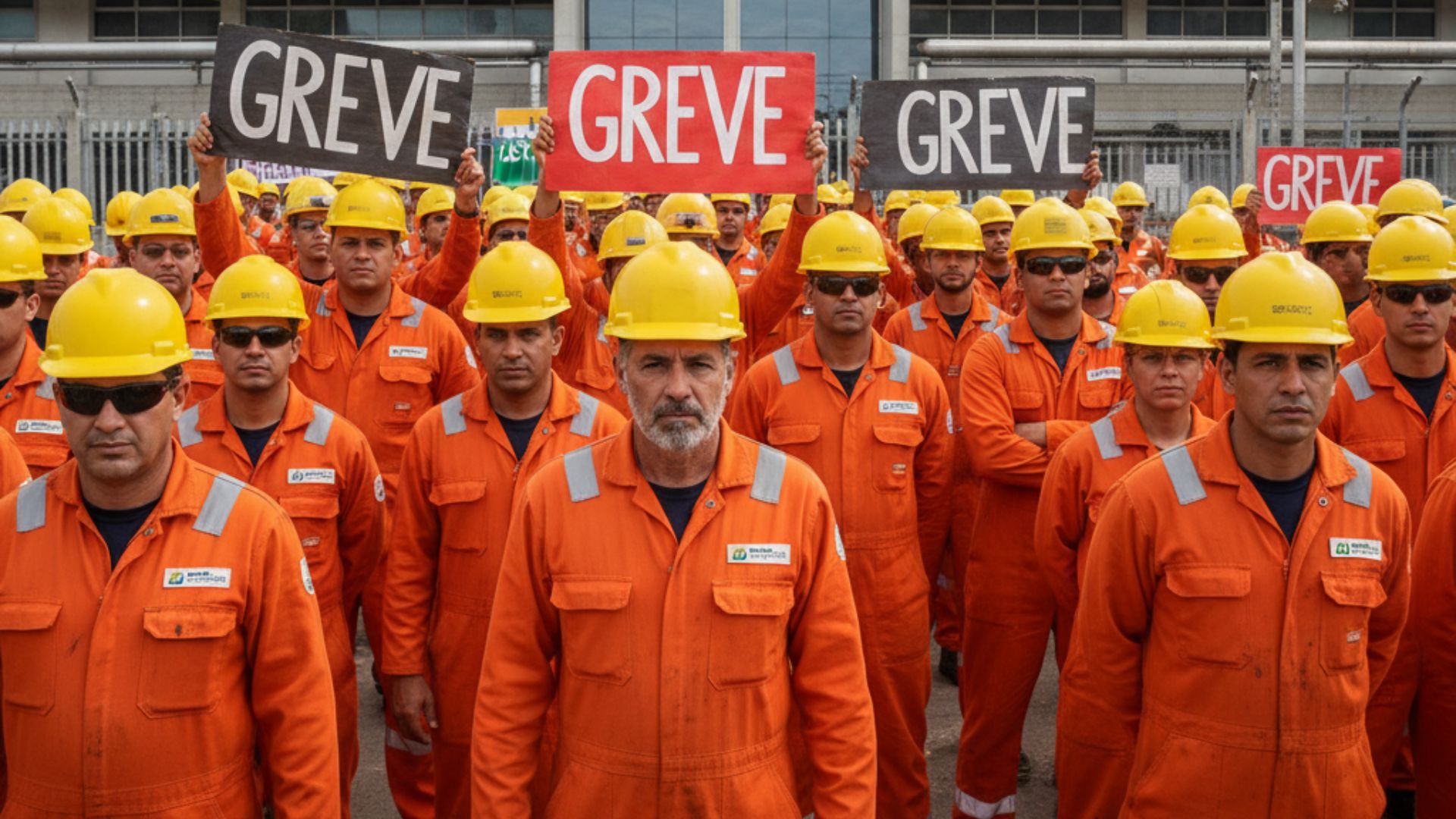
On December 10, 2025, workers from Petrobras confirmed the approval of a national strike starting at midnight on December 15, following the failure of negotiations between the company and the Unified Federation of Oil Workers (FUP). According to a report published by Metrópoles, the stoppage was approved in assemblies held in various regions of the country and represents one of the most significant labor movements in the energy sector this year.
Understand the Context of the National Strike at Petrobras
The category rejected the new counterproposal for the Collective Labor Agreement (ACT) presented by the company, considered unsatisfactory by the unions. The document was delivered on December 9 but did not address structural solutions for essential points, such as the revision of the Deficit Equations Plans (PEDs) from Petros, as well as advancements in career plans and salary recomposition.
According to FUP, the level of dissatisfaction among workers has grown in recent weeks, especially after Petrobras failed to formalize a definitive position on the end of the PEDs. The federation also criticized the lack of concrete progress on issues related to careers, progressions, and the recomposition of purchasing power.
-
Oil production grows in Rio, but reserve replacement raises a warning sign

-
Petrobras is expected to complete the drilling of the Morpho well in the Foz do Amazonas in August 2026, the first well in the Equatorial Margin, an oil frontier that the ANP estimates at more than 30 billion barrels and could redraw the map of Brazil.

-
Oil returns to the center of concerns with tension between the US and Iran

-
IEA reduces forecast for global oil demand in 2026 after impacts of the Middle East crisis



The counterproposal does not meet the needs of the category, the entity stated when announcing the stoppage. For the workers, after months of negotiations, the strike has become the only measure capable of forcing real changes.
Rejection of ACT and Dissatisfaction Among the Oil Workers of Petrobras
The new version of the ACT was considered insufficient by the unions for not addressing fundamental issues that have been raised since the beginning of the negotiations. Among them are points related to professional progression, internal appreciation, and the impact of mechanisms that directly affect employee earnings.
The category demands a more consistent policy for the job and salary plan, aligned with Petrobras’ financial performance and the complexity of activities performed in its operational units. Workers also criticize the lack of broader guarantees for recomposition, as fiscal adjustment mechanisms have been limiting real gains.
This set of demands became central in the assemblies that analyzed the ACT. There is no reason to submit this counterproposal to the assemblies, stated Deyvid Bacelar, general coordinator of FUP.
PEDs from Petros: The Center of the Dispute
The majority of discussions between the category and the company center around the Deficit Equations Plans (PEDs) administered by Petros, a pension fund created in 1970 and currently one of the largest in the country. The PEDs were adopted to compensate for accumulated deficits, creating extraordinary contributions for active workers, retirees, and pensioners.
However, unions claim that these equations have severely affected the monthly budgets of beneficiaries. The entities argue that the company needs to present a definitive solution to reduce these impacts and restore the financial balance of the affected families.
According to Bacelar, it is unacceptable that, after years of negotiations, there is still no concrete stance on the end of these mechanisms. Workers argue that this debate has been ongoing for almost three years, and although some discussions have progressed, there is still a lack of a formal proposal that structurally resolves the issue.
Job and Salary Plan: Accumulated Demands
In addition to the pension issue, workers argue that the job and salary plan needs to be updated. They contend that the state-owned company has the financial capacity to increase investments in internal appreciation, as personnel expenses represent a small share of the total spent by the company.
FUP emphasizes that Petrobras has recorded strong financial results in recent years, which would justify more consistent progress on the ACT. However, representatives of the category say that structural adjustments have been dealt with slowly or without sufficient scope.
Salary recomposition is also a sensitive point. For the federation, it is necessary to ensure that workers are not exposed to losses resulting from automatic containment mechanisms. During assemblies, the category reinforced that recomposition should occur with predictability and respect for purchasing power.
National Mobilization and Preparation for the Strike
FUP reported that the unions will officially notify Petrobras about the stoppage before the end of the week, following all the legal procedures provided. The guidance is for workers to continue participating in the assemblies that have been approving the strike indication.
Workers continue to approve the stoppage, highlighted the federation. The mobilization is broad and involves administrative, operational, and strategic sectors in different states.
The stoppage is expected to impact production, supply, maintenance, and logistics operations, although each unit will adopt specific protocols to ensure the safety of the facilities. Historical records of previous movements show that stoppages in the sector require rigorous planning, especially because they involve complex industrial operations.
Negotiations with Petrobras and Possibility of New Developments
Until the official announcement of the stoppage, the state-owned company had only presented the counterproposal rejected by the workers. There had not been a clear indication of the possibility of sending a new document before the strike begins.
The company typically argues that labor negotiations need to consider financial, structural, and regulatory aspects. As a state-owned entity, its decisions also depend on strategic guidelines and internal analyses involving various technical areas.
Nevertheless, in light of the upcoming strike, there is an expectation that discussions will intensify in the coming days. Movements of this magnitude usually press management to resume dialogue more quickly.
Political and Economic Context Surrounding the National Strike at Petrobras
The announcement comes at a time of broad debates about energy policies, energy transition, and the role of state-owned companies. The sector faces technological transformations and demands for new operational models, making labor discussions even more complex.
Additionally, issues related to complementary pensions have gained relevance across the country, especially due to challenges faced by pension funds in various sectors. The discussion surrounding the PEDs from Petros, therefore, connects to a broader scenario and is not limited to just the category.
Another important point is the debate on professional appreciation in state-owned companies. For experts, movements like this reflect tensions accumulated over the years, involving adjustments, progressions, technical recognition, and pension security.
Importance of Dialogue and Next Steps
The confirmation of the strike starting December 15 reinforces the need for progress in negotiations. The rejection of the ACT, discussions involving salaries, the deadlock over the PEDs, and the lack of a more consistent career plan indicate that the category expects objective responses.
Continuing the dialogue will be crucial to reduce tensions and seek solutions that meet the workers’ needs while maintaining the operational stability of Petrobras. For the unions, the movement reinforces the importance of transparent, predictable processes that respect the historical demands of the category.