






 Portuguese
  Spanish


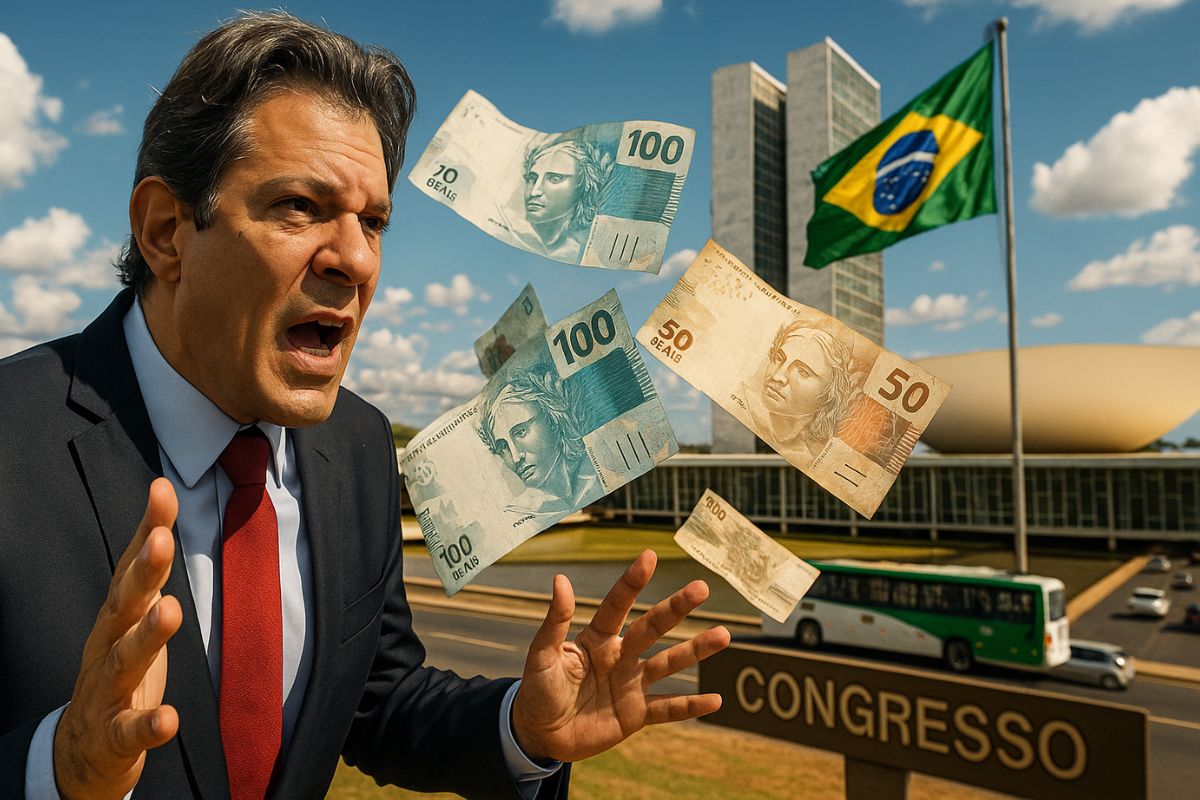

Income And Consumption Reforms Must Finally Come To Light With Unprecedented Support Between Executive And Legislative, According To Announcement By Fernando Haddad
The Minister of Finance, Fernando Haddad, stated that the income and consumption reforms are about to advance in Congress, in a move considered historic for the unification of forces between the Executive and Legislative. For the government, this political convergence is essential to correct distortions in the tax system and promote greater social justice.
In his speech, Haddad emphasized that rarely have so many economic issues progressed together in an organized manner and highlighted that the measures are not limited to fiscal adjustment, but aim for a restructuring capable of improving income distribution and ensuring competitiveness for strategic sectors of the Brazilian economy.
Political Unity And Economic Impact
Cooperation between the powers has been pointed out as a differentiator at this time.
-
Brazil’s 2026 Tax Refund: Record 9.58 Million Filers in Largest Payout Ever, But a Key Detail on Priority Recipients Draws Nationwide Attention

-
Itaú Alters Hybrid Work Model, Increasing Office Days from 2028, Prompting Employees to Adjust to New Routine
-
Facing Labor Shortage, Japan Plans to Invest $34 Million to Attract Foreign Workers in Construction, Healthcare, Industry, and Commerce

-
Brazilian City Makes Remarkable Leap, Becomes 4th Wealthiest in the Country with GDP of R$ 134.1 Billion




According to Haddad, the harmony between Executive and Legislative brought order to the tax chaos and opened space to approve measures that had been stalled for years.
This articulation is seen as a necessary condition for the country to move towards a fairer system for both taxpayers and businesses.
Additionally, the minister emphasized that the integration of reforms could generate greater predictability for the business environment, stimulating both internal and external investments.
The focus is to transform the tax structure into a growth engine rather than an obstacle to production and consumption.
What’s At Stake In The Reforms
The income and consumption reforms encompass measures to rebalance the tax burden, reduce inequalities, and increase transparency in tax collection.
The central objective is to simplify processes, improve revenue collection, and make the system more efficient, especially for those who feel the impacts of regressive taxation the most.
Haddad also associated the reform agenda with the strengthening of the agricultural sector
stating that tax modernization can make life easier for small producers and expand access to public policies.
Thus, the expected impact is not limited to large cities but reaches different regions of the country.
Expectations For Approval In Congress
Discussions are expected to be finalized in the coming days, with expectations for proposals to be approved later this week.
If the timeline is met, the government will take an important step towards a more balanced economy, ready for medium and long-term challenges.
According to Haddad, the speed of the process reflects unprecedented political support, reinforcing the Executive’s confidence in approval without major obstacles.
Still, experts warn that implementation will be complex and will require ongoing coordination between the federal government, states, and municipalities.
Haddad’s announcement reignites the debate about the direction of the Brazilian economy and the country’s capacity to finally execute structural reforms that have been awaited for decades.
The income and consumption reforms could represent a turning point, but their success will depend on practice and not just discourse.
And you, do you believe these changes will have a real effect on the pockets of Brazilians or will they only be technical adjustments without direct impact? Share your opinion in the comments and join the discussion.








Para mim, Lula não da tiro no pé, está reforma e para arrecadar mais impostos para o governo, e se dane o povo, porque não faz uma reforma, ampla e geral, para diminuir os impostos, que são muitos neste país?!?!