Portuguese
  Spanish


International research identified genetic patterns present in different mammalian species and created an innovative tool that can estimate biological age, monitor cellular aging, and contribute to the development of treatments aimed at increasing longevity.
An international team of scientists has made an important step in understanding aging. Researchers from Harvard Medical School, in partnership with Brigham and Women’s Hospital in Boston, have developed a new type of biological clock capable of estimating not only an organism’s biological age but also its survival expectancy. The study was published in the scientific journal Nature and expands the possibilities for research on longevity, age-related diseases, and future anti-aging therapies.
The information was released by Nature, in a study conducted by researchers Alexander Tyshkovskiy and Vadim N. Gladyshev. According to the authors, the new technology uses gene activity patterns to identify universal signs of aging in different tissues and mammalian species.
To achieve the results, the team analyzed more than 11,000 transcriptomes, which represent gene expression profiles obtained in more than 25 types of tissues from humans, mice, rats, and monkeys. From this large database, the researchers identified similar molecular changes that appear throughout aging, regardless of the species analyzed.
-
Methane, natural fuel lakes, ice, and a nitrogen-rich atmosphere make Titan central to NASA’s plans for the first “space fuel station” to speed up missions beyond Mars.

-
16-Year-Old Kentucky Student Solves Long-Standing Biomedical Challenge, Wins Top Young Scientist Award at $9 Million Science Fair
-
Teen Invents Biodegradable Material from Shrimp Shells That Decomposes 1.5 Million Times Faster Than Regular Plastic
-
Scientists Develop Diving Suit for Cyborg Cockroaches to Survive Underwater for 3 Hours, Navigate Flooded Tunnels, and Aid in Disaster Rescue Missions, with Potential for Mars Exploration




Genetic changes help measure biological aging
The scientists observed that various types of cells share conserved molecular changes during aging, even while performing completely different functions in the organism. This pattern allowed them to identify common characteristics capable of serving as a reference to measure biological age.
Among the main discoveries, the study pointed out that certain groups of genes increase their activity over the years. Among them are genes related to inflammation, cellular senescence, and apoptosis, the mechanism responsible for programmed cell death.
Cellular senescence, for example, causes certain cells to stop dividing and gradually lose part of their functions. Although this mechanism protects the organism against some biological damage, its accumulation is also associated with the natural aging process.
At the same time, researchers observed a reduction in the activity of genes linked to tissue repair, cell differentiation, and the production of the extracellular matrix, a structure responsible for supporting organs and tissues.
Furthermore, the results showed that these changes appear repeatedly in different organs and mammalian species. Therefore, the team proposed the existence of universal transcriptomic characteristics of aging.
New transcriptomic clock can predict survival with high precision
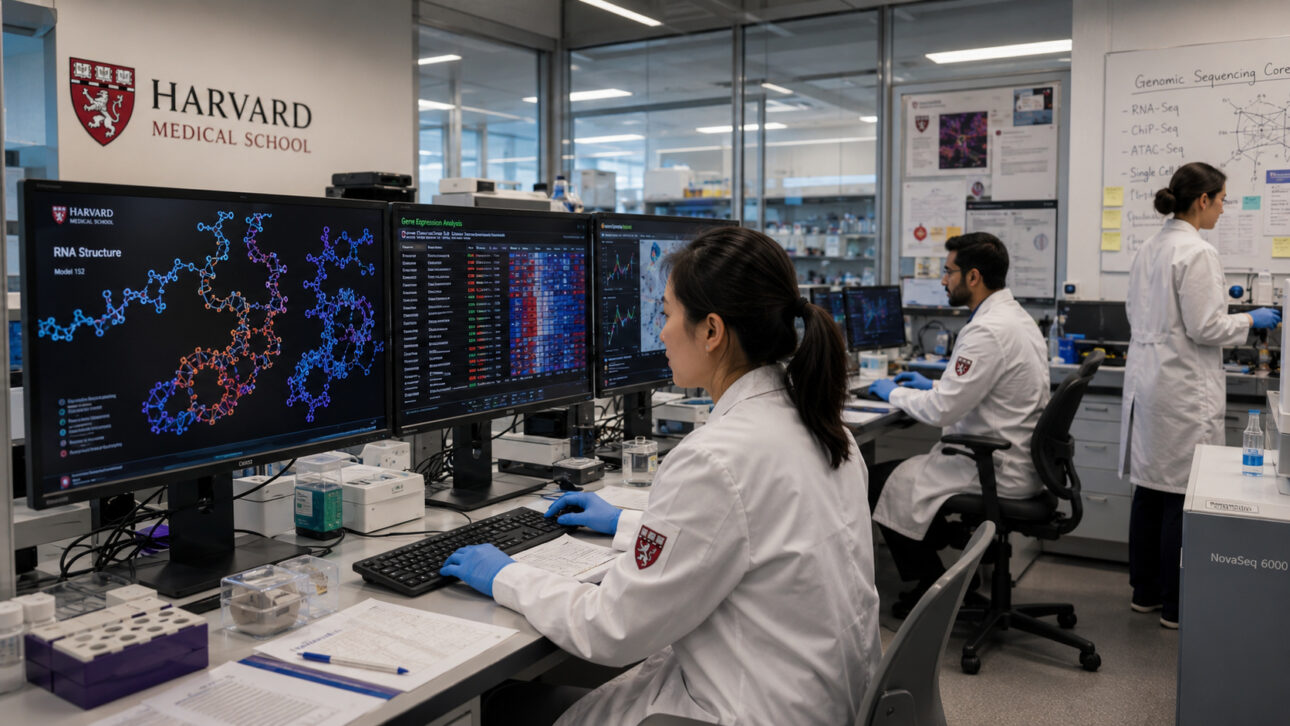
Based on these genetic patterns, researchers developed new transcriptomic clocks. Unlike traditional epigenetic clocks, this tool directly analyzes gene activity, offering biological information that is easier to interpret.
According to the authors, the new clocks can estimate both chronological age and expected mortality, presenting precision comparable to the so-called second-generation epigenetic clocks, currently considered a reference in aging research.
During the presentation of the results, Alexander Tyshkovskiy highlighted that the same changes observed in gene expression also allowed for predicting the survival time of the analyzed individuals.
This capability significantly expands the tool’s potential. In addition to estimating biological age, it could help researchers monitor the progress of treatments aimed at delaying aging and increasing life expectancy.
Discovery could accelerate longevity research
Another important aspect identified by the team involves the response of genetic markers to different interventions.
According to the study, transcriptomic patterns underwent changes when organisms underwent treatments already known to influence longevity, such as caloric restriction. Similarly, the markers responded to the presence of chronic diseases, cellular stress, radiation exposure, and the aging of cells cultured in the laboratory.
These results indicate that the tool could serve to more accurately assess the biological impact of future therapies aimed at prolonging life.
Even so, the researchers themselves acknowledge that there are still important unanswered questions. In an analysis article published in Nature itself, biologist João Pedro de Magalhães from the University of Birmingham stated that the identified markers could help understand how different treatments modify biological processes related to aging.
However, the specialist emphasized that it will still be necessary to clarify whether these molecular signals represent a direct cause of aging or just a natural consequence of this process.
Despite this question remaining open, the research represents an important advance for the biology of aging. By identifying patterns shared among different mammalian species and developing a tool capable of measuring biological age with greater precision, scientists pave the way for new strategies of prevention, diagnosis, and development of therapies that could contribute to a longer and healthier life.
If in the future it were possible to know your biological age with precision and track your aging in real-time, would you take this test? Why?