






 Portuguese
  Spanish


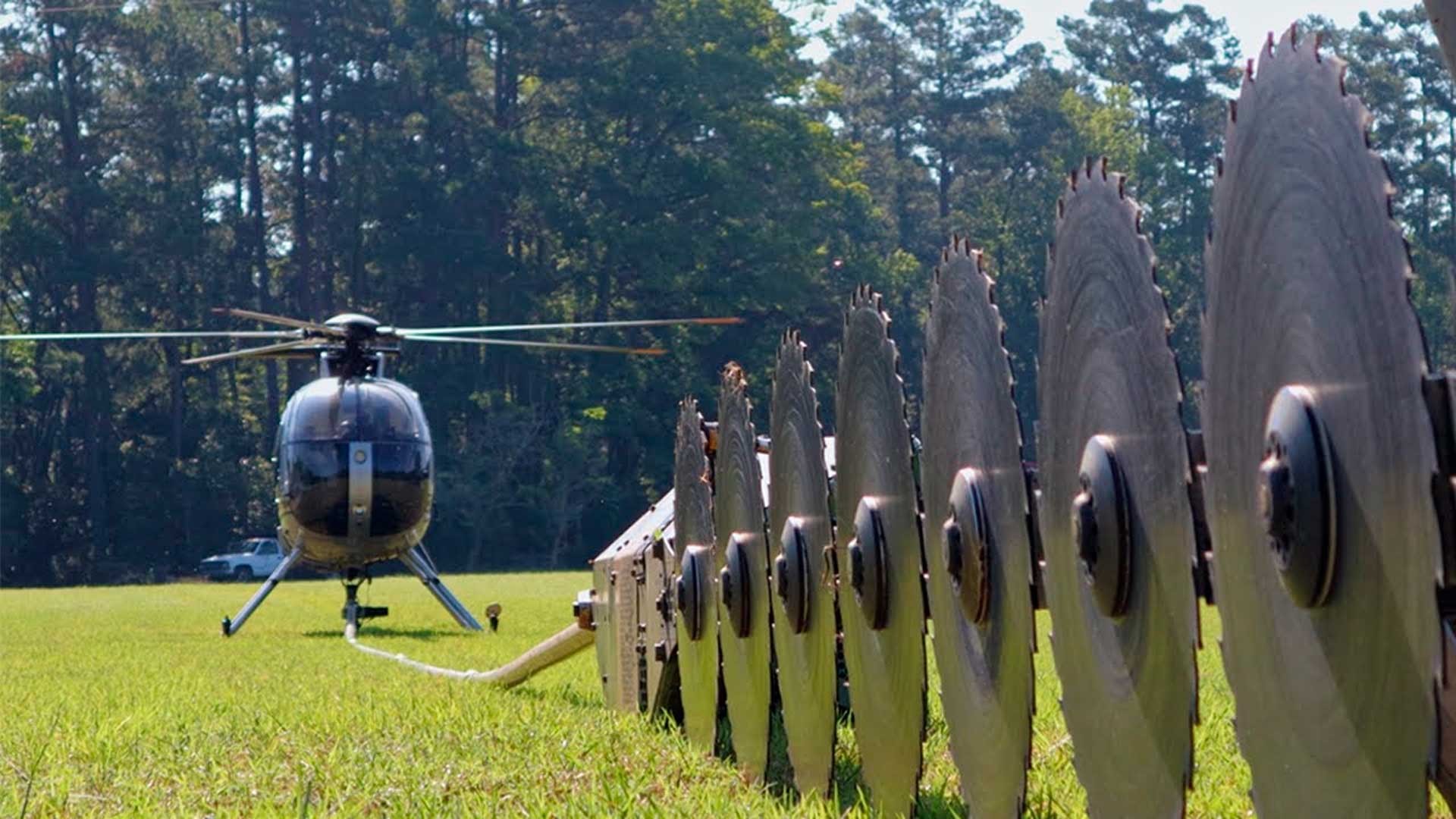


An Aerial Saw Hanging from the Helicopter Cuts Large Branches with Precision, Speeding Up Maintenance in Hard-to-Access Areas
Helicopter videos “pruning from the sky” impress with the level of precision with which they perform tree growth control around the power grid. In one of them, the cut is made with a suspended saw that slowly advances into the treetops, right next to power corridors.
The scene grabs attention, but it’s not new to utilities and service providers. Electric companies use this type of equipment for vegetation maintenance in right-of-way areas and to reduce the risks of service interruptions in hard-to-access sections.
Interest increases during severe weather and after storms, when ground teams face mud, fallen trees, and blocked access. The logic is simple: remove branches from the path of possible contacts with the grid before they become a bigger problem.
-
She spent 73 years breathing inside an iron lung, survived the aftereffects of polio, and became the last woman in the United States dependent on the equipment before dying at 78 years old.

-
Brazilian students created a $1 filter using pine bark, cotton, and 3D-printed parts to clean cassava wastewater, reduce the toxicity of a hazardous waste, and transform contaminated water into biofertilizer.

-
Astronaut from Artemis II steps down after mission to the Moon and decision surprises after a record of 406,771 km, a historic 10-day journey, and an unprecedented achievement for Canada.

-
A fossil kept for years in a small museum in Montreal concealed 450-million-year-old soft tissue, a discovery that has only happened once before in history.


Still, the technique divides opinions. For some, it’s efficiency and prevention of power outages; for others, the operational risk and the disturbance of a low-flying helicopter with a spinning saw call for clear rules and strict communication with the community.
How the Aerial Saw Hanging from the Helicopter Works


The most common name is aerial saw, a set of rotating blades attached to a long arm below the aircraft. The operation tends to be slow and precise, with the pilot maintaining the trajectory to “shave” only what invades the corridor of the line.
In technical descriptions from utilities, the equipment can have 10 rotating blades and its own auxiliary motor, in addition to a total length that can reach dozens of meters when including the support arm. The goal is to maintain a safe distance from the helicopter in relation to the vegetation while also reaching the side of the power corridor.
In practice, cutting is only one part of the job. In operations reported by companies in the sector, there is a support team on the ground for checking the equipment, fueling, and coordinating the area, including collecting and disposing of branches when this is planned.
Why Utilities Use This Technique in Electric Grid Maintenance
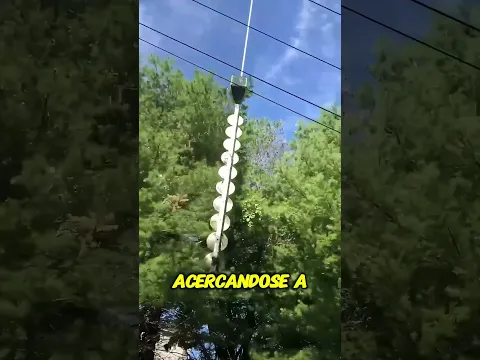
The central argument is efficiency in places where the traditional method costs time and risk. One utility describes the use of helicopters and even sensor mapping to speed up pruning in difficult areas, such as mountainous sections or regions overrun with dense vegetation where machinery cannot enter.
Another point is to reduce impact on the ground. Service providers claim that aerial cutting helps in environmentally sensitive areas because it avoids opened trails and the circulation of heavy equipment, which is significant in long and remote corridors.
The time gain also matters. In a report on the subject, the cited comparison is that the aerial saw can accomplish in about an hour what a manual team would take days to do under certain conditions, especially when there is difficult displacement and access restrictions.
There is also the reliability component of the grid. Energy companies claim that keeping vegetation controlled along the corridors reduces the chance of failures and also decreases the exposure of workers in rocky, sloped, or densely vegetated terrain.
Safety Rules and Qualifications Required for Work Near Live Lines
Working close to a live grid is not “common pruning.” OSHA, the U.S. Occupational Safety and Health Administration, describes line clearance tree trimming as an activity near live lines and details requirements for qualifications, minimum distances, and procedures, including condition assessments and the use of appropriate equipment.
The rules highlight that unqualified individuals must maintain minimum distances, and trained professionals need to consider voltage, safe approaches, and work practices before starting the cut. There are also recommendations against working in adverse weather that would make the service dangerous, such as strong winds.
In the case of the helicopter, companies describing the operation emphasize protocols and site preparation. There are mentions of prior planning, dedicated ground crew, and strict control of the suspended equipment, precisely because any oscillation changes the risk of the work.
The Debate About Vegetation Management and Public Responsibility
In Brazil, the issue intersects with institutional responsibility. In a public consultation note, ANEEL recalls that tree pruning is the responsibility of municipalities but proposes that distributors undertake preventive and corrective actions, with an updated vegetation management plan annually and a public report of the measures taken.
This discussion gains strength when falling branches cause power outages and become a collective nuisance. The logic is that, with more frequent extreme weather events, prevention in the power corridor ceases to be a detail and becomes part of the system planning.
A recent federal law that reduces bureaucracy for pruning in cases of public power omission has also come into effect, as long as there is a risk certified by a qualified professional, and the agency does not respond within 45 days. Although the focus is on the citizen, the rule reinforces how the topic involves procedure, responsibility, and technical verification.
It is at this point that the helicopter with a saw becomes more than just a video curiosity. It becomes a symbol of a practical question: who should ensure vegetation maintenance to avoid outages, and what limits and notifications should the public receive when the solution involves high-impact aerial operations?
In your view, should this type of aerial pruning be used more in Brazil to reduce interruptions, or do the risks and disturbances of the low-flying helicopter outweigh the efficiency? Share what you think and say whether the community should be notified in advance whenever this type of operation occurs.










Passar nesses fios, rapidinho acaba a brincadeira! Kkk