Portuguese
  Spanish



Cold War Bunker Found Beneath Scarborough Castle Reveals How the UK Monitored Possible Secret Nuclear Attacks
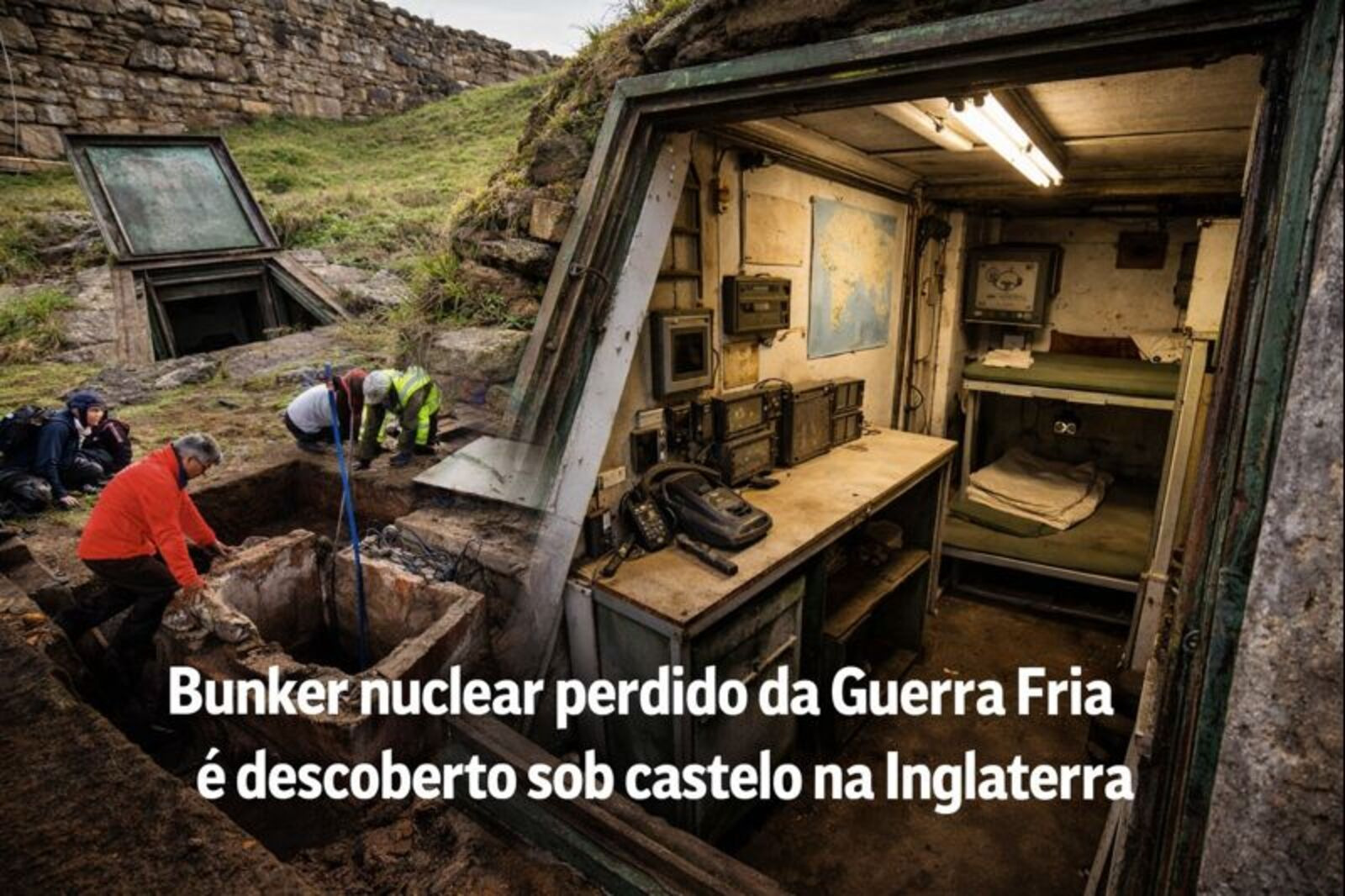
Archaeologists have located a Cold War bunker hidden beneath Scarborough Castle in northeastern England, following excavations that began on March 7. Closed for over 50 years, the structure reinforces the extent of the British network created to monitor nuclear attacks.
Discovery Beneath the Castle
The underground bunker was found on the grounds of Scarborough Castle after experts cross-referenced historical records with a recent topographical survey of the area to pinpoint the likely location of the former post.
The excavations began on March 7. Shortly thereafter, the team discovered the entrance to the structure, which had remained sealed and forgotten since the 1960s.
-
The battery that promises to change cell phones and electric cars still has a microscopic enemy: researchers discover how lithium dendrites pierce the solid electrolyte and are already testing ways to prevent cracks and short circuits.

-
An old ferry rusted for more than 10 years in New York, almost sank after the engine room was flooded, and now volunteers are rushing to clean the hull, remove wires, life jackets, and loose paint before sinking it in the Atlantic to become an artificial reef full of marine life.

-
SpaceX launch turned Falcon 9 into a giant jellyfish in the night sky, with a colorful plume illuminated by the Sun at high altitude, confusing observers and showing how a routine flight can become a rare spectacle of atmospheric physics over Earth.
-
Advancement in science: a new plastic developed by researchers in the USA combines structural strength and thermal blocking in a single technology, opening new possibilities for construction, transportation, electronics, and sustainable solutions with a direct impact on global energy efficiency.



The discovery was conducted by English Heritage, the organization responsible for managing several British historical sites.
Cold War Structure
The Scarborough bunker was built between 1963 and 1964, during a period marked by the fear of nuclear war.
The facility was part of a national network of over 1,500 similar posts spread across the UK.
These posts were designed to detect nuclear explosions and measure levels of radioactive fallout in the event of conflict.
The bunker was part of the network operated by the Royal Observer Corps, established at the height of nuclear tensions.
After carefully opening the sealed hatch, archaeologists used cameras to examine the interior of the underground chamber and assess its condition.
How the Posts Worked
The Royal Observer Corps posts followed a standardized model designed to protect occupants from the immediate effects of a nuclear detonation.
Generally, they were small underground chambers equipped with monitoring instruments, communication systems, and bunk beds.
During the height of the Cold War, the ROC had over 20,000 volunteers. They were responsible for identifying nuclear explosions and relaying information that helped British authorities estimate the scale and location of possible attacks.
Kevin Booth, head of collections at English Heritage, stated that there was an ROC post within a few miles of almost anywhere in Britain, although few people were aware of the existence of these facilities.
Centenary Project
Booth also noted that the Scarborough promontory has served as an observation point for thousands of years, with occupations ranging from the Bronze Age to a World War I artillery battery.
The excavation is part of a broader project commemorating the 100 years of the Royal Observer Corps, celebrated in 2025.
The initiative, supported by the National Lottery Heritage Fund, aims to gather stories from the organization, locate former members, and prepare an event at the Cold War Bunker in York.
For Helen Featherstone, director of the Heritage Fund, the discovery adds an important chapter to the history of the Cold War in Britain and highlights the role of ROC volunteers.
With information from Revista Galileu.