






 Portuguese
  Spanish
  3 min of reading
  0 comments


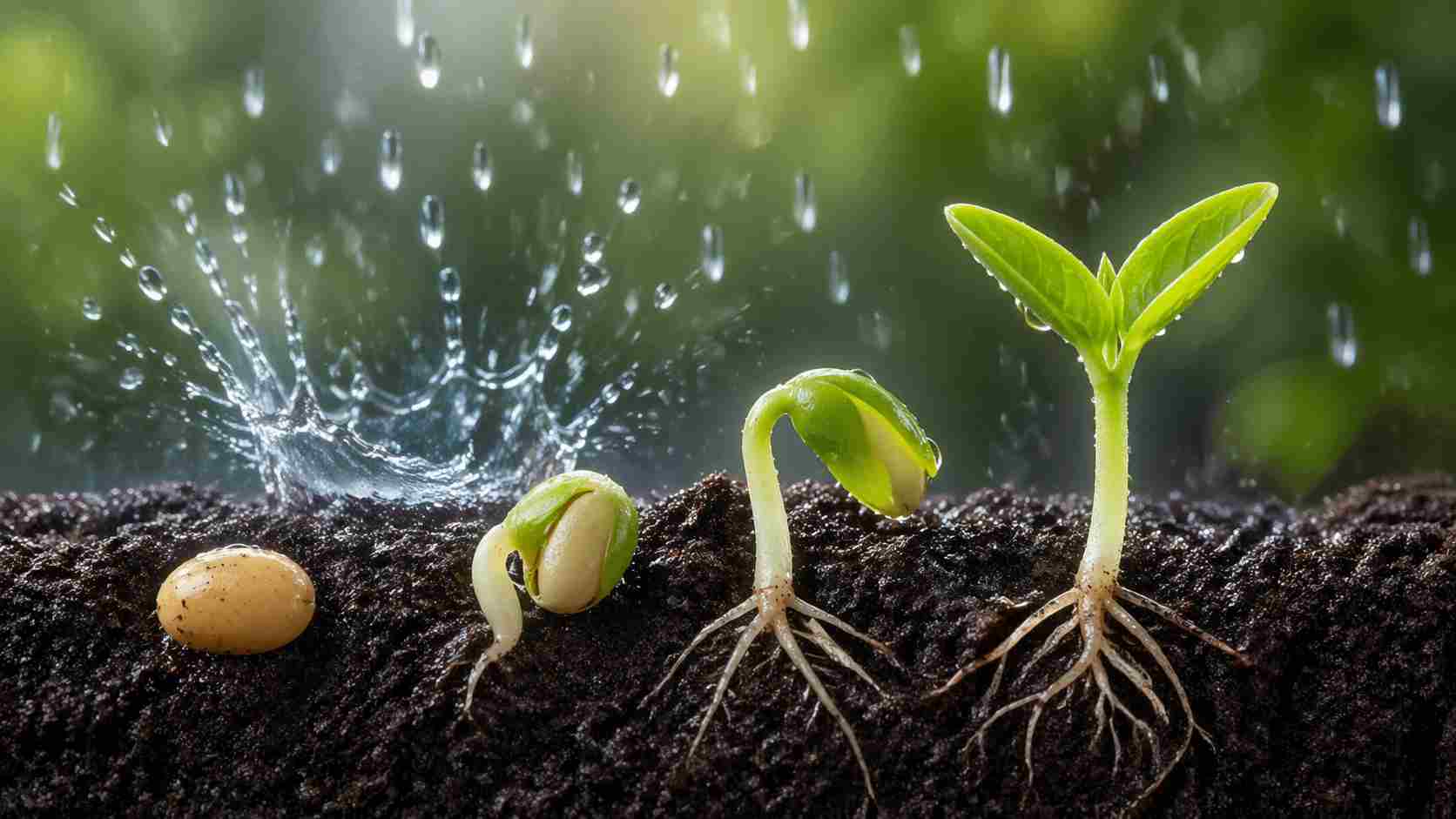
The sensory capacity of seeds to detect sound vibrations of water allows plants to prepare for growth even before they get wet.
A recent scientific study found that seeds have the sensory capacity to detect environmental sounds, using the sound vibrations of rain to accelerate their growth process.
The study demonstrates that by “hearing” the sound of falling water, seeds activate biological mechanisms that result in a germination up to 40% faster compared to those kept in silent environments. This evolutionary adaptation allows plants to take advantage of ideal moisture windows to ensure their survival in variable climatic conditions. The discovery opens new frontiers for precision agriculture and for understanding the communication between flora and the environment.
The sensory mechanism of seeds under sound stimulation
Researchers conducted experiments using specific sound frequencies that mimic the noise of rain and the flow of water in the soil.
-
The legendary oak that, according to the story, hid Robin Hood from the Sheriff of Nottingham, died at the impressive age of 1,200 years in England, and the first chilling sign of its end was that no leaves sprouted on the tree this spring.

-
While the world looks at forests, the UN warns that the Earth is also threatened by the silent degradation of natural grasslands and savannas, ecosystems that cover half of the planet, support billions of people, and can exacerbate water, food, and climate crises.
-
The future of computers may change sooner than expected: Amazon bets on commercial quantum computing within seven years, while qubits, the Ocelot chip, AI, and scientific simulations take center stage in the new race among big techs.
-
Cheaper than new HB20, Onix, and Argo, this German sedan offers a 510-liter trunk, a 2.0 naturally aspirated engine, a 6-speed Tiptronic automatic transmission, and well-known mechanics; the 2016 Volkswagen Jetta Comfortline still draws attention in the used car market.

When exposed to these acoustic stimuli, the seeds showed an immediate physiological response, preparing their cellular structures for nutrient absorption even before physical contact with the liquid. This phenomenon of germination up to 40% faster occurs because sound acts as an early warning signal, reducing the seed’s dormancy period.
The study details that the mechanical vibrations of sound affect the permeability of seed membranes, facilitating the entry of water and oxygen.
The biochemical analysis revealed that sound waves induce changes in the levels of plant hormones, such as abscisic acid and gibberellin, which control the onset of growth. In samples exposed to the sound of rain, a faster degradation of starch reserves was observed, providing immediate energy for the embryo. The efficiency of this process, which leads to germination up to 40% faster, suggests that seeds are not just passive containers, but active organisms that monitor the sound environment around them.
The research isolated different frequencies to confirm that only sounds associated with vital resources, such as water, trigger this positive reaction.
Impacts on agricultural productivity and environmental restoration
The practical application of this discovery could revolutionize the way large plantations are managed, especially in regions prone to short droughts or irregular rainfall periods.
By using devices that emit optimized sound frequencies, farmers could induce a germination up to 40% faster, ensuring that crops establish themselves more uniformly and vigorously. This acoustic stimulation technique represents a sustainable alternative to the use of chemicals to accelerate plant growth.
Additionally, synchronizing planting with sound stimulation could reduce financial losses caused by seeds that fail to sprout in time to take advantage of the wet season.
In reforestation projects, using sounds that promote germination up to 40% faster can drastically increase success rates in recovering degraded areas. Seeds of native species, often difficult to cultivate in the lab, showed encouraging responses to acoustic treatment. The study suggests that urban noise pollution may, conversely, interfere with these natural signals, hindering plant growth in metropolitan areas.
Therefore, protecting the natural acoustics of ecosystems emerges as a new factor in biological conservation to maintain the health of forests and gardens.
The future of plant bioacoustics research
The scientific community is now planning to investigate whether other plant species use different sounds, such as the buzzing of pollinators, to activate other phases of their life cycle. The evidence that the sound of rain causes germination up to 40% faster is just the first step in understanding the complex “vibrational alphabet” of plants.
High-sensitivity monitoring equipment will be installed in natural environments to capture how seeds interact with the wild soundscape. Upcoming experiments will focus on identifying the specific cellular receptors that capture these mechanical waves and transform them into chemical signals.
The study concludes that the auditory perception of seeds is a fundamental climate resilience tool for global biodiversity. By unraveling the secrets behind up to 40% faster germination, scientists hope to create smarter cultivation models adapted to the planet’s changes. The integration of bioacoustics into plant biology transforms the traditional view of plant sensitivity, revealing a world of dynamic and silent interactions. The discovery reaffirms that nature possesses sophisticated communication mechanisms that science is only beginning to decipher.
Click here to access the study.






Be the first to react!