Portuguese
  Spanish



From Production in Sugar Mills to the Revolt in Rio de Janeiro: Understand How Cachaça Became an Economic and Political Symbol in the 17th Century
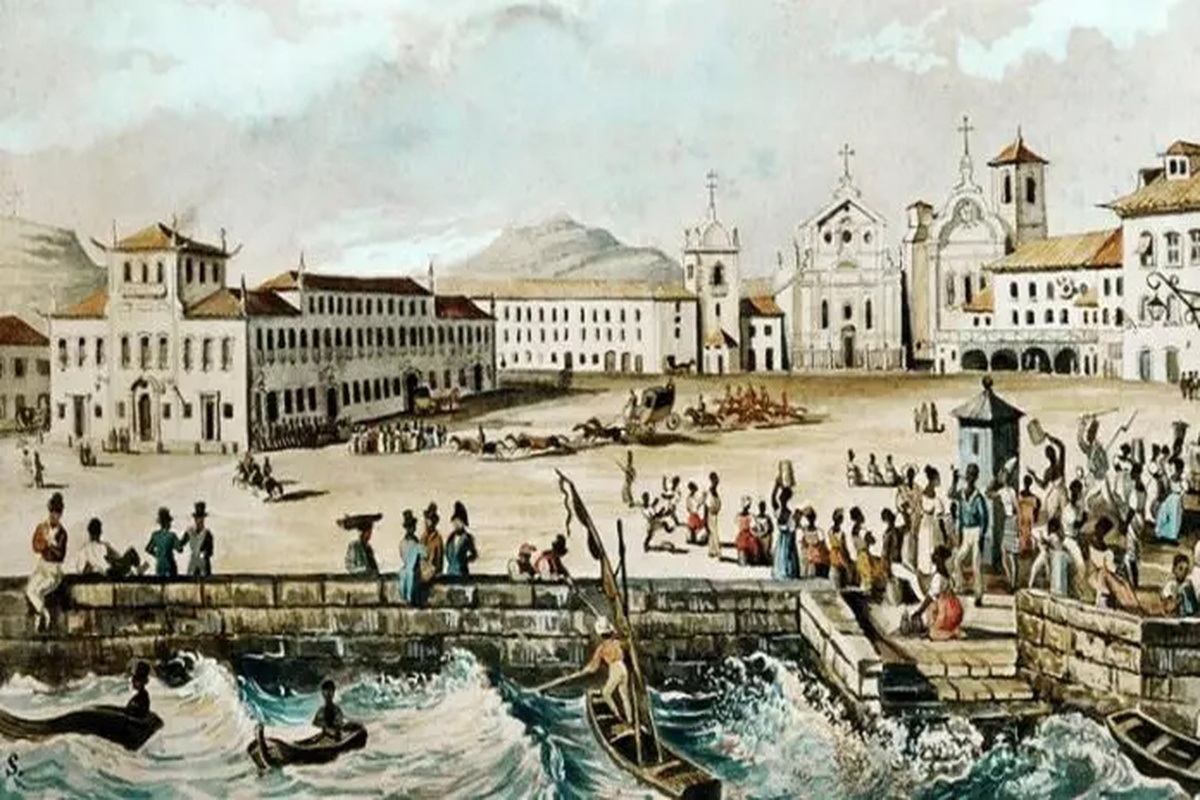
The cachaça, a distilled spirit made from sugarcane, emerged in the 16th century during the consolidation of sugar mills in colonial Brazil.
Initially, the fermented liquid was a result of the use of juice and molasses from sugar production.
Over time, the drink gained its own identity and began to circulate widely among workers, merchants, and landowners.
Thus, even in the early years of colonization, sugarcane brandy ceased to be merely a byproduct and became integral to the colony’s economic dynamics.
Sugar Production Fuels the Emergence of Cachaça
With the introduction of sugarcane by the Portuguese around 1532, sugar mills came to dominate regions like Bahia and Pernambuco.
In this context, the fermentation of sugarcane juice produced a strong and affordable drink.
According to historical records cited by researchers of Brazilian food culture, cachaça quickly became popular among enslaved people and workers in the sugar mills.
Moreover, production expanded throughout the 17th century, accompanying the growth of the sugar economy.
In this way, the distilled spirit established itself as a regular product on rural properties.
Cachaça Gains Economic Importance in Atlantic Trade
Subsequently, by the 17th century, cachaça surpassed domestic consumption and became part of the Atlantic trade.
According to historical studies mentioned by the magazine Superinteressante, the drink was used as a barter currency in the slave trade between Brazil and Africa.
Consequently, its economic value increased significantly.
At the same time, however, the expansion of cachaça generated tension with the Portuguese Crown.
This was because the drink competed with the bagaceira produced in Portugal.
Thus, colonial authorities decided to restrict and tax its production at different times.
-
Thailand Converts 8 Tons of PET Bottles into 3,500 School Backpacks, Showcasing Circular Economy with Over 40 Factories Involved

-
Mysterious Bats Spotted in Paris’s Père Lachaise Cemetery, Drawing Tourists to the “Vampire Cemetery”

-
From Selling Street Food to Leading a $300 Million Construction Firm: The Journey of a Brazilian Entrepreneur

-
Abandoned Penthouse in Houston Reveals Million-Dollar Suite with 24-Karat Gold, Tiffany Crystals, and Opulence Even Elvis Might Have Snubbed




Taxes Spark the Cachaça Revolt in 1660
In November 1660, in Rio de Janeiro, producers and merchants reacted to the restrictions imposed on cachaça.
The so-called Cachaça Revolt, which lasted until April 1661, was motivated by what were considered abusive taxes.
According to historical records, the movement directly challenged the fiscal policy of the colonial government.
Although it did not have a separatist character, the revolt represented one of the first organized popular manifestations in Portuguese America.
During the uprising, local leaders managed to pressure Governor Salvador Correia de Sá e Benevides.
However, official forces regained control of the city in 1661.
Repression and Resumption of Production
After the repression, some participants were punished, and leaders were executed or sent to Portugal.
Still, cachaça production was subsequently reestablished.
This occurred because the drink already played a strategic role in the colonial economy.
Furthermore, in 1695, official trade between Brazil and Africa was reorganized, which once again reinforced the circulation of the distilled spirit.
Thus, despite attempts at control, cachaça maintained its economic relevance.
Historical Legacy of the Brazilian Drink
Over the following centuries, cachaça solidified its status as a cultural and economic symbol of Brazil.
Its origin linked to sugar mills, its role in the Atlantic trade, and its direct relation to the Cachaça Revolt highlight its historical importance.
Therefore, the drink that began as a byproduct of sugar became the main player in one of the first fiscal conflicts in the colony.
In this way, this story reveals not only consumption habits but also economic and political disputes of colonial Brazil.
Do you consider that the Cachaça Revolt was merely a tax conflict or an initial milestone of economic resistance in colonial Brazil?