






 Portuguese
  Spanish


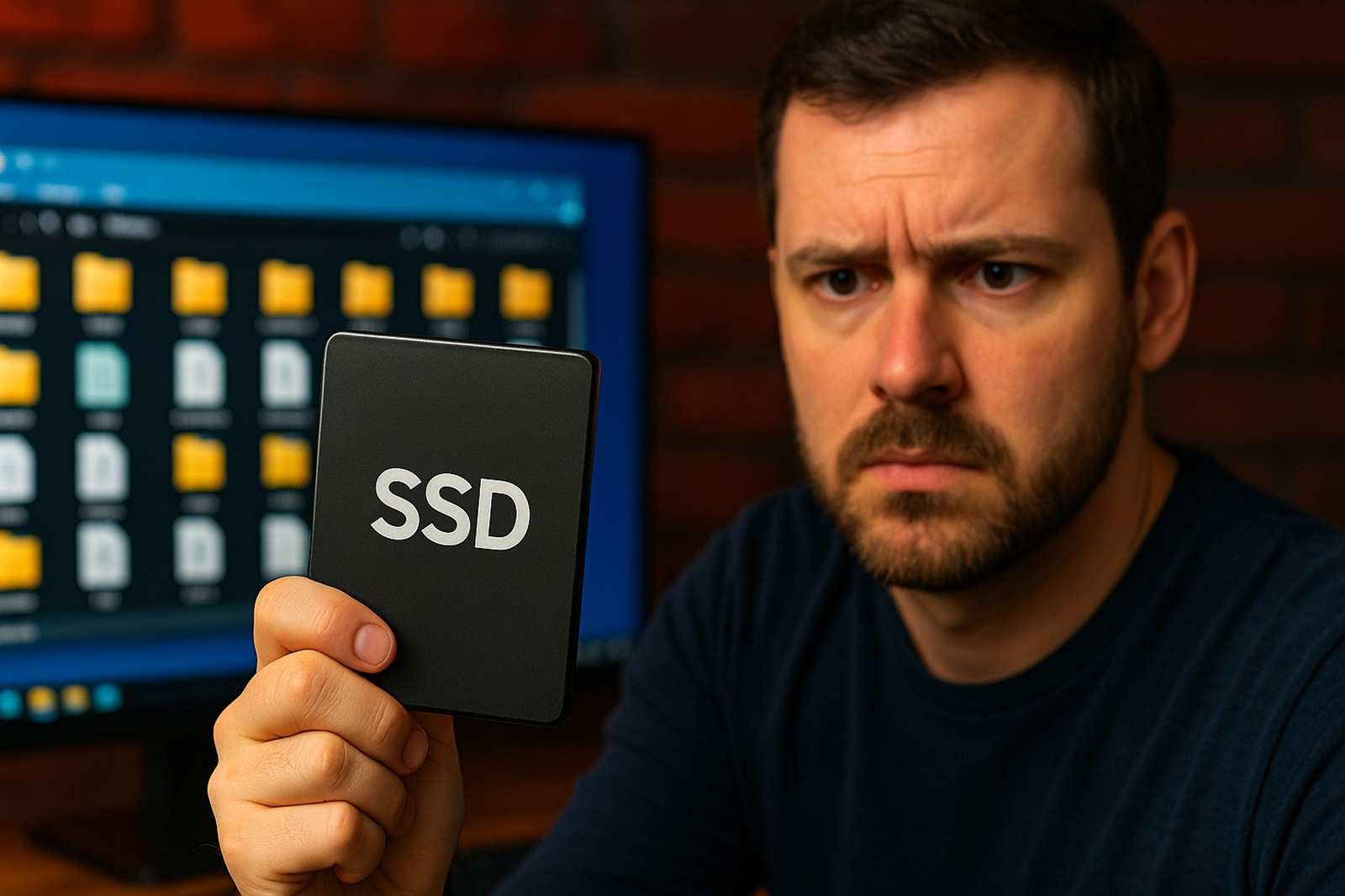


When Acquiring An SSD That Seemed Fully Sealed, A Buyer Was Surprised To Find 800 Gigabytes Of Storage Already Filled, Including High-Value Software, Raising Security, Piracy, And Return Control Concerns
A man bought an SSD that was supposed to be completely new but found almost 800 gigabytes of pre-loaded files right after connecting it to his computer. The device, sold as sealed and with a capacity of 1 terabyte, seemed perfect for a simple upgrade.
However, it revealed a complete set of high-quality music production tools, including Kontakt, Reaktor, and other professional programs. None of this was supposed to be there.
The buyer, identified on Reddit as All-Seeing_Hands, shared screenshots on the r/pcmasterrace forum, and the case quickly gained attention.
-
Thailand Converts 8 Tons of PET Bottles into 3,500 School Backpacks, Showcasing Circular Economy with Over 40 Factories Involved

-
Mysterious Bats Spotted in Paris’s Père Lachaise Cemetery, Drawing Tourists to the “Vampire Cemetery”

-
From Selling Street Food to Leading a $300 Million Construction Firm: The Journey of a Brazilian Entrepreneur

-
Abandoned Penthouse in Houston Reveals Million-Dollar Suite with 24-Karat Gold, Tiffany Crystals, and Opulence Even Elvis Might Have Snubbed




The images showed software valued at over a thousand dollars, all packed in .rar files with clear signs that they had been cracked. The incident sparked an urgent discussion about the dangers of returned products being reinserted into the market without proper verification.
When A “New” SSD Becomes A Gateway To Piracy And Security Risks
The incident goes far beyond a simple stock error. It exposes a dangerous blind spot in how retailers handle returned devices. These units return to shelves without undergoing deep cleaning, allowing pirated software, malicious files, or even personal data to inadvertently end up in the hands of the next buyer.
Previous investigations have indicated the extent of the problem. In 2020, the Information Commissioner’s Office in the UK revealed that over 60% of used storage devices still contained data from previous owners.
That research focused on privacy, but the SSD case amplifies the warning and shows that poorly handled returns can also pave the way for security breaches and software piracy.
Pirated Files Carry Real And Silent Risks
The cracked files found on the SSD did not just represent a license violation. They also created a direct vector for attacks. Pirated software, especially distributed in compressed packages, often comes with hidden malicious code that bypasses simple antivirus checks and only activates when the user opens the file.
Data from Kaspersky supports this concern. In the 2023 MDR report, the company identified tampered audio tools and unauthorized plugins as one of the main sources of infection within the creative sector. Over 1.3 million cases in a single year arose from this type of distribution.
The company also noted that many recent attacks reuse leaked or modified tools from previous campaigns, allowing criminals to automate more complex invasions without direct interference.
Although the percentage of serious incidents related to malware slightly decreased in 2023, attacks have become harder to detect. Software related to music production has turned into effective hiding places for sophisticated threats.
The Failure In The Return And Reinspection Process
The most likely explanation for the case points to a return handled without the necessary care. In many retail environments, the tests applied to returned products only check basic functionality and interface stability. They do not examine the file system or perform secure wipes.
Users on Reddit suggested that the buyer use tools like CrystalDiskInfo to check the hours of use and identify possible hidden partitions. These indicators help reveal when a supposedly new device has had previous use.
The ICO’s 2020 report already warned that the lack of complete wiping compromises consumer privacy and security. The SSD involved in the case likely bypassed any formal sanitization procedure. This exposed the buyer to licensing violations, malware risks, and potential legal issues.
The presence of professional audio tools also introduces another type of risk. Companies like Native Instruments monitor the use of their software rigorously. If the user were to install any unauthorized file, even unknowingly, they could face legal consequences related to intellectual property.
A Problem That Arises From The Retail System Itself
The case does not represent an isolated incident. It stems from a business model focused on speed and volume, in which stock turnover surpasses thorough checks. The fast pace, automation, and cost-cutting measures create a fragile system for handling data-storing devices.
NIST guidelines, such as the SP 800-88 Rev. 1 standard, define clear procedures for sanitizing devices. However, much of retail does not follow these recommendations rigorously. Many products return to stock with minimal checks, and items that should undergo secure wiping end up reinserted into the market as if they were new.
The average consumer hardly perceives the risk. An SSD with leftover files behaves normally and shows no obvious signs of threat. Even so, it may carry spyware, backdoors, or pirated software that compromises the entire system.
The case highlights a structural failure: if the content of storage devices is not rigorously verified, packaging loses its real value. The risk has already reached the desk of an average user, signaling the urgency for safer practices throughout the distribution chain.







Onde comprou ? Qual é a marca ? ?????