Portuguese
  Spanish


The gym owner faces an expensive fitness market: in the popular gym, medium gym, and premium gym, the simulated scenarios show an investment of R$ 430 thousand to R$ 1.87 million, profit dependent on loyal students, timely payments, energy, rent, payroll, marketing, and control of monthly costs.
The gym owner in Brazil may find a huge fitness market, but also an operation full of fixed costs, risks, and tight margins. In simulated scenarios for popular gym, medium gym, and premium gym, the initial investment ranges from R$ 430 thousand to R$ 1.87 million.
In a video released by the channel Economia Oculta on June 16, 2026, the analysis shows how much the business can earn and profit when it reaches operational maturity, with estimated bases of 400, 800, or 1,000 students. The calculation considers structure, equipment, working capital, rent, energy, payroll, maintenance, marketing, taxes, tuition fees, and extra income.
Fitness market is huge, but does not forgive weak management

Brazil appears as the second largest fitness market in the world in terms of the number of gyms. This helps explain why so many people look at the sector as a business opportunity, especially in neighborhoods with demand for health, aesthetics, and well-being.
-
Thailand Converts 8 Tons of PET Bottles into 3,500 School Backpacks, Showcasing Circular Economy with Over 40 Factories Involved

-
Mysterious Bats Spotted in Paris’s Père Lachaise Cemetery, Drawing Tourists to the “Vampire Cemetery”

-
From Selling Street Food to Leading a $300 Million Construction Firm: The Journey of a Brazilian Entrepreneur

-
Abandoned Penthouse in Houston Reveals Million-Dollar Suite with 24-Karat Gold, Tiffany Crystals, and Opulence Even Elvis Might Have Snubbed



But market size does not mean automatic profit. The gym can be full and still leave little money in the owner’s pocket, because rent, energy, payroll, maintenance, and taxes come every month, regardless of the number of active students.
For the gym owner, the main question is not just how much it costs to open. The tougher question is how much it costs to keep the operation running until the student base matures and recurring revenue surpasses the break-even point.
Popular gym can profit R$ 8,566 per month, but only with 400 students
In the popular model of the source, the gym has up to 400 m² and about 400 students. The total estimated investment to set up an organized structure is R$ 430,000.
Of this amount, R$ 342,550 corresponds to physical investment, such as equipment, renovation, flooring, electrical work, air conditioning, and initial structure. Another R$ 87,450 is allocated as working capital to sustain the first six months while the student base is still growing.
This working capital is one of the most overlooked parts by those dreaming of opening a gym. Without a reserve, the business can fail before reaching the necessary volume of enrollments and monthly fees.
Equipment is not the only major expense of the gym
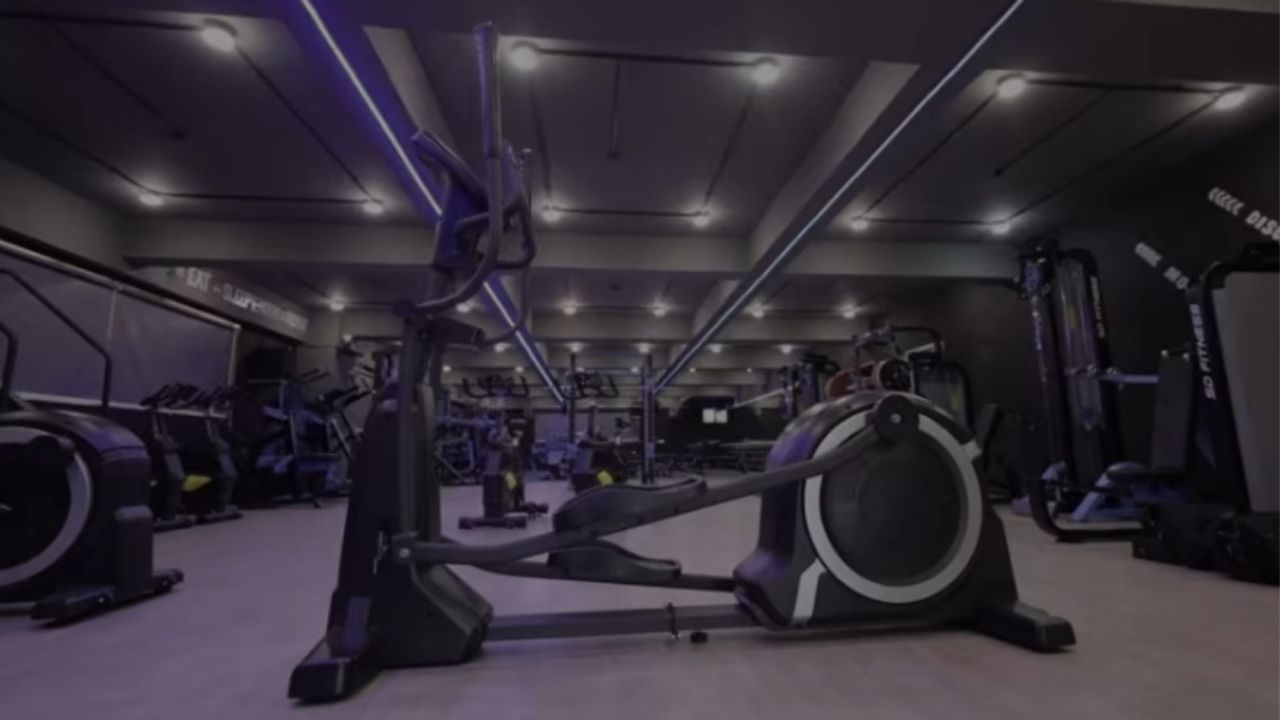
In the scenario of the popular gym, the equipment consumes R$ 168,750 of the physical investment. It’s a high amount, but it doesn’t stand alone in the account.
The infrastructure appears almost at the same level, with R$ 162,800 allocated to renovation, flooring, electrical work, and air conditioning. This shows that the gym owner doesn’t just invest in machines; they also need to create an environment capable of retaining students.
A poor structure can drive away clients even with good equipment. The environment weighs on the student’s retention as much as the training schedule, especially when there is nearby competition and similar monthly fees.
Monthly cost of the popular gym reaches R$ 31,900
After the opening, the most difficult part begins: covering the operational cost. In the popular model, the estimated monthly expense is R$ 31,900.
The rent is R$ 8,000. Electricity appears as one of the main villains, at R$ 4,000 per month. Water, internet, cleaning, materials, management system, accounting, fees, insurance, maintenance, marketing, and depreciation reserve complete the account.
The payroll adds up to R$ 12,900 already considering real CLT costs throughout the year. In other words, before talking about profit, the gym needs to overcome a heavy and recurring fixed expense.
Popular can earn R$ 8,566 per month, but only with 400 students

In the presented scenario, the popular gym reaches R$ 47,300 in monthly revenue with 400 active students. The effective average ticket is R$ 118 per student, combining monthly plans, annual plans, individual students, enrollment, and product sales.
After deducting R$ 6,834 in taxes and R$ 31,900 in operational costs, the estimated net profit is R$ 8,566 per month. The approximate margin is 18.1%.
For the gym owner, this number shows that the business can work, but it doesn’t leave as much as many people imagine. The difference between profit and loss can be in just a few dozen paying students.
The breakeven point mentioned for this model is 322 students. Below that, the gym may still struggle to cover monthly costs. Additionally, the average churn cited is between 8% and 12%, which requires constant student replacement.
Medium gym changes the game and increases return
In the intermediate scenario, the medium gym has about 800 m² and approximately 800 students. The total investment rises to R$ 920,000.
Of this amount, R$ 789,600 is physical investment and R$ 130,400 is kept as working capital for the first six months. The expenditure on equipment reaches R$ 375,000, while the infrastructure amounts to R$ 352,600.
The medium gym requires more capital, but also creates more revenue possibilities. With more space, more students, and more services, the business no longer depends solely on the basic membership fee.
Operational cost of the medium gym exceeds R$ 62,000
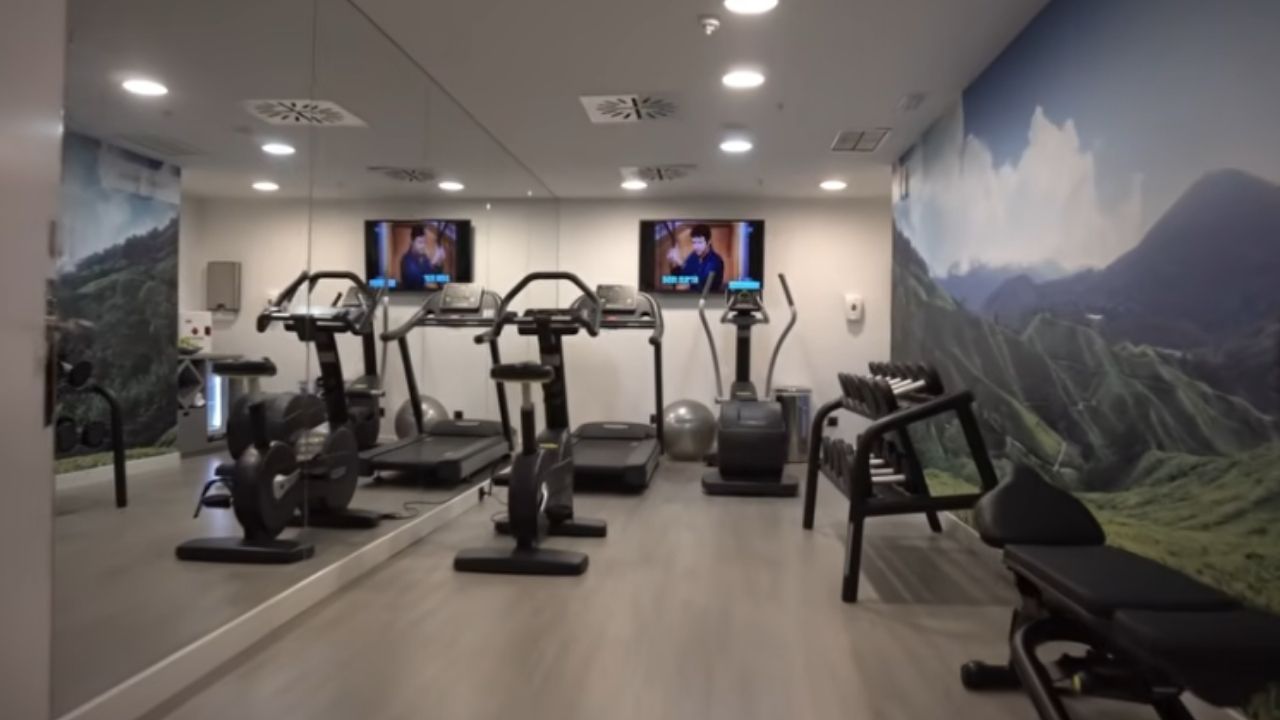
Maintaining a medium gym in operation costs much more. The estimated monthly operational cost reaches R$ 62,750.
The rent rises to R$ 18,000 for an 800 m² property. The payroll reaches R$ 23,750, already including six employees and a dedicated manager. Electricity costs R$ 9,000, and marketing increases to R$ 4,000 monthly.
Preventive maintenance is R$ 2,500 per month, and the depreciation reserve is R$ 4,500. With hundreds of thousands of reais in machines, ignoring maintenance turns apparent savings into future losses.
Average gym can generate R$ 33,477 in net profit
With 800 active students, the estimated gross revenue of the average gym reaches R$ 116,900 per month. The effective average ticket rises to R$ 146 per student.
The revenue combines monthly plans, annual plans, physical evaluations, product sales, and group classes. After taxes of R$ 20,673 and operational costs of R$ 62,750, the projected net profit is R$ 33,477.
In this scenario, the estimated margin is 28.6%. For the gym owner, the average gym delivers a more robust return but requires more professional operation and speed to reach the base of 800 students.
The cited break-even point is 432 students. This means that even with a larger structure, the business needs to quickly form a solid base so as not to become too burdensome on the cash flow.
Premium gym requires R$ 1.87 million to open

At the top of the simulation is the premium gym. Here, the total estimated investment is R$ 1.87 million.
Of this amount, R$ 1.664 million corresponds to physical investment, and R$ 206,000 is working capital. Just the equipment consumes R$ 850,000, while the infrastructure reaches R$ 694,000.
The proposal completely changes. The premium gym does not just sell training; it sells experience, environment, service, and high-standard perception. Therefore, finishing, air conditioning, lighting, locker rooms, and maintenance need to support the positioning.
Premium can earn R$ 247,300 per month
With 1,000 active students, the premium gym reaches an estimated gross revenue of R$ 247,300 per month. The average ticket reaches R$ 247 per student.
The composition involves monthly plans, annual plans, personal training, nutritional evaluation, store, and premium group classes. It is a model with more revenue sources, but also with much higher costs.
The monthly operational cost reaches R$ 130,500. The rent in a prime location is around R$ 35,000, the payroll reaches R$ 45,500, and electricity costs R$ 18,000.
Premium profit is higher, but complexity also grows
After paying R$ 43,053 in taxes and R$ 130,500 in operational costs, the estimated net profit for the premium gym is R$ 73,747 per month.
The approximate margin is 29.8%. The return on physical investment is estimated at about 23 months after the business matures. The breakeven point is 528 students.
For the gym owner, this is the most profitable scenario of the simulation, but also the most difficult to manage. When the client pays for a premium experience, any failure weighs more: broken equipment, poor service, neglected locker room, or worn-out environment can affect retention.
Energy, rent, and payroll are the invisible villains
The source shows that a gym’s profit does not depend solely on selling plans. The big villains are the fixed costs that repeat every month.
Electricity, rent, and payroll appear as critical expenses in all models. As the gym grows, these costs rise along with it, requiring strict cash control.
The most dangerous mistake is to look only at gross revenue. A gym with high revenue can profit little if it does not control delinquency, maintenance, churn, marketing, charges, and equipment replacement.
Loyal student is worth more than isolated enrollment
The gym business depends on recurrence. The student who stays for months or years generates predictability, reduces pressure on marketing, and improves the financial health of the operation.
Therefore, annual plans, good service, pleasant environment, timely maintenance, and a sense of community make a difference. Attracting a student is expensive; keeping a student is what protects the margin.
The gym owner who understands this stops thinking only about new enrollments and starts looking at retention, cancellation, frequency, satisfaction, and customer relationship.
Seasonality and delinquency can bring down the cash flow


The source also points out typical risks of the sector. January and February tend to be strong months, driven by New Year’s resolutions. However, March, July, and December may experience higher dropout rates.
Moreover, default appears as a historical problem for gyms in Brazil. When a student delays or cancels, revenue drops, but costs remain.
The cash flow needs to be prepared to get through weak months. Without reserves, a gym may seem healthy in a peak month and struggle shortly after.
Gym owner earns more when mastering costs
How much a gym owner earns depends less on the size of the dream and more on the quality of management. In the simulation, the popular gym profits R$ 8,566 per month, the average reaches R$ 33,477, and the premium hits R$ 73,747.
But these values depend on maturation, number of students, timely payments, retention, control of energy, rent, payroll, maintenance, marketing, and taxes. Without management, the fitness market can become a bill-generating machine.
Do you think opening a gym is still worth it in Brazil, or have fixed costs made the business too risky? Which model seems more realistic: popular, average, or premium? Share your opinion.