






 Portuguese
  Spanish
  6 min of reading
  0 comments


Mainha’s House, a renovation that architect Zé Vágner did on his own mother’s simple house in the hinterlands of Pernambuco, was elected the work of the year at ArchDaily 2026. With low-cost solutions and natural ventilation, the popular house won the world’s largest architecture award voted by the public.
It wasn’t a millionaire mansion that won the largest architecture award decided by the public on the planet. It was Mainha’s House, a simple house in the hinterlands of Pernambuco, renovated by a son for his own mother. The work of the Pernambuco architect Zé Vágner was elected the Work of the Year in the February 2026 edition of the ArchDaily Building of the Year, after receiving more than 120,000 votes from readers in over 100 countries, according to a report by Correio Braziliense.
The story resembles David versus Goliath. While the architecture award usually crowns projects with gigantic budgets, the winner this time was a renovation of low cost done in the Pernambuco interior, with cobogós, neighborhood labor, and materials from the region itself. The name says it all: “mainha” is how many people in the Northeast call their mother, and the house is precisely that of Zé Vágner’s mother, Dona Marinalva, a seamstress.
It wasn’t a mansion, it was the mother’s house in the hinterlands of Pernambuco
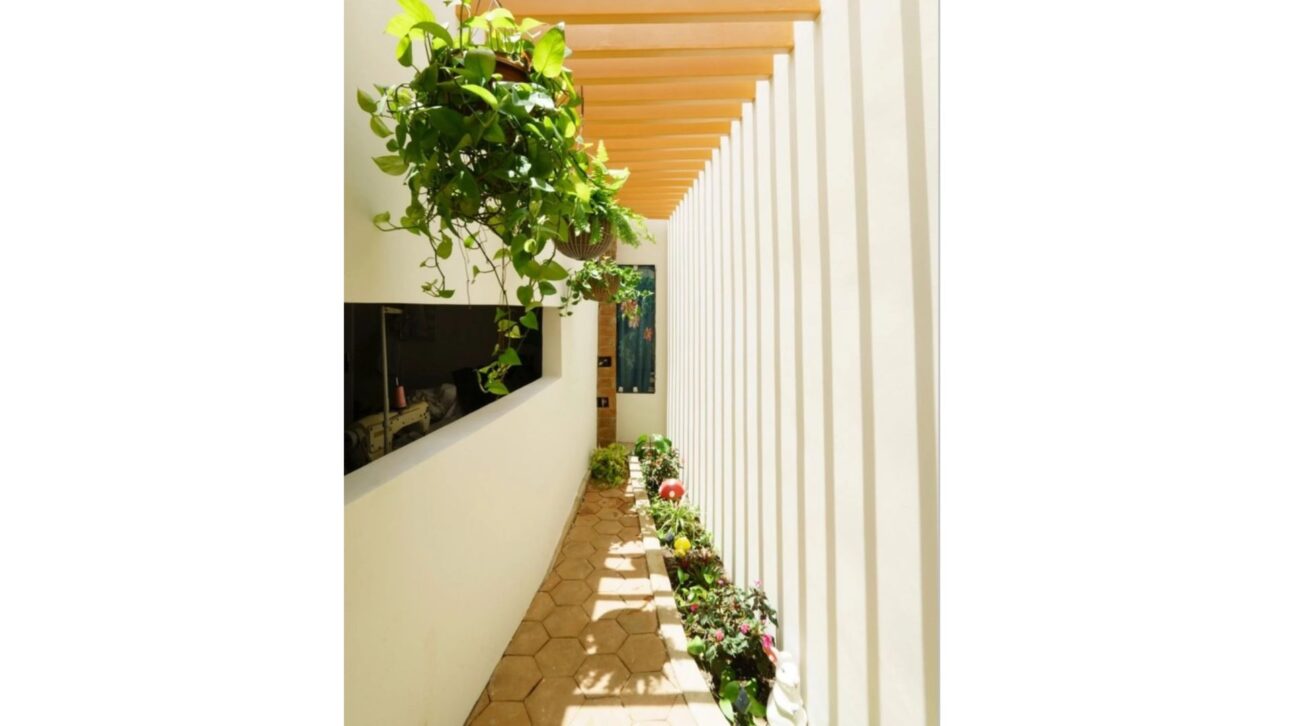
The protagonist of the story is Dona Marinalva, a seamstress, owner of the house located in Feira Nova, a small town in the hinterlands of Pernambuco. The original construction is from the 1980s, built with traditional techniques from the region, and was renovated by her son, the architect Zé Vágner. The result of this low-cost renovation has just surpassed works from all over the world.
-
Couple trades four-bedroom house in Canada for a retired school bus costing less than $7.5k bought on Facebook, dismantles the vehicle down to the screws, and transforms the yellow scrap into a luxury home on wheels, with a bedroom, bathroom, kitchen, and handmade skylight.

-
Tired of seeing residents sleeping on the streets, a U.S. city approved a village with 55 micro-houses, rent starting at $300, and an 1880 school transformed into a community center to accommodate people without requiring a minimum income.
-
Mato Grosso inaugurates the first 162 km stretch of the largest railway project underway in Brazil, with around R$ 5 billion invested to transport 10 million tons of grains per year to the Port of Santos.

-
Without money to pay rent and without an architect’s degree, a man took a chisel, chainsaw, and hammer, carved a house into the hillside, and built a fairy-tale dwelling that looks like it’s straight out of The Lord of the Rings in just four months for less than R$ 25,000.



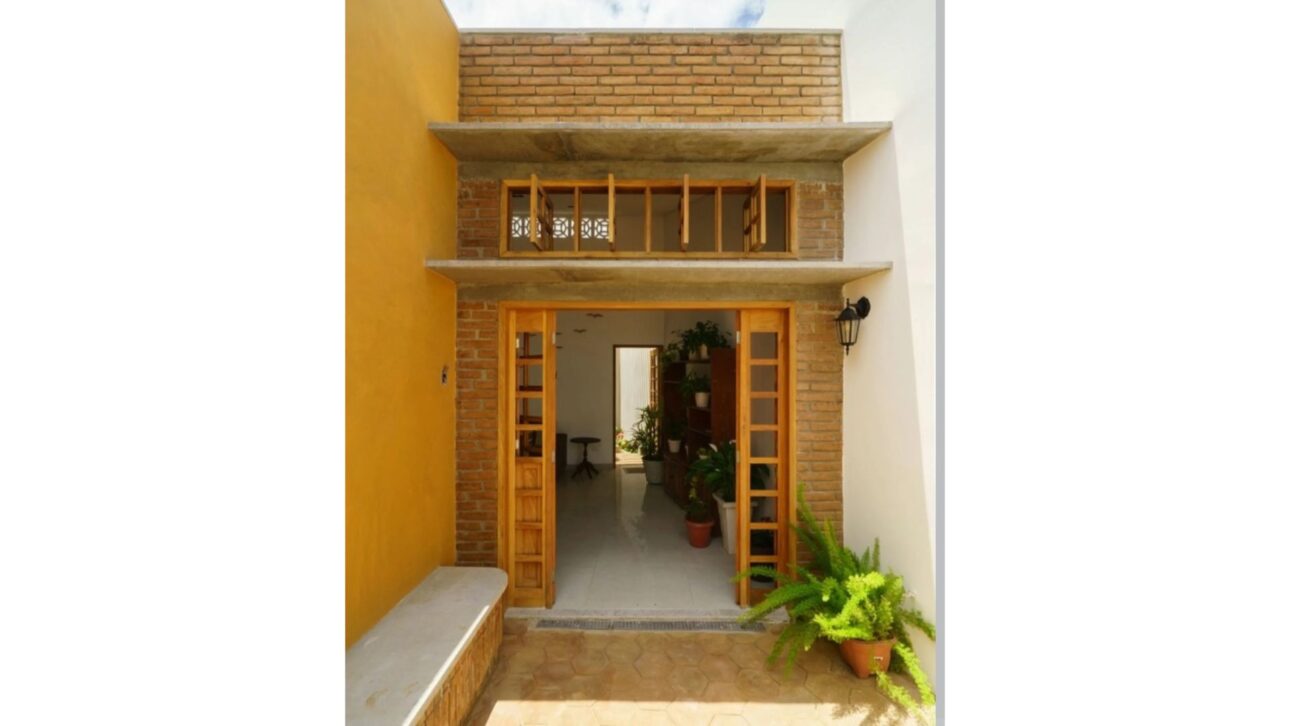
The contrast is what makes the case so strong. The same architecture award that in other editions applauded works from major firms chose, this time, a modest house from a small town. The Casa de Mainha does not have imported marble or a glass facade. It features adobe, wood, tile, and ceramics, the local materials that have always been there in the hinterland of Pernambuco, as detailed by Correio Braziliense.
And the project did not erase the old house to build another on top. Zé Vágner started from what already existed and made adjustments, preserving the family’s memory and the identity of the construction. It was this decision to respect the place, instead of imposing a monumental gesture, that won over the public at the world’s largest architecture award.
Cobogós of R$ 11 and the natural ventilation that enchanted the world
The heart of the project lies in solving the heat without air conditioning, and that’s where natural ventilation comes in. Zé Vágner worked on the ceiling height and roof slope to make room for a line of cobogós, the hollow blocks that allow air to circulate. The detail that becomes a symbol of everything is the price. “I found pieces for R$ 11 and used 11 units to create the exhaust on the facade facing the west. It’s an accessible and efficient solution,” the architect told CAU/BR.
The low-cost engineering is evident in every choice. Besides the cobogós, concrete brises and hollow elements were used on the facade, which protect from the sun while ensuring natural cross ventilation, keeping the house cool without relying on energy. Everything was designed for the hot climate of the hinterland of Pernambuco, where the sun is harsh and the electricity bill is heavy.
None of this came from luxury suppliers. The execution involved local labor, made up of nearby residents who participated in the construction, according to CAU/BR. The materials are those of the land, such as adobe and ceramics. The lesson is that natural ventilation and comfort do not depend on expensive technology, but on intelligent design, the kind of low-cost solution that fits the reality of most Brazilian families.
The world’s largest architecture award voted by the public
The ArchDaily Building of the Year is not just any award. The 2026 edition received more than 120,000 votes from readers in over 100 countries, making it the largest architecture award decided by the community in the world, according to Correio Braziliense. It is not a closed jury of a handful of critics; it is the global public pointing out what they consider the best.
Among so many competitors spread across the planet, it was a low-cost renovation in the hinterland of Pernambuco that rose to the top in the house category. A popular work, made with what the region offers, surpassed projects with very high budgets and brought the title of Building of the Year to Brazil.
Winning an architecture award of this size, with votes from people in more than a hundred countries, shows that the project’s message crossed borders. The Casa de Mainha proved that a simple, well-thought-out house can be worth more than square meters of ostentation in the eyes of the whole world.
The lesson from Casa de Mainha: you can do a lot with little
Zé Vágner’s phrase about cobogós sums up the entire philosophy of the project. By explaining that he solved the house’s exhaustion with pieces costing R$ 11, he shows that quality is not a privilege of those with a lot of money. The Casa de Mainha is living proof that good architecture is the one that solves the problem of those who live there, not the one that impresses those who pass by.
This is the point that tends to get lost in the noise of mansions. The natural ventilation, the cheap cobogós, and the use of what the region already offers are not limitations disguised as virtues; they are the virtue itself. The low cost here is not synonymous with project poverty, but rather with intelligence applied to the climate and the budget.
By choosing a popular house instead of a mansion, the world’s largest architecture award sent a clear message. The future of construction involves climate efficiency, local identity, and respect for the territory, and it was from the hinterland of Pernambuco that this message was sent to the world.
Why this is a source of pride and an example for Brazil
The achievement is, above all, a reason for national pride. A Pernambucan architect, starting from his own mother’s house in a small town, put the hinterland of Pernambuco on the map of the best in world architecture. It is Brazil being recognized not for what it copies from outside, but for what it has most authentically.
More than pride, the Casa de Mainha is a replicable manual. In a country where building and renovating are increasingly costly, low-cost solutions like cobogós for natural ventilation and the use of local materials can inspire thousands of popular works. What worked for Dona Marinalva’s house can work for any family facing heat, rain, and a tight budget.
There is also the cultural victory. By awarding a simple house, the world’s largest architecture prize recognized that beauty and technique also reside in the popular architecture of the Northeast. And the person behind this turnaround is a son who transformed his mother’s house renovation into the planet’s work of the year.
The Casa de Mainha became a symbol that good architecture is a matter of intelligence, not fortune. With R$ 11 cobogós, natural ventilation, and the labor of the local community, a low-cost renovation in the hinterland of Pernambuco achieved something that no mansion managed in that edition: to move the audience from more than a hundred countries and bring the world’s largest architecture prize to Brazil.
And you, would you trade a mansion full of luxury for a simple, fresh, and well-designed house like Casa de Mainha? Share in the comments what impressed you the most about this story.


Be the first to react!