Portuguese
  Spanish


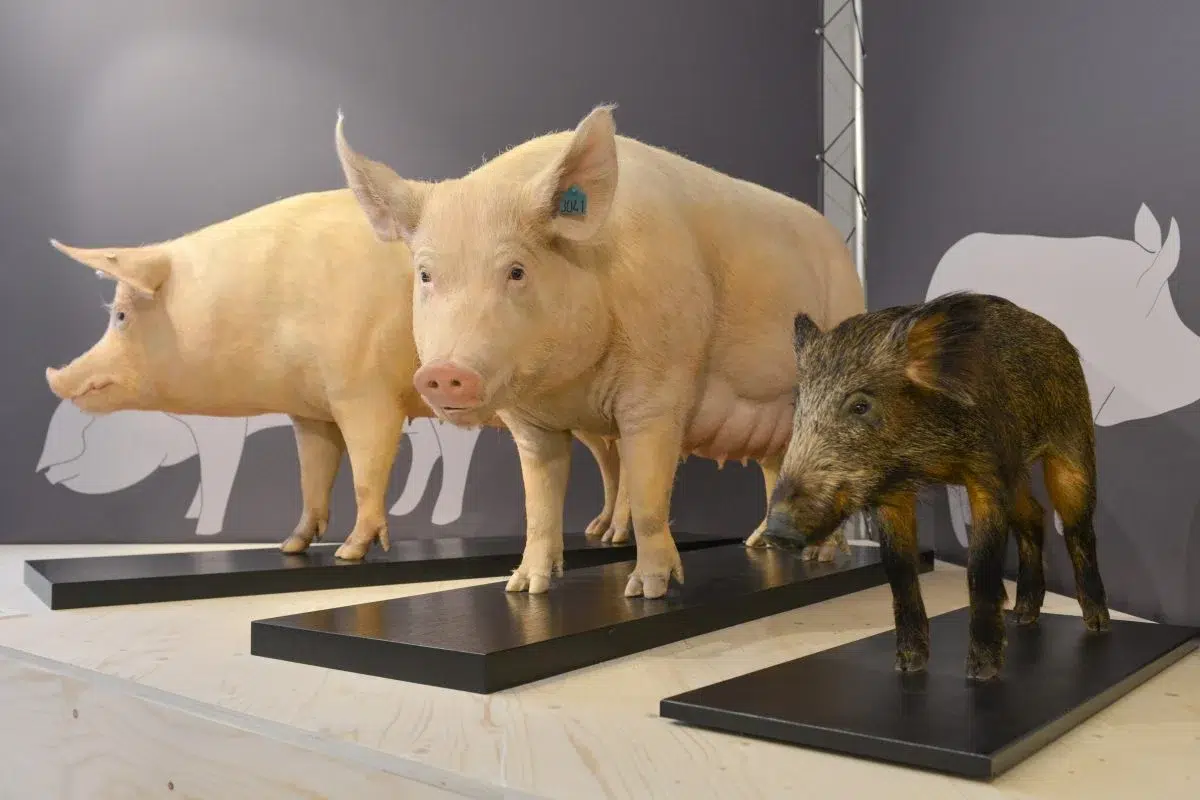

Study Reveals How Selective Breeding Quickly Altered the Shape of German Domestic Pig Skulls, with Shorter and Flatter Snouts, in Just 100 Years
In just 100 years, the shape of German domestic pig skulls has changed significantly. The transformation, which includes shorter and flatter snouts, reflects the changes introduced by breeding practices in the early 20th century.
A research team from Martin Luther University Halle-Wittenberg (MLU) analyzed skulls of domestic pigs and wild boars and revealed surprising findings about the speed at which humans can shape the evolution of animals.
Changes Caused by Selective Breeding
The alteration of the shape of pig skulls was not a deliberate choice by breeders, but rather a byproduct of intentional changes to the animals’ characteristics.
-
Oceanographer Turns Abandoned Fishing Nets from Brazilian Waters into Bags, Creating Jobs and Earning Over $7,000 Monthly

-
Australia deploys poisoned sausages and uses traps, shooting, and fences in a battle against invasive cats that kill over 1.5 billion native animals annually, threatening more than 200 species.

-
NASA Rover Captures “Tired Face” on Mars, Highlighting Human Brain’s Tendency to See Faces in Rock Formations

-
Ancient Stone City in the Desert, Once Home to 30,000, Puzzles Scientists with Nabateans’ Water Mastery 2,000 Years Ago





According to Dr. Renate Schafberg, head of the MLU’s Domestic Animal Collection, the increased demand for pork in Germany in the early 20th century forced breeders to enhance pigs so they would grow quickly, be fertile, and produce quality meat.
The change in the skull shape of pigs, especially the shortening and flattening of the snouts, occurred without breeders aiming for this specific transformation.
The study was based on an analysis of 135 skulls from three pig breeds, along with wild boars, which served as a control group.
Comparisons between the skulls of animals from the early 20th century and more recent ones showed that the changes were striking, particularly in domestic pigs.
Unintentional Change and the Impact of Feeding
In addition to genetic selection for rapid growth characteristics, feeding may have also contributed to the observed changes.
Modern pigs are fed protein-rich diets, which may have influenced the growth of their skulls.
In contrast, wild boars, which continue to have a more varied diet, do not show significant changes in skull shape.
The study’s findings reveal how much power humans have to accelerate the evolution of animals.
Frank Steinheimer, a co-author of the study, emphasizes that the changes that occurred in just 100 years demonstrate that selective breeding can modify animal development much quicker than previously thought, leading to rapid and significant evolutionary changes through artificial selection.
With information from Scitechdaily.