






 Portuguese
  Spanish


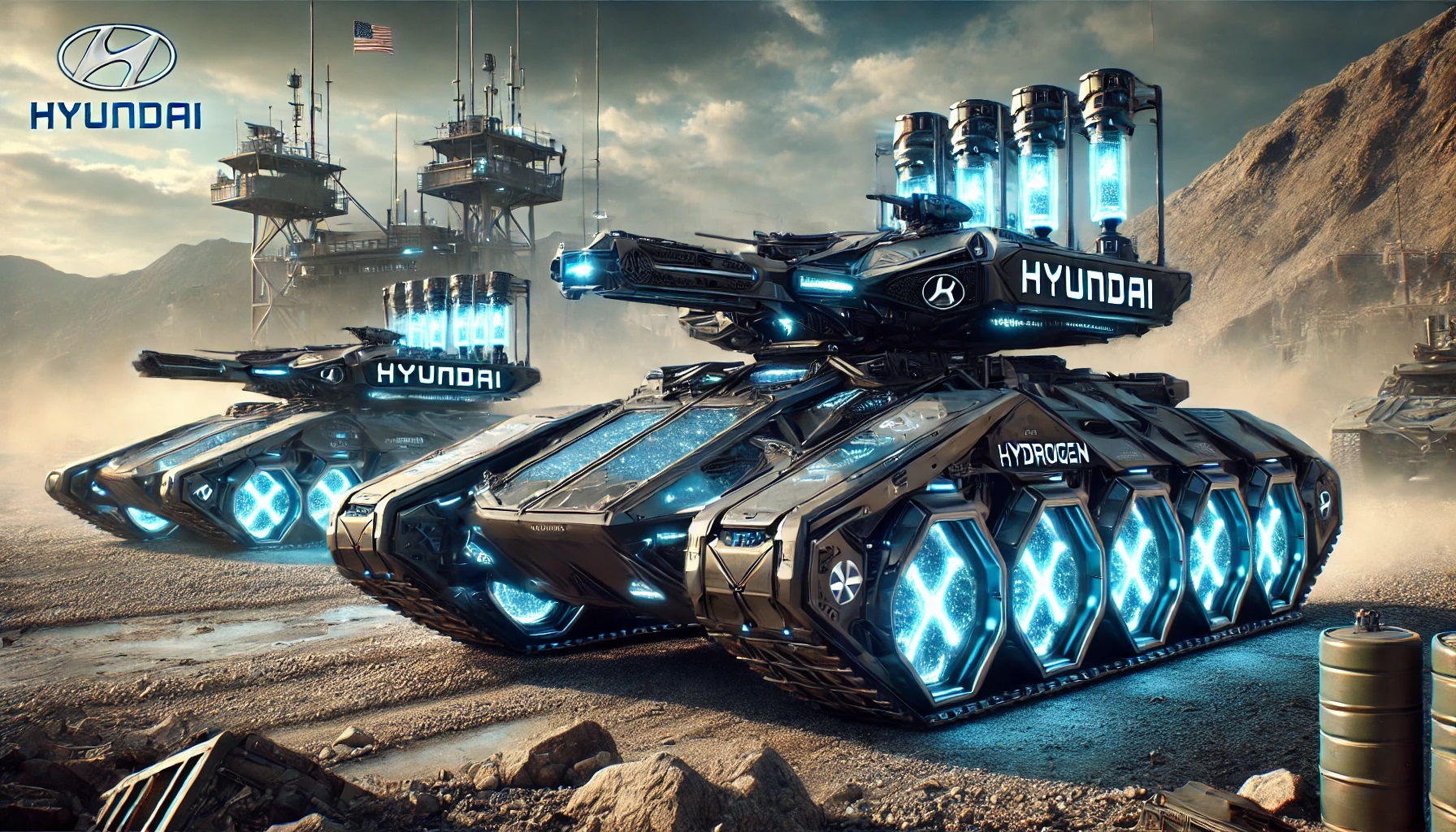


New Tank Manufactured By Hyundai? Multinational Is Working On Futuristic Tank That Promises To Revolutionize The Arms Sector. Hydrogen-Powered Tank Offers Several Advantages.
South Korea is rapidly expanding its military capability with the development of a high-level defense system. In addition to a ballistic missile submarine, aircraft carrier, and a stealth fighter KF-21, what stands out now is a new tank from Hyundai, called the K3. In this article, we will learn about the hydrogen-powered tank from the South Korean company.
Meet The Futuristic Tank From Hyundai
This hydrogen-powered tank is a technologically advanced Main Battle Tank (MBT) that Hyundai Rotem, the same company that built trains for São Paulo’s metro, is developing to enter active service in 2030.
With protective armor featuring reactive armor elements arranged in a honeycomb pattern, the Hyundai tank has a low silhouette and a delta turret with a long 130 mm smoothbore gun that includes stealth elements and IR emission reducers.
-
Realme Launches Affordable 16x 5G Phone with Military Certification, 6,600 mAh Battery, 50 MP Camera, and 6.8-Inch Screen Starting at $320

-
Amazonian Fruit Bacuri: A Nutrient Powerhouse with Antioxidants, Vitamins, and Bioactive Compounds, Ideal for Sweets and Beverages
-
Açaí Genome Sequenced for the First Time, Potentially Tripling the Speed of Developing New Cultivars
-
Geologists Find 4% of Normandy D-Day Beach Sand Still Contains Metal Fragments from WWII Explosions





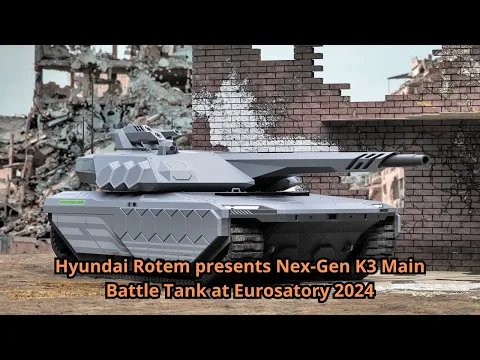

This turret of the futuristic tank also launches grenades from some of its hexagonal shields, as well as chaffs and anti-tank missiles from retractable launchers. With a focus on stealth, including a concealed 0.50 caliber machine gun, the hydrogen-powered Korean tank will feature radar-absorbing paint.
With ceramic armor and a tubular structure chassis, Hyundai’s tank is being developed to confront modern tanks, defend itself against artillery batteries, and even deploy drones in enemy territory.
Advantages Of Hydrogen-Powered Tank
The fire control systems and optronic sights are concealed and designed to reduce the radar detection area. The futuristic tank can also move without IR emissions since it is powered by a fuel cell.
The use of hydrogen in Hyundai’s tank enhances stealth, as there is no heat emission and the K3 can thus remain hidden for long periods on the battlefield.
With three crew members, the futuristic tank can initially be produced with a diesel engine, which could be a 1,500 horsepower V12 diesel already used in the K2 Black Panther. However, the focus is on hydrogen fuel cells.
It is worth noting that Hyundai Rotem is a subsidiary of the South Korean conglomerate Hyundai Motor Group, specializing in the manufacture of rolling stock, rail engineering, defense industry, and industrial equipment.
Founded in 1977, the company initially developed as Hyundai Precision and Industry Company before becoming Hyundai Rotem in 2007, following several internal mergers within the group. Currently, although not very visible in France, it is one of the world leaders in its field.
New Futuristic Tank Offers More Range
This tank from Hyundai was designed in partnership with the Defense Agency for Technology and Quality of South Korea and other research institutes. Called the K3, the new combat tank from Hyundai Rotem represents the next generation of tanks in South Korea’s K series.
Scheduled to enter production in 2040, this model will be equipped with hydrogen fuel cell technology that will gradually replace the diesel engines currently used in the K series.
The K3 has been designed to be considerably quieter than its predecessors and, thanks to hydrogen fuel cell technology, will offer greater acceleration and a much longer range than a 100% electric model.


