Portuguese
  Spanish


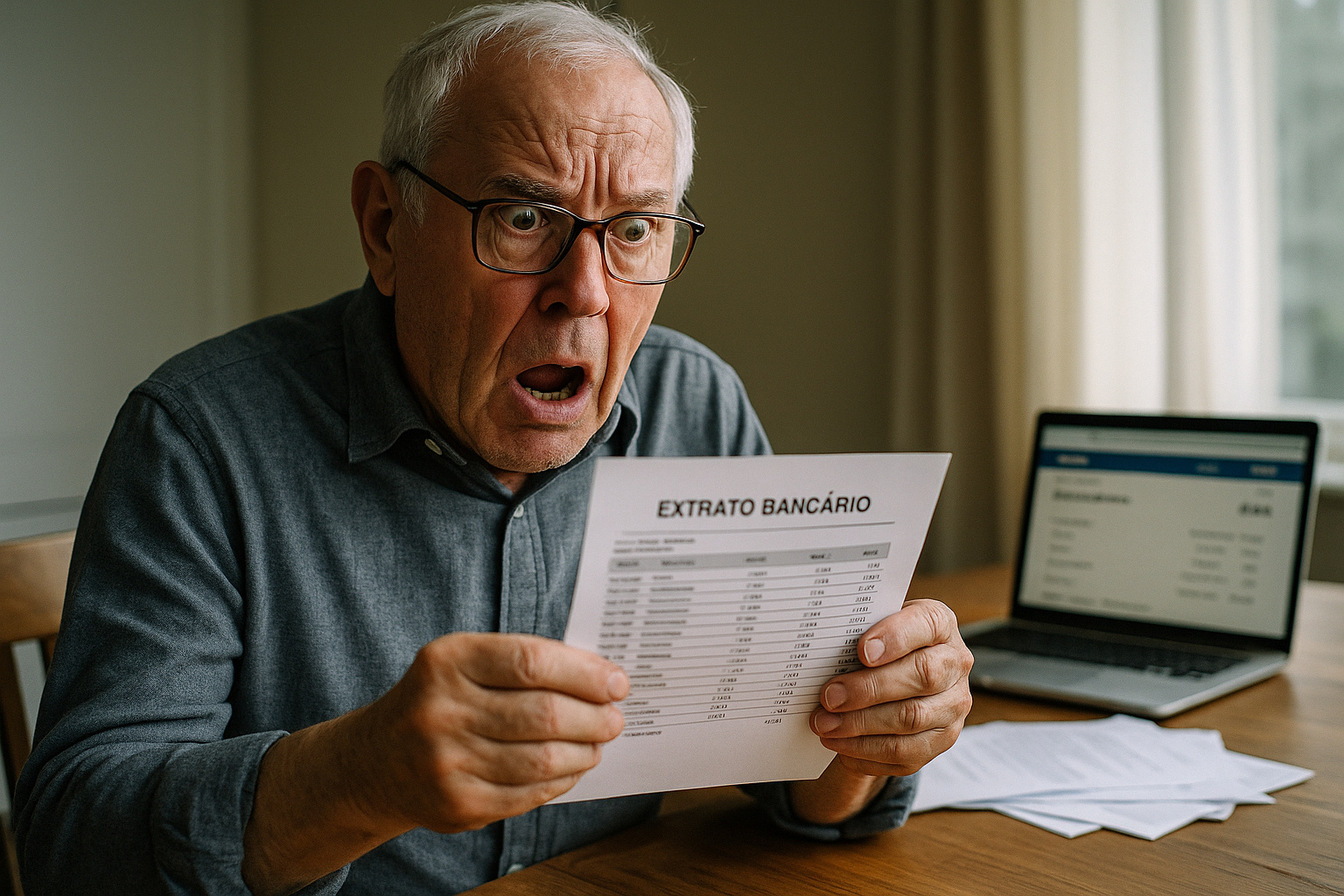

A Couple of Elderly Noticed the Disappearance of Half a Million Reais from Their Account After Automatic Withdrawals. Experts Explain the Step-by-Step to Recover the Money
Imagine opening your bank statement and noticing that all the money has disappeared. That is exactly what happened to a couple of elderly individuals from Minas Gerais, who had saved a lifetime’s worth of savings in a savings account. The shock came when the 70-year-old man received, by mail, the monthly bank statement and noticed something unthinkable: R$ 500 thousand had vanished from the account, after a series of daily withdrawals at ATMs.
The case, reported by the channel Don’t Fall for Scams, is more common than it seems and serves as a warning for anyone who keeps money saved in savings accounts or financial investments. Below, you will understand what happened and learn the step-by-step to act immediately if your money also “vanishes” from the bank.


When Money Disappears from the Account: What Happened in the Case of the Elderly
According to the report, the elderly man noticed that, during an entire month, amounts were being withdrawn in small increments from the ATM — always within the permitted limit for daily withdrawals. The total sum exceeded R$ 500,000.00, leaving the account holder in despair.
-
She bought a used motorhome at 23, refused an expensive renovation, dismantled furniture from the old apartment, and created a home on wheels with compact carpentry and repurposed pieces.

-
At 7 years old, boy swaps toy cars for raising bantams, dreams of becoming a veterinarian, and conquers the internet with his routine in the countryside of Santa Catarina; meet Luiz Miguel, the “Piá do Garnizé”

-
New York removed the tracks from over 2,500 subway cars and dumped everything at the bottom of the Atlantic, and what seemed like trash turned into an artificial reef teeming with fish and divers.

-
From matches sold by bicycle at age 5 to a global furniture empire: the lumberjack’s son founded IKEA at 17 in his uncle’s kitchen and transformed a small company into the largest furniture retailer on the planet.



Such cases raise a fundamental question: can the bank be held responsible when there are unusual transactions out of a client’s pattern? The answer, according to recent decisions from Brazilian courts, is yes — especially when dealing with elderly individuals with predictable financial behavior, such as those who only deposit and rarely make withdrawals.
The inactivity for long periods followed by an atypical series of withdrawals should raise an internal alert within the financial institution. When this does not happen, there is judicial understanding that the bank was negligent in not adequately monitoring the account’s profile.
First Steps: Police Report and Immediate Contact with the Bank
The first step upon noticing any strange activity is to file a police report. Go to the nearest police station taking your bank statements and transaction records. It is essential to describe in detail what happened — indicating the date, time, account number, agency, and total amount withdrawn.
With the report in hand, contact the manager of your branch. Show the documents, explain what occurred, and request to open a formal banking incident. Typically, the bank requests a timeframe of 10 to 15 business days to investigate the source of the withdrawals.
There are two possible outcomes: the bank recognizes the error and returns the full amount, or denies responsibility, claiming that the card or data was cloned — which shifts the burden of proof to the customer.
If the Bank Denies: Contact Procon and the Special Court
If the bank refuses to reimburse, do not accept the loss. The consumer can — and should — seek assistance from the Procon in their city. The agency helps to mediate the conflict and, in many cases, resolves the issue without the need for legal action.
When the lost amount is within the limit of the Special Civil Court (up to 40 minimum wages), the customer can file a claim without a lawyer. However, higher amounts — such as the case of the elderly individuals, of R$ 500 thousand — require the involvement of a private attorney.
In such situations, the defense usually argues that there was negligence on the part of the bank, as the transaction pattern was completely different from the historical behavior of the client, who maintained the same banking profile for 25 or 30 years.
The information was disclosed by the channel Don’t Fall for Scams, which emphasizes that there is case law in favor of elderly clients who suffer losses due to atypical transactions not detected by the security systems of financial institutions.
Courts Have Recognized Security Failures in Cases Involving the Elderly
In several recent rulings, the courts have understood that banks must adopt proactive protection mechanisms. When an elderly customer who rarely withdraws cash starts to withdraw large amounts in sequence, it is the institution’s duty to temporarily block the withdrawals and contact to confirm the transaction.
When this does not happen, there is a failure in service provision, and the customer is entitled to full reimbursement. In some cases, the court also determines compensation for moral damages, considering emotional distress and the loss of trust in the banking system.
Therefore, it is essential that all account holders, especially the elderly, check their statements weekly and keep transaction alerts activated in the bank’s app.
Constant Attention is the Best Defense Against Banking Scams
The case of the elderly individuals from Minas serves as a lesson and warning for everyone: constantly monitoring your bank account is the best way to avoid unpleasant surprises. Do not rely solely on the monthly statement — check your balance regularly, activate notifications, and maintain frequent contact with your manager.
If the money disappears, follow the protocol: police report, contact with the bank, seeking Procon assistance, and if necessary, legal action. Most cases have decisions favorable to the consumer, especially when it is proven that the transaction was outside the historical pattern.
In the end, the couple from Minas continues to seek justice — and the episode reinforces the importance of watching over their assets with increased attention. After all, digital scams and banking failures can happen to anyone.