Portuguese
  Spanish




Impressive discovery by Brazilian science: how Sisal can redefine sustainable industrial materials
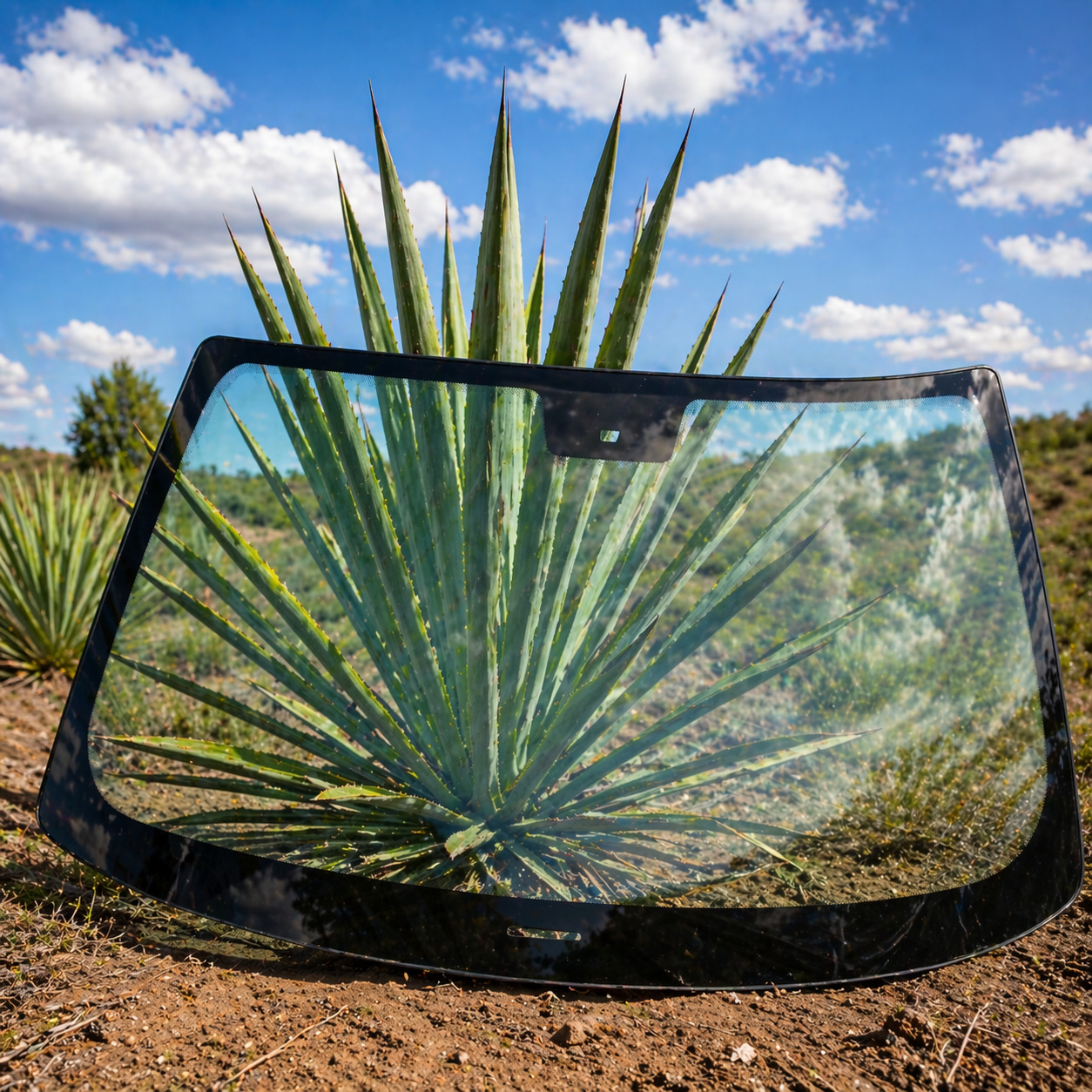
Brazilian science has just highlighted a traditional resource that could gain global prominence. Sisal, cultivated for decades in the semi-arid region, has revealed surprising potential as an advanced industrial raw material. Research conducted by scientists in the Northeast indicates that Sisal Fiber, extracted from this Brazilian plant, can act as a substitute for fiberglass, especially in demanding sectors such as the automotive industry.
The most impactful data appears in the very first results: the density of the natural fiber is around 1.15 g/cm³, while fiberglass reaches approximately 2.5 g/cm³. In practice, this means that components produced with Sisal Fiber can be significantly lighter. This characteristic is decisive for reducing energy consumption, optimizing transport, and improving vehicle performance.
Sisal gains scientific prominence as a strategic Brazilian plant
Sisal is no longer seen merely as a traditional raw material and has begun to occupy a space in high-level research. This Brazilian plant, typical of the semi-arid region, has always had regional economic importance, but now gains new significance within materials science.
-
NASA Rover Captures “Tired Face” on Mars, Highlighting Human Brain’s Tendency to See Faces in Rock Formations

-
Ancient Stone City in the Desert, Once Home to 30,000, Puzzles Scientists with Nabateans’ Water Mastery 2,000 Years Ago

-
Ancient Creature Thought Extinct Since Dinosaur Era Reappears, Baffling Scientists
-
India Deploys Giant Fabric Tubes Filled with Sand to Combat Coastal Erosion and Rebuild Disappearing Beaches





Studies published in the scientific journal “Matéria” show that Sisal Fiber possesses structural properties capable of reinforcing composite materials. These so-called biocomposites combine resins with natural fibers, creating lighter solutions with less environmental impact.
Researchers involved in the study, such as Fernanda Monique da Silva, point out that the fiber acts as a relevant structural element, contributing to greater rigidity and stability of materials, even with weight reduction.
This change in perspective transforms Sisal into a strategic resource, connecting agriculture, science, and industry in an unprecedented way.

Sisal Fiber in the automotive industry paves the way for lighter vehicles
The presence of Sisal Fiber in the automotive industry is not just a theoretical possibility. It is a trend aligned with the global pursuit of energy efficiency.
Reducing vehicle weight is one of the most direct ways to decrease fuel consumption and emissions. In this scenario, the use of Sisal as a substitute for fiberglass emerges as a promising alternative.
Among the main observed gains are:
- Significant reduction in the weight of structural components
- Lower energy consumption during production
- Potential reduction in carbon emissions throughout the lifecycle
- Greater ease in transporting parts
The automotive industry already uses natural fibers in some internal applications, such as panels and coatings. Sisal Fiber, due to its availability and competitive cost, can expand this use more consistently.
Direct comparison reveals advantages of Sisal as a fiberglass substitute
When compared directly with synthetic materials, Sisal presents clear advantages, but also important limitations.
The density of 1.15 g/cm³ places Sisal Fiber in a privileged position regarding lightness. Fiberglass, with about 2.5 g/cm³, offers greater robustness, but with greater weight.
Another relevant point is mechanical strength. Natural fiber exhibits about 242 MPa, while glass fiber can reach approximately 2,500 MPa. This difference shows that, although Sisal is efficient in certain applications, it still does not completely replace synthetic materials in situations of high structural demand.
Even so, as a substitute for glass fiber in specific applications, the material already shows great potential.
Sustainability drives the use of Sisal in the automotive industry
The advancement of Sisal is directly linked to current environmental demands. Replacing petroleum-derived materials with natural alternatives is a global priority.
Sisal Fiber, being renewable and biodegradable, contributes to reducing environmental impacts throughout the entire production chain.
Among the most relevant benefits are:
- Reduction of carbon footprint
- Lower energy consumption in production
- Simpler recycling possibility
- Integration with plant-based polymers
Research also points to the feasibility of combining the fiber with materials such as castor oil-derived polyurethane, expanding the sustainable potential of biocomposites.
In this context, the automotive industry finds in Sisal an alternative aligned with increasingly stringent environmental goals.
Social impacts strengthen the value of the Brazilian plant in the semi-arid region
The growing use of Sisal goes beyond technology. It also represents a concrete opportunity for social transformation.
The production of this Brazilian plant already supports thousands of families in the Northeast. With the valorization of Sisal Fiber in more sophisticated industrial chains, the scenario tends to evolve significantly.
Among the main social impacts are:
- Creation of more qualified jobs
- Increased income in producing regions
- Strengthening of the local economy
- Reduced dependence on low value-added activities
This movement can transform Sisal into a link between industrial innovation and sustainable regional development.
Technical challenges still limit Sisal as a substitute for glass fiber
Despite its great potential, the use of Sisal Fiber as a substitute for glass fiber still faces significant technical obstacles.
One of the main challenges is moisture absorption. Studies indicate that the fiber can absorb up to 91% of water in 24 hours, which compromises its durability and performance in composites.
Furthermore, natural factors directly influence fiber quality, such as:
- Climatic conditions
- Soil type
- Cultivation methods
- Extraction processes
To overcome these limitations, researchers have developed specific solutions, including chemical treatments that improve fiber compatibility with polymers.
These advancements are essential to expand the use of Sisal in the automotive industry and other industrial sectors.
Integration between science and market defines the future of Sisal Fiber
The success of Sisal as an industrial material depends on efficient articulation between research, industry, and public policies.
It is not enough to merely prove the potential of Sisal Fiber in the laboratory. It is necessary to ensure scale, quality, and competitiveness in the global market.
Some points are considered fundamental:
- Standardization of fiber properties
- Guarantee of continuous supply
- Reduction of logistical costs
- Investment in technological innovation
The consolidation of Sisal as a substitute for fiberglass requires strategic planning and collaboration between different sectors.
A material from the backlands that can reposition Brazil in industrial innovation
The advancement of Sisal represents more than a scientific discovery. It signals a real opportunity to reposition Brazil as a reference in sustainable materials.
Sisal Fiber, originating from a Brazilian plant, brings together characteristics that meet the modern demands of the automotive industry: lightness, lower environmental impact, and scalability potential.
Even with technical challenges, the data presented — such as a density of 1.15 g/cm³, resistance of 242 MPa, and absorption of up to 91% humidity in 24 hours — show that the material already has a solid foundation for technological evolution.
The future of this innovation depends on the continuity of research, institutional support, and the ability to transform knowledge into practical application. If this path is followed, Sisal can cease to be merely a symbol of the semi-arid region and become a global protagonist in the transition to a more sustainable industry.