






 Portuguese
  Spanish
  4 min of reading
  0 comments


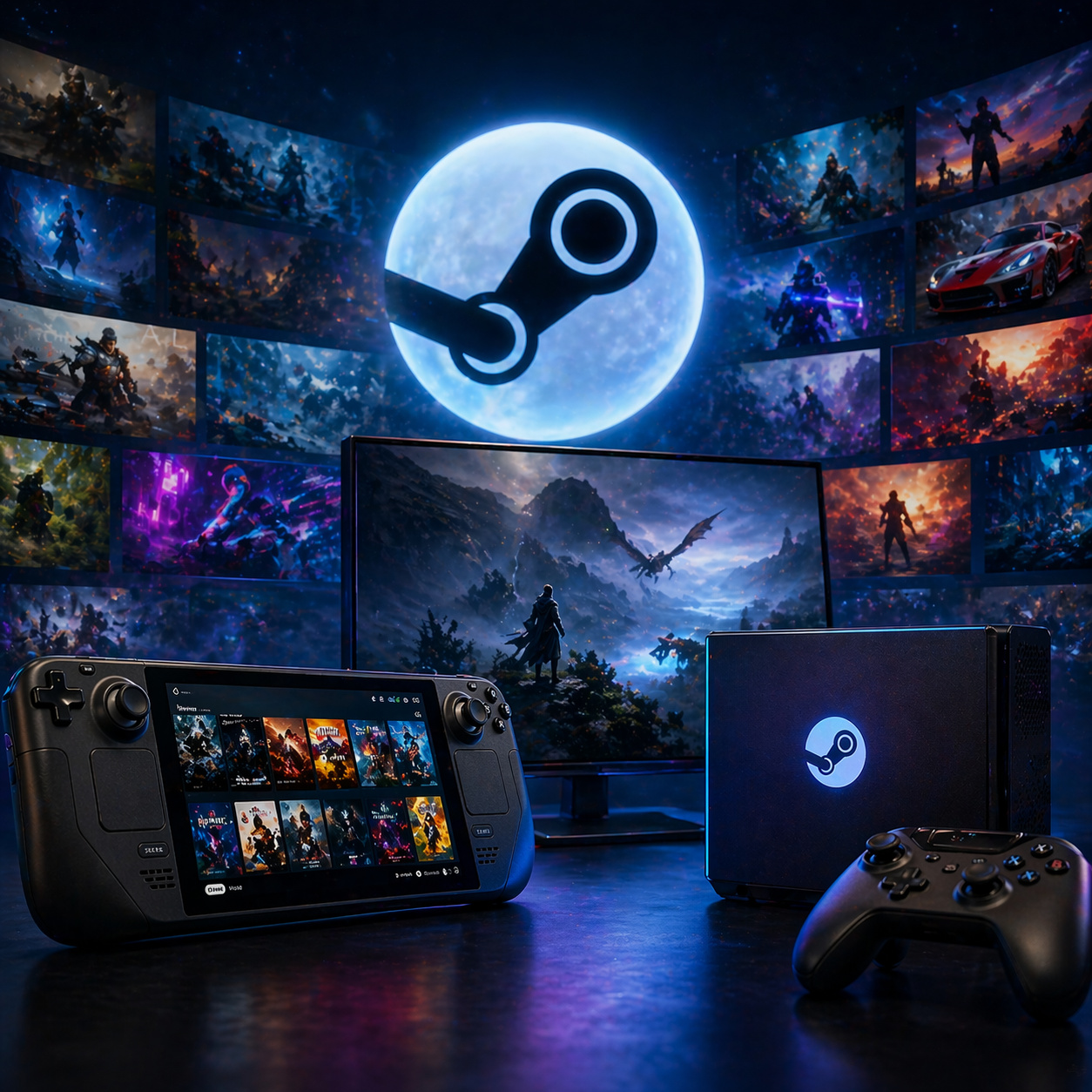
Steam surpasses consoles in software revenue and advances with Steam Deck, SteamOS, and plans to expand its gaming ecosystem.
In 2025, market reports widely cited by industry analysts, such as those published by Newzoo on April 15 and September 9, pointed to a significant reaccommodation in the gaming sector, but not an overall overtaking of PC over consoles. The consulting firm’s data indicated that the global gaming market would reach US$188.8 billion in 2025, with consoles leading growth and totaling US$45.9 billion, while PC appeared with US$39.9 billion, sustained by a strong digital presence and advancement in Asian markets.
In this scenario, Valve Corporation remains in a central position through Steam, which has consolidated itself as the main digital storefront for the PC gaming ecosystem. On the platform’s official page, the company states that Steam brings together almost 30,000 games, while its institutional section highlights that the service, created in 2003, connects millions of players and creators in an environment of direct distribution, community, and digital sales on a global scale.
The impact of this change is not only on revenue but on the distribution model, which ceased to depend on physical media and became dominated by digital platforms.
-
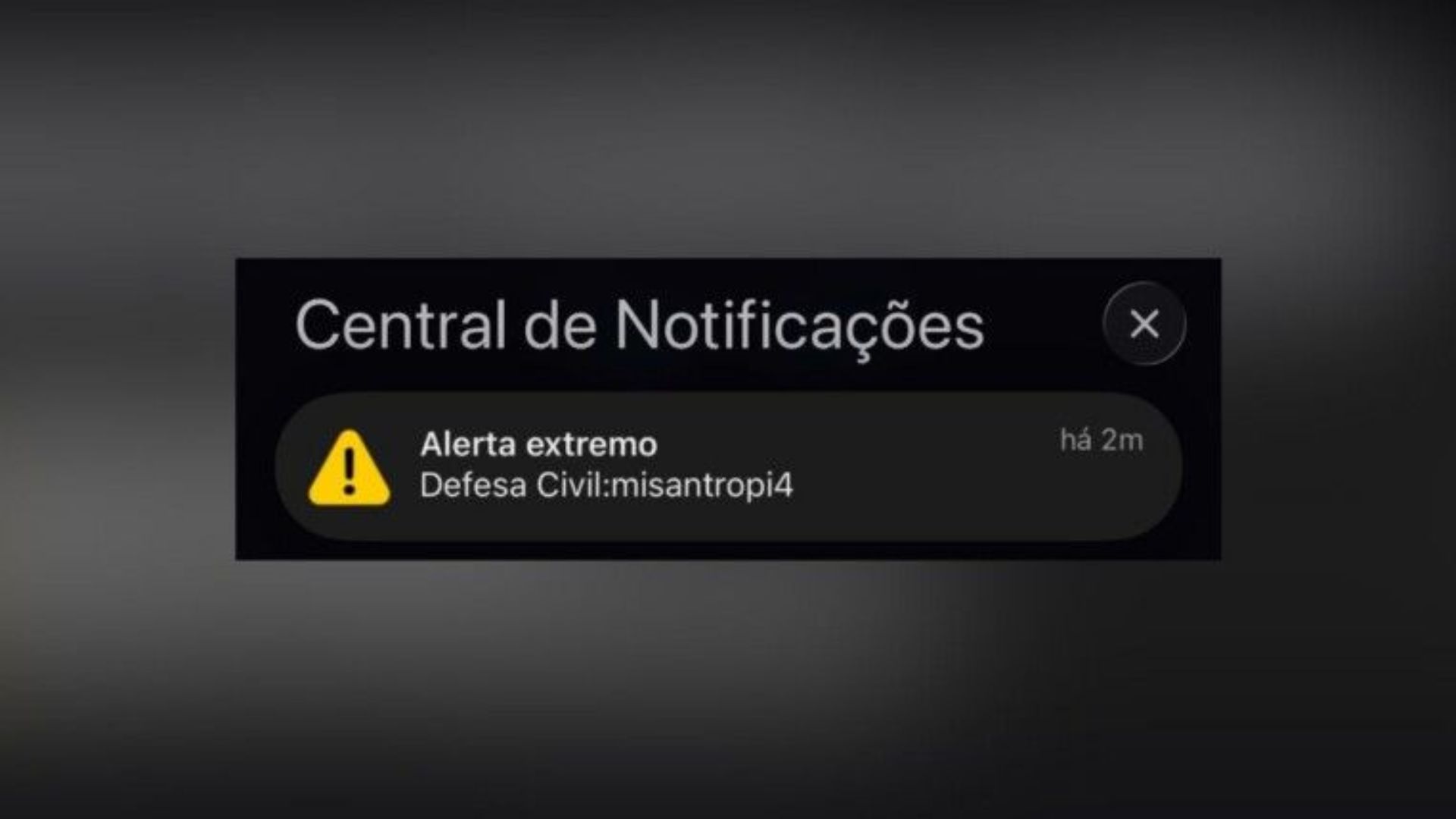
System created to save lives in disasters turned ‘against’ Brazilians overnight: a hacker attack sent out a false alert from Civil Defense with the word “misantropia” that went off on the phones of half the country, even in silent mode, and took down the Cell Broadcast.

-
In the cold desert of Ladakh, where it hardly rains, engineer Sonam Wangchuk created the ice stupa, a tower that freezes winter water and stores it for irrigating crops in the spring, a simple engineering feat that mimics nature.
-
For the first time in history, solar and wind energy generated more electricity than natural gas worldwide in a single month, April 2026, a milestone in the energy transition that shows renewable sources taking the lead in the global electric system.
-
The Amaterasu particle, a cosmic ray with energy millions of times greater than that of the world’s largest accelerator, hit the Earth coming from the Local Void, a region of space that is practically empty where, in theory, there should be nothing capable of creating it.



Steam transforms digital distribution into the dominant infrastructure of the gaming industry
Since its launch in 2003, Steam has evolved from a simple game update tool to a complete distribution, community, and services platform.
Today, it brings together functionalities such as a centralized digital library, integrated purchasing system, online multiplayer, active community, and mod support.
This set has transformed Steam into an essential digital infrastructure for developers and players, reducing reliance on consoles as the sole channel for accessing games.
Furthermore, the platform benefits from an open model, where independent developers can publish their games, rapidly expanding the available catalog.
Growth of PC gaming drives shift in balance against traditional consoles
The advancement of PC gaming is linked to structural factors that differentiate this model from consoles. Among the main ones are the possibility of constant hardware updates, configuration flexibility, an open ecosystem, and broad backward compatibility.

These characteristics allow the PC to evolve continuously without depending on fixed generation cycles, as is the case with consoles.
Additionally, frequent promotions and competitive prices on Steam help attract users, especially in emerging markets.
Steam Deck marks Valve’s entry into hardware and takes the platform beyond the desktop
One of Valve’s most important moves was the launch of the Steam Deck in 2022. The device combines portable console and PC characteristics, allowing native playback of games from the Steam library.


The Steam Deck represents a significant strategic shift, bringing the PC experience to a portable and more accessible format, approaching the traditional console proposition. The device’s initial success reinforced the idea that Steam can operate beyond software.
SteamOS and ecosystem strategy point to expansion beyond the traditional computer
Another central element of Valve’s strategy is SteamOS, a Linux-based operating system designed to run Steam games.
This system allows manufacturers to create devices compatible with the platform, paving the way for PC-based consoles, hybrid devices, and integration with televisions.
This approach creates a flexible ecosystem, where Steam can operate on different hardware formats without relying on a single proprietary device.
Valve tests new ways to bring PC games to the living room
Historically, Valve has tried to enter the console market directly with initiatives like Steam Machines. Although these projects had limited adoption, they served as a basis for more recent strategies.
Today, the company is betting on a more integrated approach, combining its own hardware, operating system, and services.

The goal is to bring the Steam experience to the living room environment, traditionally dominated by consoles like PlayStation and Xbox.
Steam’s model reduces barriers and increases competitiveness against consoles
Unlike consoles, which operate on closed systems, Steam functions in a more open environment.
This means players don’t need to buy a new device with each generation, can keep their games over time, and have access to a wider variety of prices.
This model reduces entry costs and increases the longevity of user investments, factors that directly influence public preference.
Future investments indicate continuity of ecosystem expansion strategy
Although Valve does not disclose all its plans in detail, industry analyses indicate continued investments in hardware, software, and infrastructure.
These investments include improvements to the Steam Deck, evolution of SteamOS, and enhancement of game compatibility.
These moves point to a long-term strategy, focused on consolidating Steam as a complete platform.
What’s at stake with Steam’s expansion beyond the PC
Steam’s expansion represents a significant shift in the gaming industry. It reduces dependence on traditional consoles and broadens market access, for both consumers and developers.
At the same time, it increases competition and pressures traditional models based on closed hardware.
Steam’s advancement raises a central question about the future of the gaming industry. If a digital platform can combine distribution, community, and flexible hardware, the role of consoles may change over time.
The dispute ceases to be just between devices and starts to involve complete ecosystems.
The question that remains is direct: will the future of gaming be dominated by open platforms like Steam or by the traditional closed models of consoles.





Be the first to react!