Portuguese
  Spanish


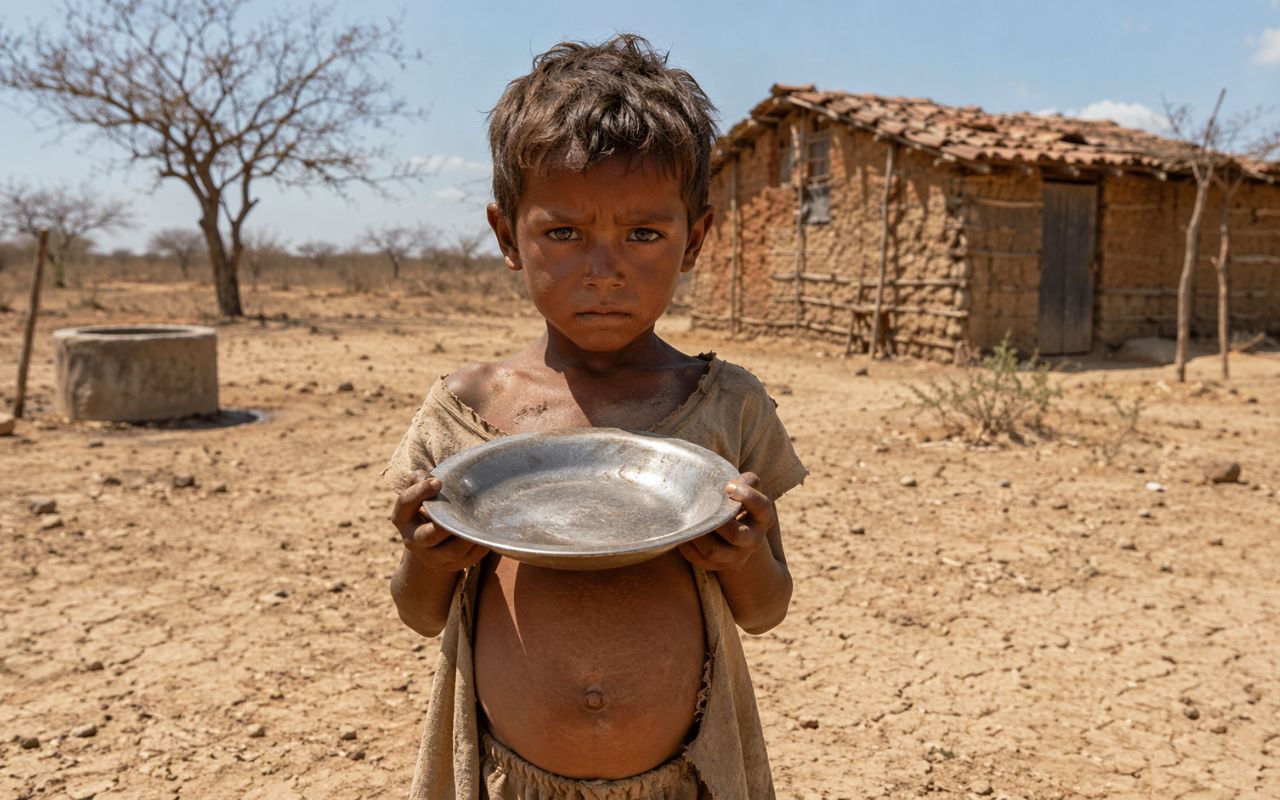

Brazilian scientists show how the increase in temperature impacts child malnutrition and child development.
The increase in temperature may be directly related to the worsening of child malnutrition, according to a study conducted by Brazilian scientists and published in the journal The Lancet. The research analyzed data from about 6 million children aged 1 to 5 years, collected between 2007 and 2017, and identified that heat influences the child’s body quickly and progressively. The survey also utilized information from a population database of approximately 100 million Brazilians to assess large-scale impacts.
Heat causes direct changes in children’s bodies
The results indicate that the rise in temperature affects not only the environment but also the functioning of the child’s body. According to researcher Priscila Ribas from Fiocruz, heat triggers a sequence of changes that harm nutrition.
Among the main observed effects are:
-
DNA Analysis Reveals How Five Cattle Survived Over 130 Years on a Deserted Brazilian Island

-
Private Spacecraft Intercepts Another for First Time in History During U.S. Space Force Mission Completed 11 Hours Early with Rocket Launched in Record 16 Hours

-
Scientists Predict Earth’s Habitable Lifespan: 1.8 Billion Years Before Oceans Evaporate and Sun Forces Planet Out of Life Zone
-
LG Unveils XBOOM Stage 501 Portable Speaker with 25-Hour Battery, AI Karaoke, and Sound by will.i.am in Brazil


- Reduced appetite
- Changes in metabolism
- Increased episodes of diarrhea
- Compromised absorption of micronutrients
These factors work together and contribute to the increase in cases of child malnutrition.
Brazilian scientists identify rapid response to temperature increase
One of the most relevant points of the study is the speed with which the body reacts to high temperatures. In cases of low weight and acute malnutrition, the effects can arise within zero to three weeks after exposure to heat.
On the other hand, when exposure is continuous, the impact tends to accumulate over time. In this case, the most evident result is the impairment of growth, such as short stature.
The analysis indicates that the increase in temperature is associated with a significant rise in malnutrition indicators. Researchers observed that there is a 10% higher chance of low weight, as well as an 8% increase in cases of acute and chronic malnutrition.
These numbers reinforce that heat does not act in isolation but directly influences the nutritional health of children.
Differences between boys and girls appear in the results
The study also revealed that the impacts vary between boys and girls. The data shows that boys have a higher incidence of growth delay, while girls have a higher proportion of low weight and acute malnutrition.

Among the boys analyzed, 10.40% had growth problems. Among the girls, 4.22% were underweight and 5.90% had acute malnutrition.
Brazilian scientists highlight greater impact in vulnerable regions
The effects of rising temperatures are not evenly distributed. Regions such as the North and Northeast have a greater impact, as do rural areas and populations in situations of social vulnerability.
Indigenous children are among the most affected. More than 26% showed growth delays, while 6.72% were underweight. According to Priscila Ribas, the data highlights an important inequality:
“The impacts are disproportionately greater in the North and Northeast regions, in rural areas, and among children of indigenous and black mothers, highlighting a profound socio-environmental vulnerability.”
Prolonged exposure can lead to permanent effects
In addition to immediate consequences, the study warns of long-term impacts. Continuous exposure to heat can compromise both the physical and cognitive development of children.
The researcher emphasizes:
“While some acute impacts may be temporary, prolonged exposure to high temperatures can have permanent effects on a child’s physical and cognitive development.”
Climate change expands the risk scenario
Another factor analyzed is the relationship between climate change and food availability. Rising temperatures can affect food supply, further exacerbating the issue of child malnutrition.
In this context, heat acts as an element that intensifies already existing problems. As Priscila Ribas summarizes:
“Heat is not a universal and neutral risk; it acts as a multiplier of vulnerabilities.”
Thus, the study broadens the understanding of how environmental and social factors connect, showing that rising temperatures can have direct and indirect effects on children’s health.
Source: Galileu Magazine