





 Portuguese
  English
  Spanish
  5 min of reading
  0 comments


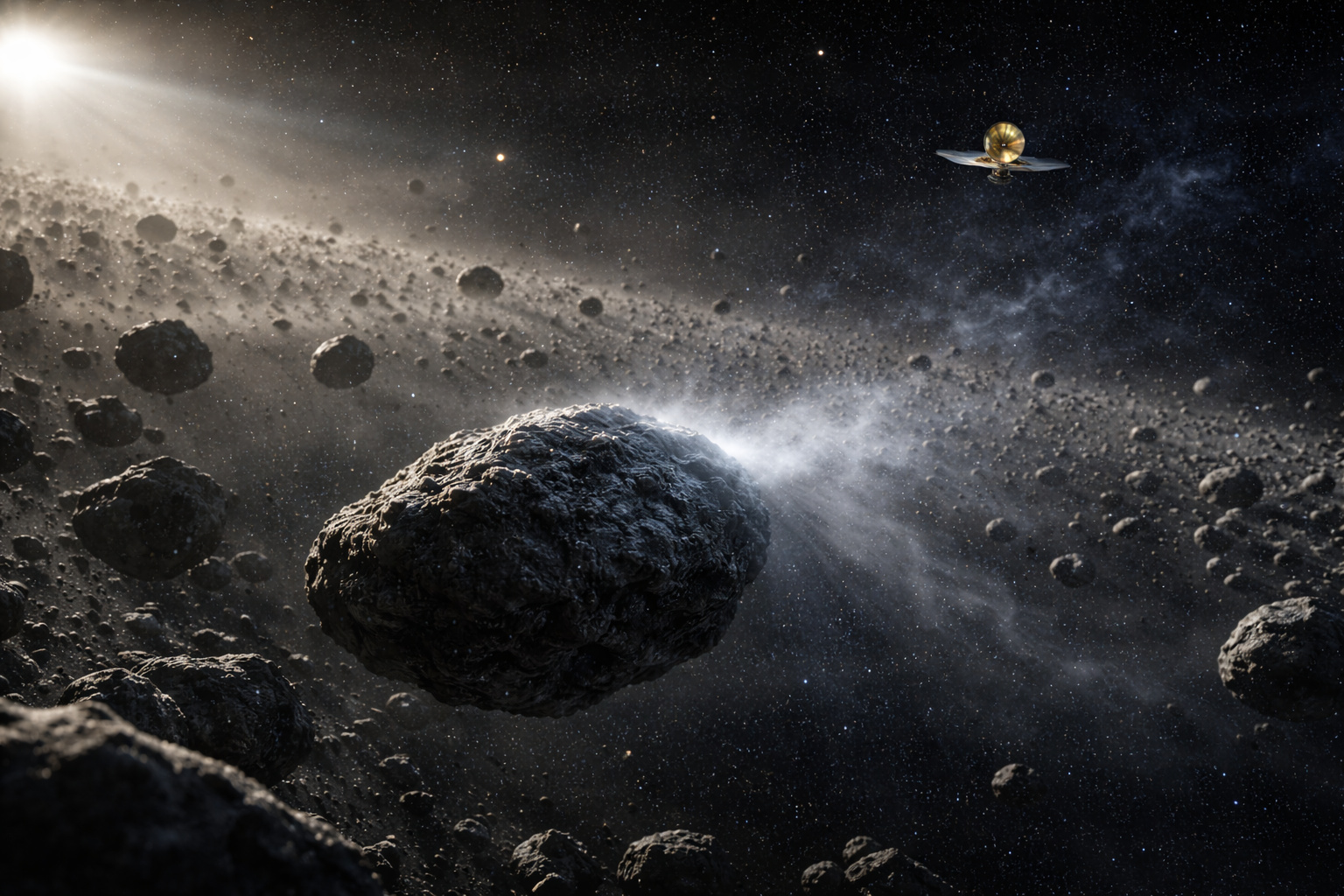
James Webb detects water vapor in comet 238P/Read in the asteroid belt, revealing primordial ice and new clues about the origin of water on Earth.
In 2023, the NASA space telescope, in partnership with the ESA, announced a discovery that directly challenges one of the most established concepts in planetary science: the unequivocal detection of water vapor in comet 238P/Read, an object located in the main asteroid belt, between Mars and Jupiter. The observation, conducted by the James Webb Space Telescope and reported in scientific papers and official communications from the space agencies, confirmed for the first time the active presence of water in an environment where, theoretically, ice should not survive for billions of years.
The object, classified as a main belt comet, had previously attracted attention for exhibiting activity similar to that of traditional comets, such as a tail and material emission. However, until then, there had been no direct confirmation of water vapor. The new detection changes this scenario and opens up a broader discussion about the origin of water on rocky planets, including Earth.
Comet 238P Read asteroid belt and water vapor discovery by James Webb
Comet 238P/Read orbits the Sun within the asteroid belt, a region historically associated with dry, rocky bodies. Unlike classical comets, which come from cold, distant regions like the Kuiper Belt or the Oort Cloud, the objects in this area are closer to the Sun and, therefore, subject to higher temperatures.
-
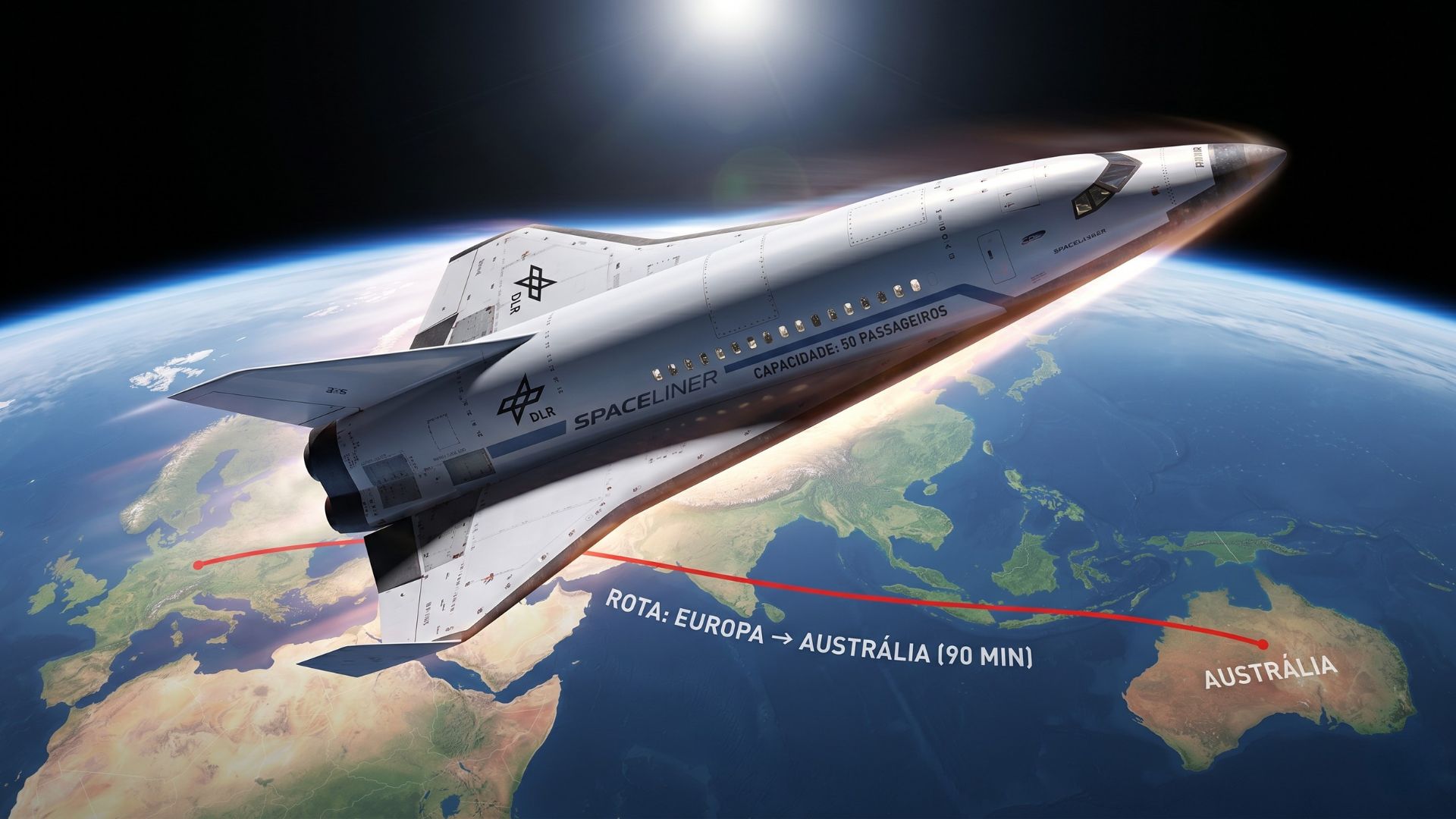
The crossing of a continent in less time than a domestic flight: Germany designs the SpaceLiner to take 50 passengers from Europe to Australia in 90 minutes, using a reusable rocket-plane that takes off like a space launcher, crosses the atmosphere in a hypersonic leap, and lands on a runway like a commercial spacecraft of the future.

-
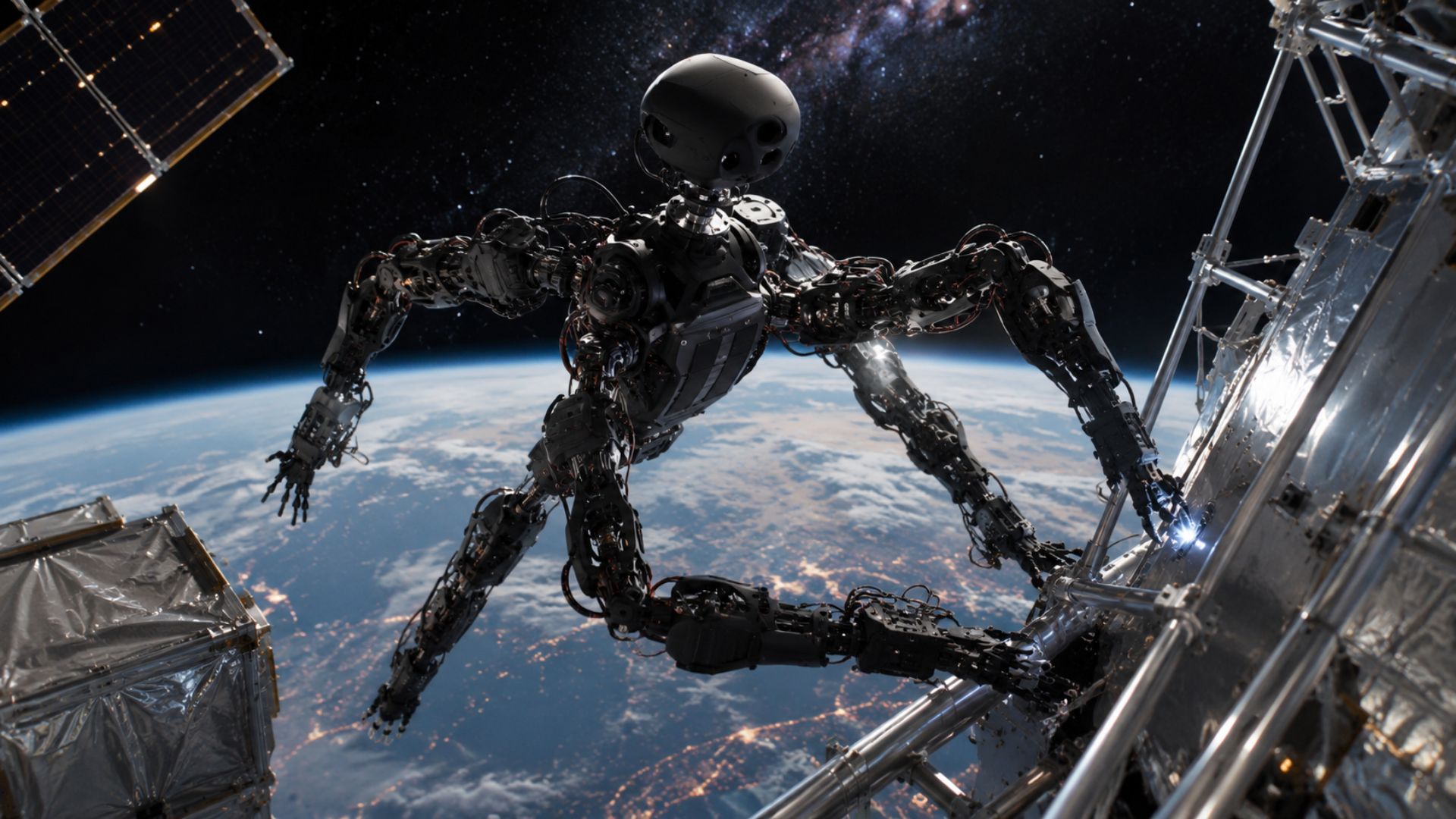
He looks alien, and it’s on purpose: the Helios abandons the legs of common humanoid robots and gains four arms to move, anchor, and operate in zero gravity, with the promise of eventually even helping with the maintenance of satellites and structures in orbit.
-
The Japanese ship Chikyu lowered a drill six kilometers below the Pacific seabed and brought up mud laden with rare earths, in a test that could pave the way to break China’s dominance over technology metals.

-
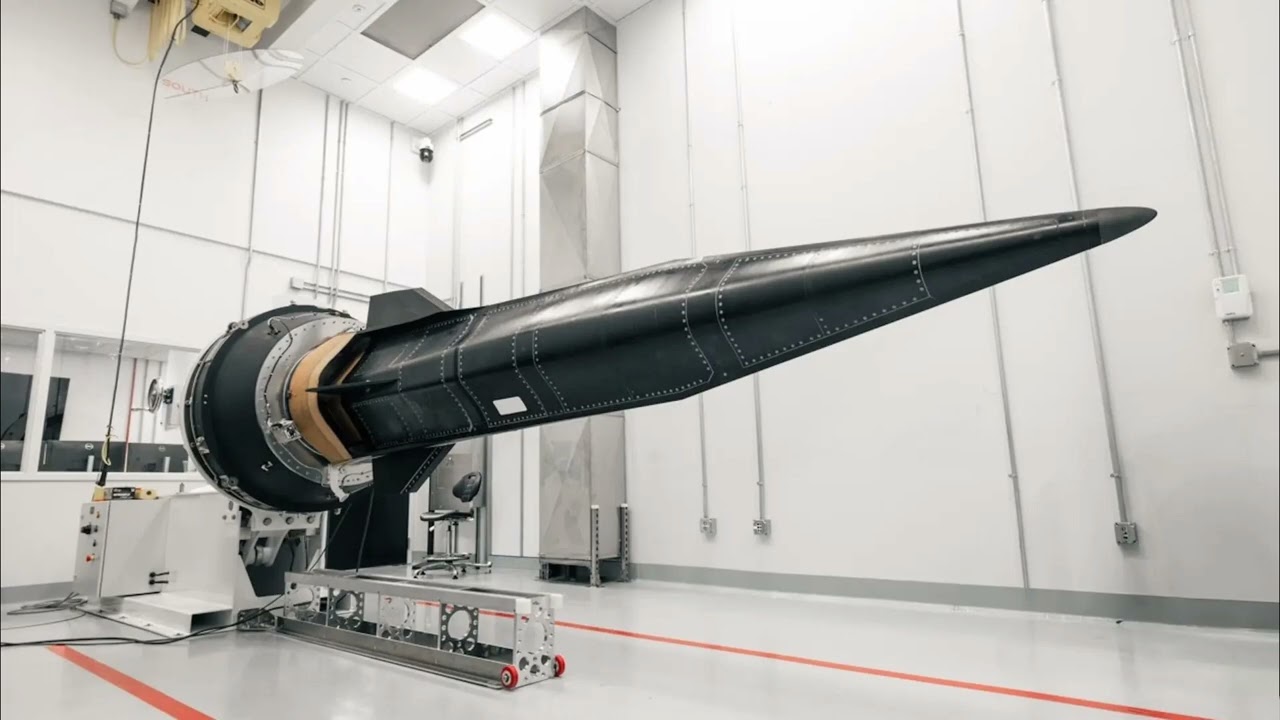
More than three times faster than the Concorde, powered by hydrogen and launched by Rocket Lab’s rocket at Mach 7, the DART AE from Australia’s Hypersonix flew with a scramjet entirely 3D printed, with no moving parts, capable of targeting Mach 12, reigniting in full hypersonic flight, and paving the way for aircraft that do not emit CO2 in propulsion.

It was precisely for this reason that the detection of water vapor had an impact. Using highly sensitive instruments, the James Webb Space Telescope was able to identify the spectral signature of water being released by the comet.
This was the first direct confirmation of water in a main belt comet, something that until then was only a hypothesis based on indirect evidence.
Why scientists considered the presence of ice in this region impossible
The dominant theory for decades claimed that the asteroid belt was too hot to preserve ice throughout the history of the Solar System. Solar radiation and relatively higher temperatures should have evaporated any water reserves billions of years ago.

For this reason, it was believed that Earth’s water mainly came from comets originating from the outer regions of the Solar System, where ice could remain stable.
The discovery of 238P/Read challenges this model by showing that ice reserves may have survived in regions much closer to the Sun than previously thought, perhaps preserved in underground layers protected from direct radiation.
What differentiates main belt comets from traditional comets
The so-called main belt comets are hybrid objects. They orbit in the same region as asteroids but exhibit cometary activity, such as dust and gas emission.
This characteristic suggests that these bodies contain ice within, which can sublimate — transition from solid to gas — when exposed to solar heat.
In the case of 238P/Read, this sublimation has been confirmed to be caused by water, and not by other volatile compounds, such as carbon dioxide, which can also generate similar activity.
This distinction is crucial because it confirms that water ice, and not just other gases, is present in these objects.
What the absence of carbon dioxide reveals about the comet’s origin
One of the most intriguing aspects of the discovery was the detectable absence of carbon dioxide (CO₂), one of the most common gases in traditional comets.

This absence suggests that the comet may have lost some of its more volatile compounds over time, retaining only water ice in more protected regions.
Another hypothesis is that the object formed under different conditions than typical comets, possibly closer to the Sun, which would imply a distinct evolutionary history.
How this discovery could rewrite the origin of water on Earth
The origin of water on Earth is one of the most debated questions in planetary science. One of the most accepted hypotheses is that it was brought by impacts from comets and asteroids during the planet’s first billion years.
With the confirmation of water in main belt objects, the possibility arises that a significant portion of Earth’s water may have come from bodies much closer than previously thought, and not just from distant regions of the Solar System.
This simplifies some models of planetary formation and alters the understanding of water distribution in the primitive Solar System.
Primordial ice may have survived for billions of years near the Sun
The idea of primordial ice surviving for billions of years in a relatively warm region raises new questions about the preservation mechanisms of these materials.
One of the most accepted explanations is that the ice may be protected under layers of dust and rock, acting as a thermal insulator. When these layers are disturbed — by impacts or internal processes — the ice is exposed and begins to sublimate.
This indicates that the Solar System may contain much more “hidden” water in unexpected places than previously thought.
The role of the James Webb telescope in the new generation of discoveries
The James Webb Space Telescope has played a central role in identifying chemical compounds in distant objects. Its ability to analyze infrared light allows for the detection of molecular signatures with unprecedented accuracy.
In the case of 238P/Read, this technology was essential in confirming the presence of water vapor, something that previous telescopes could not do directly.
This discovery demonstrates how new tools are expanding the reach of planetary science, allowing for the observation of phenomena that were previously beyond detection capabilities.
The asteroid belt may hide more “impossible comets”
The identification of water in 238P/Read raises the possibility that other similar objects exist in the asteroid belt. If confirmed, the region may be much more dynamic and rich in volatiles than previously thought.
This opens new avenues for research, including space missions dedicated to studying these objects up close.
The idea that the asteroid belt may harbor hidden reserves of water completely transforms how this region is viewed by science.
Did you imagine that Earth’s water may have come from an area where scientists believed it could not exist?
The discovery of comet 238P/Read calls into question established models and shows that the Solar System still holds fundamental surprises. If water can survive where it seemed impossible, how many other yet-to-be-understood processes may be hidden in the most familiar regions of space?






Be the first to react!