Portuguese
  Spanish


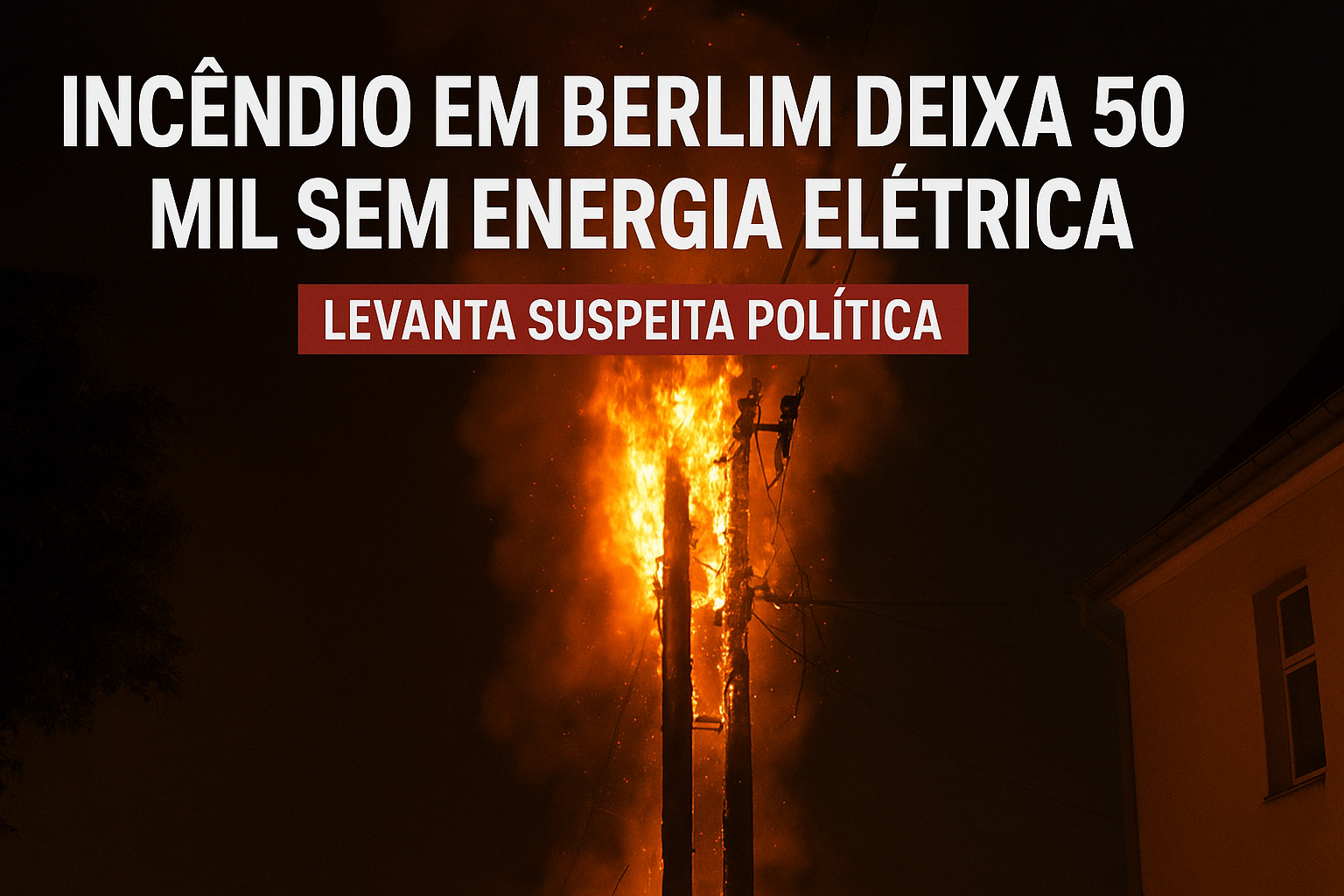

Fire in Johannisthal, Berlin, Left 50 Thousand Without Electricity. Police Investigates If There Was Political Motivation.
In the early hours of this Tuesday (9), a fire in two distribution poles left about 50 thousand people without electricity in Berlin, the capital of Germany.
The incident occurred in the neighborhood of Johannisthal, in the southeastern part of the city, and is already being investigated by the police, which is considering the hypothesis of a criminal act possibly linked to political motivation.
What Happened in the Fire in Johannisthal
According to information from the German police, the flames started during the night and quickly spread through the high-voltage poles.
-
USP researcher creates thesis to attract international funds for the country’s electric energy sector

-
Trafigura receives authorization from ANEEL to trade electricity in Brazil and expands its operations in the largest energy market in Latin America.
-
Mobile solar panels promised to share space with corn crops, but the 20% to 25% shade reduced production by an average of 7.7% and opened a new dispute between energy and food.
-
More than 80 million kilometers of wires need to be replaced by 2040: the energy transition doesn’t just depend on panels and electric cars, but on a colossal race for copper, aluminum, transformers, and recycling of old cables.


In a few minutes, 34 thousand households and three thousand businesses were left without power. The electricity supply was interrupted for hours, also affecting local transport and services.
The firefighters acted intensively to contain the fire, which was controlled in about an hour. Despite the quick response, the damage had already compromised the electrical grid of the region.
Impact of Electricity Outage in Berlin
According to the operator of the electrical grid of the capital, 50 thousand customers were impacted by the blackout. Around 10 a.m., seven hours after the start of the fire, about 15 thousand residents had already had their electricity supply restored.
Still, thousands of people remained without power, which affected both the daily lives of families and the operation of small businesses. The electricity outage also raised concerns for essential services, as many systems depend on electrical stability to operate.
Investigation Points to Possible Political Motivation
The Berlin police confirmed to AFP that they are working with the hypothesis that the case is a result of arson. In a statement, a spokesperson said:
“We do not rule out a political motivation behind the fire.”
This suspicion has sparked debate among authorities and the public, especially as Germany faces political and social tensions on various fronts, from security issues to fierce party disputes.
Why the Fire in Berlin Concerns Authorities
The combination of large-scale blackout and suspicion of political motivation raises alarms about the vulnerability of Germany’s electrical infrastructure. Experts point out that attacks on electricity poles and cables could be used as a form of protest or political pressure.
Moreover, Berlin has already recorded previous cases of sabotage to the electrical grid in other districts, which reinforces concerns about public safety and the need to enhance the protection of critical structures.
Next Steps in the Investigation
A specialized team from the German police has been assigned to analyze the origin of the flames in Johannisthal. The aim is to identify whether accelerants were used or any other evidence confirming the suspicion of arson.
So far, no organization or political group has claimed responsibility for the act. Local authorities emphasized that more details will be released only when there is solid evidence.
Conclusion: Electricity and Security Under Alert in Berlin
The fire in Berlin not only exposed the fragility of the city’s electrical system but also brought discussions about the relationship between acts of sabotage and political motivation to the forefront. While part of the population has already had their supply restored, other thousands of families are still waiting for normalization.
Therefore, with the investigation ongoing, pressure is mounting for the German government to present quick and lasting solutions, ensuring not only energy security but also protection against possible future attacks.