






 Portuguese
  Spanish
  4 min of reading
  1 comment


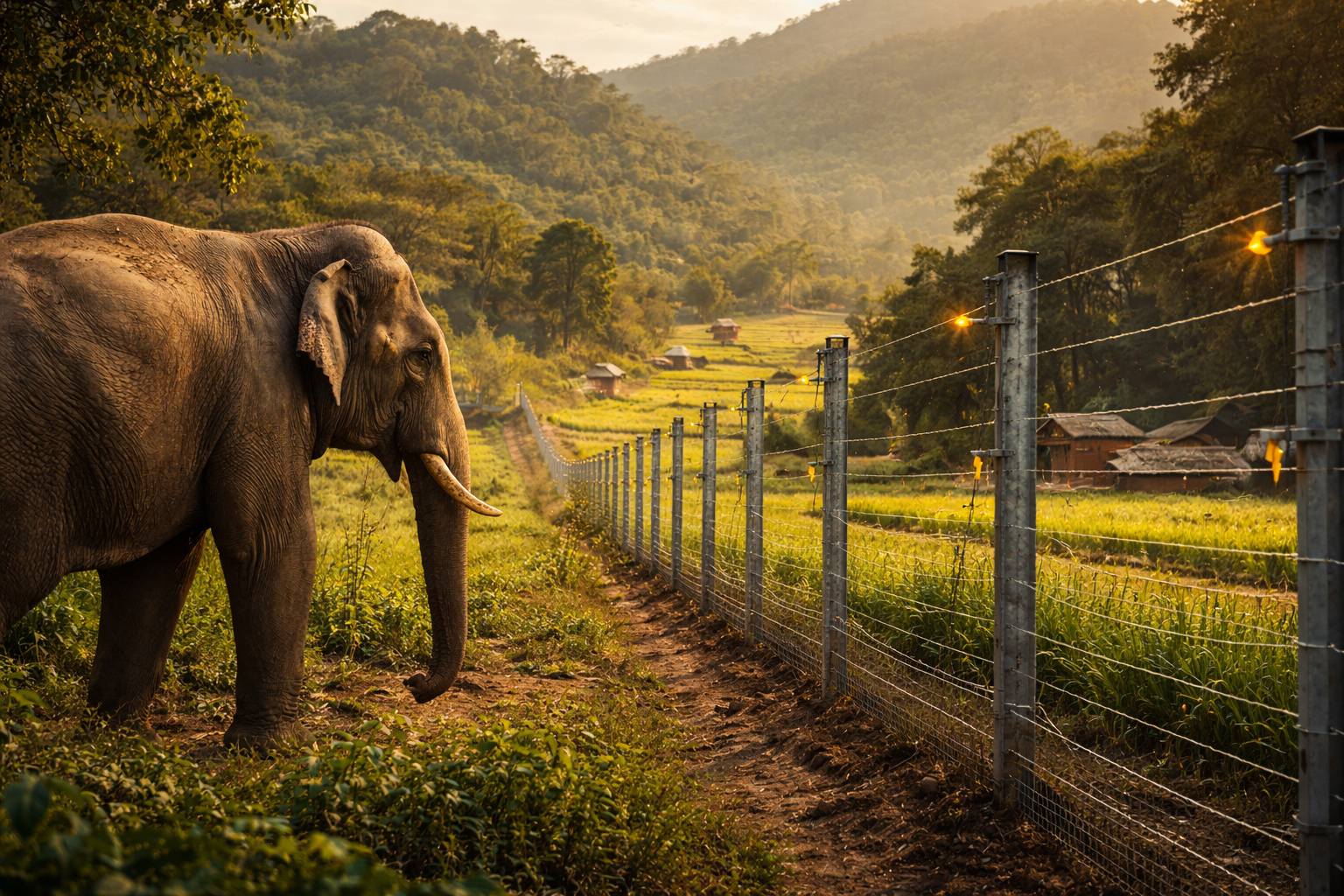


Electric And Solar Fences In India Reach 18 Km Per Section And Reduce Conflicts Between Elephants, Villages, And Crops In Critical Regions.
In India, the coexistence between humans and elephants has always been marked by tension. The country is home to more than 27,000 Asian elephants, the largest population in the world, while villages, roads, and agricultural areas have encroached on ancient migration routes. The result has been a chronic conflict: destroyed crops, invaded homes, human and animal deaths. Faced with the impossibility of “coexisting” solely with educational policies, the solution has become physical engineering applied to the territory.
It is in this context that the so-called Elephant Fence Projects arise, a set of regional projects that use physical and electrified fences to strategically separate human areas from wildlife corridors.
Fences Are Not National, But Regional And Strategic
Unlike monumental projects like Australia’s Dingo Fence, India has not built a single continuous fence. What exists are specific sections, implemented exactly where conflicts are most intense. These sections range from a few kilometers to lengths that exceed 18 km, depending on the region and elephant density.
-
Billion-dollar agricultural bill worries the Treasury: rural renegotiation could consume R$22.4 billion in 2027 and hinder the return of accounts to the black

-
Producers pierce PET bottles, bury them next to the plants, and create drip irrigation that delivers water directly to the roots and reduces waste in the garden.
-
Seven women from the same family turned a cheese factory in Minas into a tourist attraction, where visitors can watch the milking process, see the artisanal cheese being made, and even take home products made on the farm.

-
He tore up all the grass in the yard, turned the house into an urban farm, and sold food to the neighbors until the city hall showed up with a fine for zoning violation.




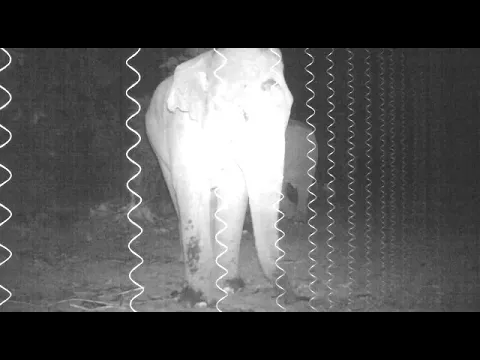

In the state of Assam, in the northeastern part of the country, one of the most critical areas of human-elephant conflict, there are records of solar fences with 18 km in length protecting entire villages near forests and national parks.
In other areas, such as around the Raimona National Park, projects have installed fences of approximately 11 km, covering dozens of rural communities.
How Electrified Fences Work
The fences used are not concrete barriers or rigid walls. They combine posts, conductors, and low-current electrification systems, often powered by solar panels. The goal is not to harm the animal, but to provide a shock that is uncomfortable enough to discourage passage.
The voltage is carefully controlled to be non-lethal, both for elephants and humans. Local studies have shown that, after a few contacts, elephants begin to visually recognize the fence and avoid the area, drastically reducing repeated invasions.
Engineering Designed For Megafauna
Designing fences for elephants is very different from designing fences for livestock. An adult elephant can weigh up to 6 tons, easily pushing trees and toppling fragile structures.
For this reason, the projects use specific spacing between wires, appropriate height, and reinforced anchoring of posts.
Additionally, the systems must withstand heavy rains, saturated soils, and dense vegetation, which are common in northeastern India. Maintenance is an essential part of the project, with frequent inspections to prevent failures that animals could exploit.
Direct Impact On Reducing Conflicts
Regional reports indicate that, after the installation of the fences, villages that were previously repeatedly hit by elephants went months — and in some cases years — without significant invasions. The reduction in agricultural losses was immediate, as was the decrease in the number of fatal confrontations.
In districts where there was previously annual destruction of crops, the fences have allowed farmers to return to planting with predictability, which is essential for subsistence rural economies.
It’s Not Just Human Protection
Interestingly, the fences also protect the elephants themselves. By reducing direct encounters with humans, the risk of retaliation, road accidents, and deaths from improvised weapons or illegal electrification decreases. The project, therefore, does not eliminate elephants from the territory but redraws the boundaries of movement.
Limitations And Criticisms
Despite the positive results, the fences are not a universal solution. If poorly planned, they can block essential migration routes and create stress in the animals.
For this reason, the most recent projects are integrated with ecological studies, ensuring alternative passage corridors and avoiding the isolation of populations.
Another challenge is the maintenance cost. In impoverished regions, failures in the electrical system can compromise effectiveness, requiring continuous government support.
Territorial Engineering Applied To Coexistence
The Elephant Fence Projects demonstrate how engineering has evolved from merely being infrastructure for vehicles to directly addressing environmental conflict management. Instead of trying to adapt elephant behavior or remove human communities, India has opted for a physical, measurable, and adjustable solution.
When coexistence proved unfeasible, the response was not expulsion or extermination, but technical separation.
When The Boundary Becomes A Tool
These fences represent a profound change in how large countries manage megafauna. They are not symbols of isolation but of intelligent territory control, where every installed kilometer carries ecological, social, and economic decisions.
In the end, the Indian experience makes it clear that, in some scenarios, coexistence does not mean sharing the same space, but building physical boundaries capable of protecting both sides.







Pobre mundo ****, não há um dia sequer de paz.
Quem invade seus habitats são os humanos, destruindo tudo que encontram, inclusive a alimentação natural da fauna.