Portuguese
  Spanish


Andy Gorman didn’t want to be a farmer. He started with a hidden garden in the garage because he didn’t want anyone to see. Then he tore out all the grass and transformed the property in Sharonville, Ohio, into an urban farm called Cincy Urban Farm. In October, the city fined him for zoning violation. In November, the appeals board unanimously canceled the fine.
Andy Gorman had no ambitions of being a farmer. He never planned to sell anything. The first garden was planted in the garage because he didn’t want anyone to know what he was doing. But the production grew, the garage could no longer hold it, and the backyard of his home in Sharonville, Ohio, began to be transformed. First the backyard garden. Then the front yard garden. Then an irrigation system. Then the Cincy Urban Farm, which opened a self-service store on-site, operating from 8 AM to 8 PM every day, according to the WCPO 9 report.
In October, the city of Sharonville sent Andy Gorman a zoning violation notice. Municipal rules prohibit retail activity on properties with residential zoning. The Cincy Urban Farm was, according to the city, selling agricultural products in an area not authorized for that. Gorman appealed. On November 12, the Sharonville Zoning Appeals Board voted unanimously in favor of Andy Gorman and canceled the fine, allowing the Cincy Urban Farm to continue operating, as reported by MSN based on the Cincinnati Enquirer. What seemed like the end of the urban farm turned into a victory that filled the city hall meeting room with supporters.
The urban farm that started in a hidden garage
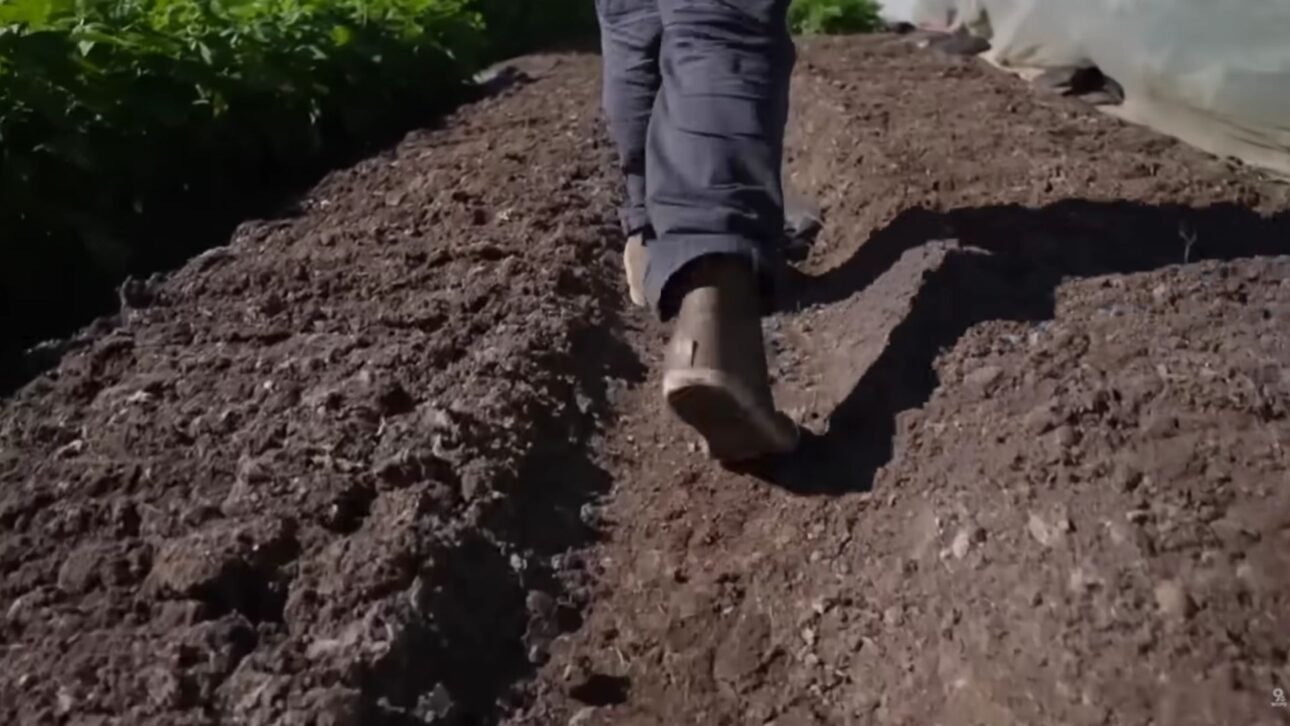
The garden started in the garage, out of sight from those passing by on the street. When production grew and space was no longer sufficient, it moved to the backyard. Then to the front yard. At each stage, the urban farm Cincy Urban Farm advanced a little more. One wheelbarrow turned into three, then six. The grass was being removed as new cultivation areas took its place.
-
Brazilian Farmers Develop Wheeled Metal Lever to Ease Cassava Harvesting Without Heavy Machinery

-
Study of Brazil’s Tietê River Finds 25 Pesticides in Water, Including Cancer-Linked Substance Near Source
-
Young Entrepreneur Expands from 50 to 1,400 Chickens, Proving “Happy Hens” Can Be a Viable Business
-
Small Farm in Brazil’s Minas Gerais Produces 403 Liters of Milk Daily, Sets Benchmark for Rural Producers



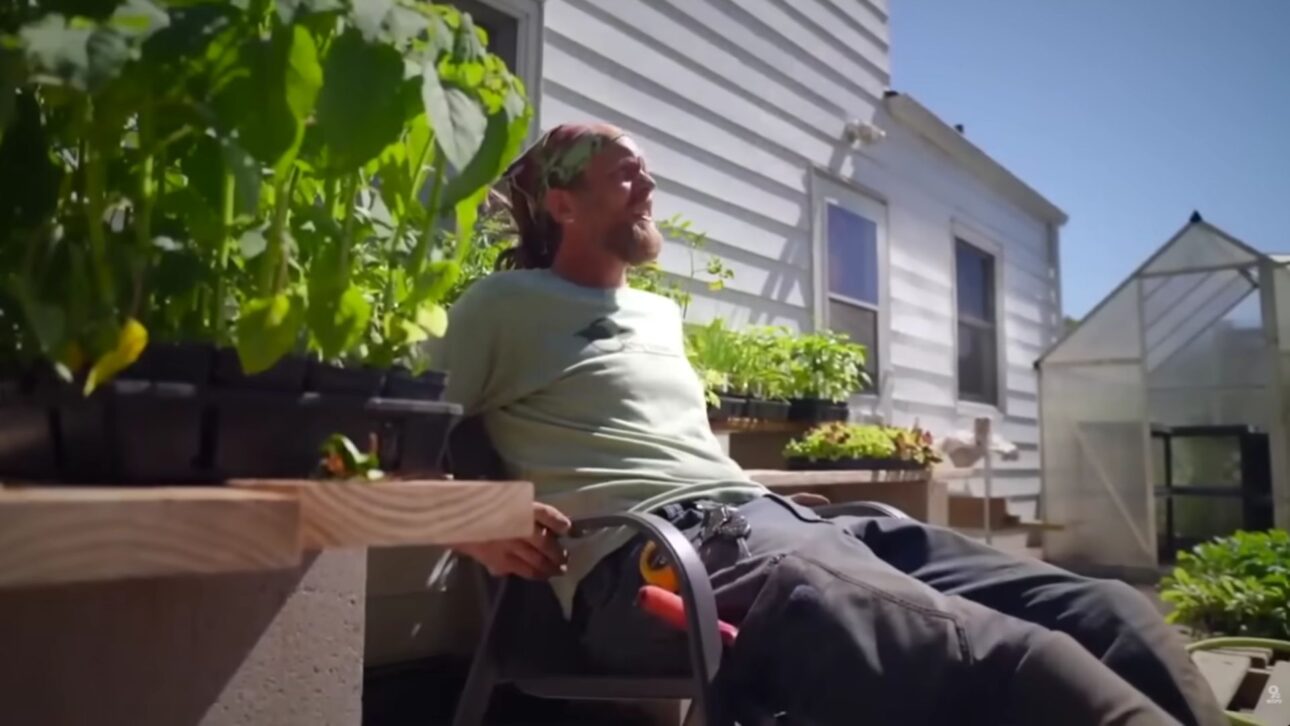
Friends found it strange. “Guys, what is he doing, destroying his backyard?” Gorman acknowledges that what he was building was not the expected standard for a residential property in Sharonville. “What I’m doing is not normal,” he told WCPO 9. But the urban farm Cincy Urban Farm kept growing nonetheless, with the support of a neighborhood that bought the products and a network of local farmers that Gorman consulted throughout the process. The urban farm that no one was supposed to see ended up becoming the talk of the town.
The direct sales model that brought the fine

The hours are extensive, from 8 AM to 8 PM, every day of the week. The logic that Gorman explains for this format is practical: many people cannot go to farmers’ markets on weekends, and the urban farm Cincy Urban Farm offers an alternative for daily access to fresh produce without traveling to the city center.
It was precisely this direct sales model that generated the conflict with the Sharonville city council. The city’s residential zoning regulations do not allow retail activity on properties classified as residential. The urban farm Cincy Urban Farm, located at Gorman’s residence, was subject to this prohibition according to the interpretation of municipal authorities. In October, the violation notice arrived. Gorman appealed. The battle between the urban farm and the zoning code went to the Board of Appeals, and the result surprised the city council itself.
The November meeting: full house and unanimous victory
The town hall meeting room filled with residents who came to support the urban farm Cincy Urban Farm, according to Stephen Brown, a local resident cited by MSN. The result was a unanimous vote in favor of Gorman: the violation was canceled and the urban farm Cincy Urban Farm was authorized to continue operating at the same address.
Board member Mathew Eggenberger explained what determined his vote in favor of the urban farm Cincy Urban Farm. It wasn’t Gorman’s online petition, which had gathered more than 1,700 signatures, but the specific location of the property. Gorman’s house is surrounded by undeveloped land, a baseball field, an elementary school, and a creek. “If he was in a neighborhood, my next-door neighbor, I wouldn’t like it,” said Eggenberger, cited by MSN. “But his unique lot was my determining factor.” The urban farm Cincy Urban Farm won not for being a farm, but for being in the right place to be one.
From backyard to 13 acres: how the urban farm grew beyond home
Andy Gorman’s operation has exceeded the limits of the Sharonville backyard for some time. In addition to the residential property where the urban farm Cincy Urban Farm has its store, Gorman works at Ell Farm, a historic 13-acre property in West Chester Township, where most of the production currently takes place, according to WCPO 9. The plot next to the house in Sharonville was also converted into permanent raised beds, expanding the cultivated area at the residential address.
This expansion of the urban farm Cincy Urban Farm beyond the boundaries of the original backyard shows that the operation has moved from being a domestic project to becoming a real-scale agricultural business, even if based in an urban area. The model is unusual: an urban farm that starts in the garage, takes over the residential backyard, opens a self-service store at the address, and then expands to a rural area of 13 acres. Gorman built the urban farm Cincy Urban Farm from the inside out, literally, from the domestic space to the historic farm.
What Gorman’s struggle says about urban zoning and food production
The case of the Cincy Urban Farm in Sharonville is not isolated. In the United States, the conflict between small-scale food producers and residential zoning rules is recurring. Municipal codes written to separate commercial areas from residential areas were not designed with urban farms that sell directly to consumers at their own address in mind. When someone like Gorman operates in a gray area of this system, the fine comes automatically, even if the impact on the neighborhood is zero or positive.
The factor that saved the Cincy Urban Farm was the atypical location of Gorman’s lot. If the property were surrounded by neighboring houses, the outcome might have been different. The appeals board recognized the uniqueness of the situation and made a decision based on the real context, not the generic letter of the code. “The Cincy Urban Farm is seen as a positive for the community,” said community development director John Creech, quoted by MSN. Gorman’s victory did not change Sharonville’s zoning code, but it showed that municipal appeals boards can analyze context instead of applying rules automatically.
What Andy Gorman said after the victory
Andy Gorman summed up the battle in a few words to WCPO 9: “It was a fight.” The Cincy Urban Farm was under threat of closure for months while the appeal was pending. During this period, the online petition gathered more than 1,700 signatures from people who wanted to see the urban farm continue operating. The Sharonville community mobilized in a way that Gorman did not expect when he started tearing up the backyard grass years ago.
After the unanimous decision of the appeals board, Gorman took to social media to comment on the outcome: “The decision to cancel the citation was not just a sentence, it was a moment that reminded us of what a community can achieve when it comes together.” The Cincy Urban Farm continues to operate at the same address in Sharonville, with the self-service store open from 8 AM to 8 PM every day. The backyard that friends once thought was strange to tear up is now a landmark in the city.
Should an urban farm that sells fresh food to neighbors directly from the backyard be prohibited for violating residential zoning, or was this type of rule designed for another world and needs to be updated to accommodate local food production? Did Andy Gorman do the right thing by going to the appeals court, or should he have negotiated with the city first? Leave your opinion in the comments.