






 Portuguese
  Spanish


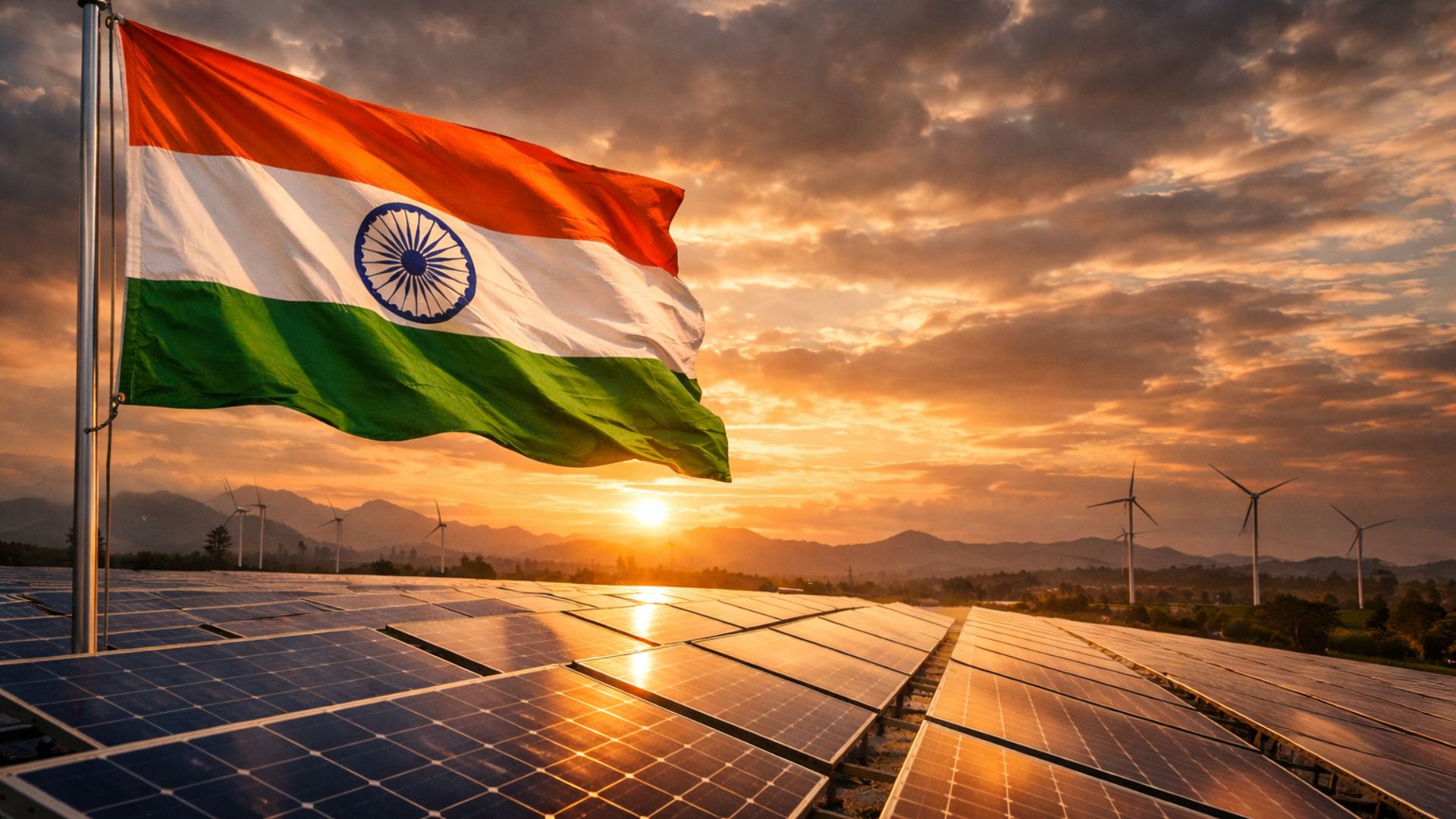

India advances in the global energy position by expanding its installed renewable energy capacity, accelerating the energy transition with billion-dollar investments, job creation, and a direct impact on the global sustainable economy.
India has just reached a significant milestone by taking the 3rd global position in installed renewable energy, consolidating its presence among the world’s major energy powers. This data, based on a report from the International Renewable Energy Agency (IRENA), as of December 2025, confirms the country’s accelerated progress amid the global race for clean sources.
According to data from Brasil 247, with 250.5 gigawatts of installed capacity, India surpasses several countries and is only behind China, with about 2.2 thousand gigawatts, and the United States. Brazil follows closely behind, occupying the fourth position, with 228.2 gigawatts.
This movement is not isolated. It is part of a broad energy transition strategy that combines investments, innovation, and ambitious goals. By accelerating its presence in renewable energy, India also reduces costs, attracts foreign capital, and strengthens its influence on the international stage.
-
Green Hydrogen Projects in Northeastern Brazil Stalled for 18 Months Awaiting Government Decree, Delaying Billions in Investments

-
Brazil Concludes Largest Energy Auction in History, Secures 18.97 GW and Mobilizes $12.8 Billion to Ensure Supply Until 2031
-
How Norway Produces More Energy Than It Consumes with Nearly 1,800 Hydropower Plants and Over 1,100 Reservoirs

-
Axia Energia Invests $280 Million in Q1, Increases Investments by 36%, and Turns Loss into $740 Million Profit


Installed capacity and renewable energy gain strength in India’s energy matrix
The growth of installed renewable energy capacity in India is directly linked to the transformation of its electricity matrix. In the fiscal year 2025–2026, the country produced about 1.8 trillion kilowatt-hours of electricity, a significant volume that matches the pace of economic expansion.
Of this total, approximately 539 billion kilowatt-hours, or 29.2%, came from non-fossil sources. This includes solar, wind, hydro, and nuclear energy, all essential to support the energy transition.
Another relevant data point reinforces this structural change: in June 2025, India reached 50% of installed capacity from non-fossil sources. The most impressive part is that this goal was achieved five years ahead of schedule in the Nationally Determined Contribution (NDC) under the Paris Agreement.
This anticipation demonstrates not only efficiency in the execution of public policies but also a clear commitment to sustainability and energy security.
“`html
Ambitious goals accelerate the energy transition and expand India’s global position
India’s evolution in the global renewable energy position did not happen by chance. The country has been adopting clear goals and structured policies to accelerate its energy transition.
During COP26, Prime Minister Narendra Modi announced an ambitious target: to achieve 500 gigawatts of installed capacity from non-fossil sources by 2030.
This goal places India among the most ambitious countries in the world in the energy sector. To achieve it, the government has been encouraging large-scale investments and expanding technological development programs.
Among the main factors driving this growth are:
- Accelerated expansion of solar and wind farms
- Government incentives for clean energy
- Opening up to foreign investments
- Modernization of electrical infrastructure
This set of actions strengthens India’s global position and creates a favorable environment for the continued expansion of renewable energy.


Green hydrogen boosts installed capacity and redefines the energy future
One of the most strategic points of India’s energy transition is the bet on green hydrogen. The so-called National Green Hydrogen Mission has been gaining prominence for its transformative potential.
The program foresees investments exceeding US$ 2 billion and sets robust goals by 2030. Among the main objectives are:
- To produce 5 million metric tons of green hydrogen per year
- To add 125 gigawatts to the installed capacity of renewable energy “`
- Attract more than US$ 87 billion in investments
- Generate more than 600 thousand jobs
- Reduce 50 million tons of CO₂ per year
This initiative positions India prominently in the race for clean technologies, especially in industrial sectors that still face challenges in reducing emissions.
By investing in green hydrogen, the country not only expands its installed capacity but also diversifies its energy matrix and strengthens its leadership in the global energy transition.

Wind energy grows strongly and reinforces advancement in global position
Wind energy also plays a key role in India’s advancement in installed renewable energy capacity. In the fiscal year 2025–2026, the country added 6.05 gigawatts to the sector, recording a growth of 46% compared to the previous period.
As a result, the installed wind capacity surpassed 56 gigawatts, consolidating India as the fourth largest power in this segment worldwide.
This growth was driven by incentive policies and specific investments, including a program with about US$ 55 million. The expansion of wind energy directly contributes to the diversification of the energy matrix and the reduction of dependence on fossil sources.
Moreover, the combination of solar and wind energy increases the stability of the electrical system, reducing risks and enhancing generation efficiency.
Economic and environmental impacts strengthen India’s leadership in renewable energy
India’s advancement in installed renewable energy capacity generates impacts that go beyond the energy sector. The economic and environmental benefits are clear and help explain why the country has attracted so much international attention.
Among the main positive effects, the following stand out:
- Significant reduction in energy generation costs
- Greater energy security in an unstable global scenario
- Attraction of large-scale foreign investments
- Job creation in strategic sectors
- Reduction of carbon emissions
These factors reinforce India’s global position and show that the energy transition can also be a strategy for economic growth.
At the same time, the country becomes more competitive and less vulnerable to fluctuations in the international fossil fuel market.
How India consolidates energy leadership with strategy and scale
India’s rise to the 3rd global position in installed renewable energy capacity is the result of a combination of strategic planning, investment scale, and continuity of public policies.
Unlike other countries that progress more slowly, India has adopted an integrated approach, connecting economic growth with sustainability. This model allows for an accelerated energy transition without compromising development.
The consistency of actions also conveys confidence to the market, which helps attract foreign capital and enable new projects. As a result, the country creates a positive cycle of growth, innovation, and expansion of installed capacity.
What this advance represents for the future of global energy
India’s progress in renewable energy is not just a national milestone. It has direct implications for the future of energy worldwide. By consolidating its global position, the country begins to influence strategic decisions, prices, and trends in the energy sector.
This is especially relevant at a time when the energy transition has become a global priority. The Indian experience shows that it is possible to accelerate the adoption of renewable energy on a large scale, even in economies with high energy demand.
More than that, it demonstrates that sustainability can go hand in hand with economic growth. With ambitious goals, significant numbers, and a well-defined strategy, India positions itself as one of the main protagonists of the new energy era.


