Portuguese
  Spanish


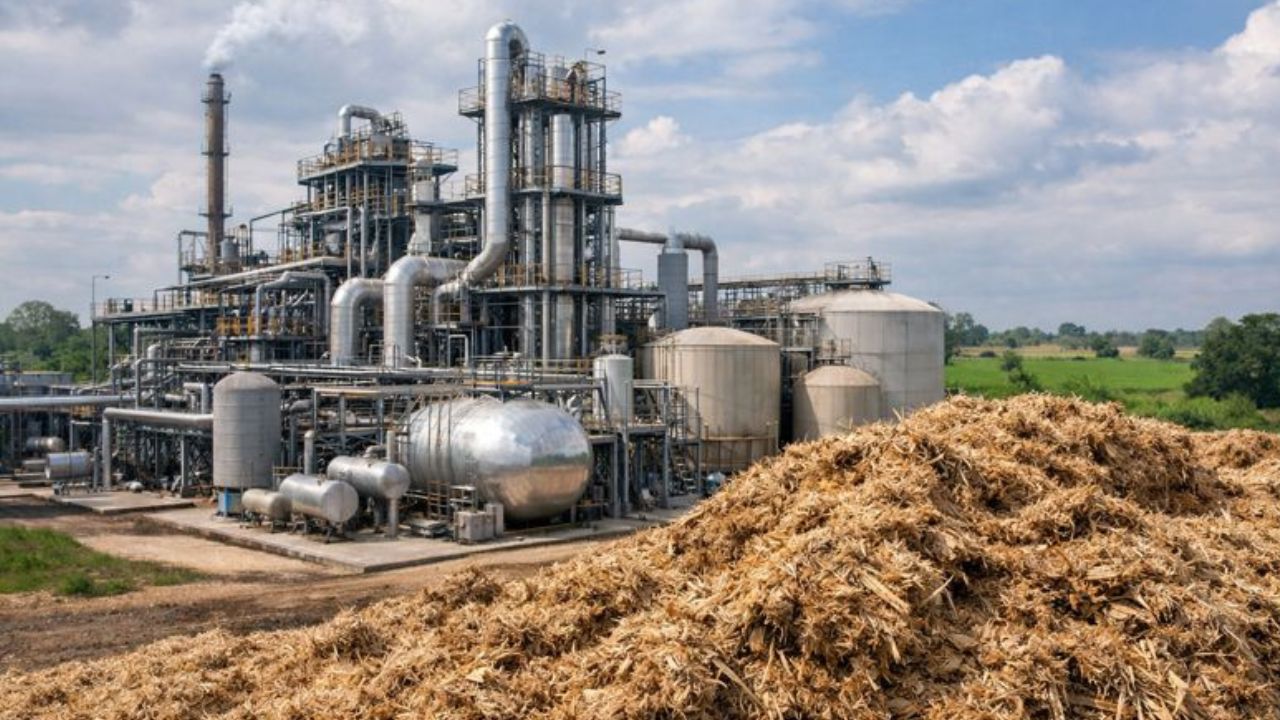


New LanzaTech Ethanol Plant in India to Use Sugarcane Bagasse and Advanced Technology to Produce Sustainable Fuels.
The second-generation ethanol plant announced by LanzaTech marks a new advance in sustainable fuel production in India. The company signed a contract to build a plant capable of converting sugarcane bagasse into fuel and chemical feedstocks, using agricultural waste abundant in the country.
The project will be implemented in Uttar Pradesh, is expected to be operational within two years, and is part of a larger effort to reduce emissions, strengthen rural economies, and increase the use of renewable sources in India’s energy sector.
The initiative will be developed in partnership with Spray Engineering Devices (SED) and is part of the “SED Smart Village” concept.
-
The U.S. Navy Conducts Submarine Tests in Idaho Lake to Detect Underwater Noises Hidden by the Ocean

-
British Factory Transitions from Mechanical Parts to Producing 420,000 Electric Power Units Annually, Supplying 70% of Ford’s Electric Cars Sold in Europe
-
France Launches Network to Recycle 20 Million Cookware Pieces by 2027, Accepting All Brands for Aluminum and Coating Separation
-
Ancient Mines in Spain Reveal Tools and Metals That May Explain Bronze Age Trade with Scandinavia


The model aims to unite low-cost renewable energy, carbon reuse, and local high-value production, positioning the ethanol plant as a central hub in the regional energy transition strategy.
See more: Gasoline Reduction: Petrobras Cuts Price and Market Reacts
See more: Meatpackers Pressure Government for Hilton Quota in China to Protect Brazilian Industry
Bagasse Ethanol Plant Reinforces Circular Economy in India
The new plant is designed to process up to 300 tons of sugarcane bagasse daily.
This agricultural waste, often discarded or burned, is now being utilized as a strategic raw material for producing bagasse ethanol, sustainable fuels, and green chemicals.
Therefore, in addition to reducing waste, the project directly contributes to the circular economy.
According to the companies involved, the local production chain will be strengthened by avoiding waste burning and encouraging the decentralized production of energy and industrial feedstocks.
LanzaTech’s Carbon Recycling Technology
LanzaTech’s differentiator lies in the carbon recycling technology applied to the ethanol plant.
The process combines gasification of bagasse with oxygen-enriched air, generating a gas rich in carbon that is converted into ethanol by patented microorganisms.
These microorganisms operate in bioreactors that function similarly to a brewery. However, instead of converting sugar to alcoholic beverage, they convert gases such as CO₂, combined with green hydrogen, into ethanol.
Thus, the plant transforms waste into fuel, reducing emissions and increasing energy utilization.
Environmental Impacts and Benefits for Agriculture
In addition to producing bagasse ethanol, the project plans to generate nutrient-rich biochar, estimated to be between 5% and 10% of the processed volume.
This byproduct can be used by local farming communities to improve soil fertility.
“Modern agriculture is about to undergo a significant transformation through green solar energy and hydrogen, which will create limitless opportunities for rural economies,” stated Vivek Verma, founder of SED.
He also emphasizes that India’s solar potential, combined with fertile lands and increasing energy demand, strategically positions the country to lead a future of low-cost renewable energy.
According to Verma, ensuring biomass is processed locally is essential to preserve soil health and strengthen rural economies.
Strategic Project Within the PM JI-VAN Yojana Program
LanzaTech’s ethanol plant will be one of the first private projects framed under the PM JI-VAN Yojana program, an initiative of the Indian government aimed at promoting the production of advanced ethanol from agricultural and industrial waste.
This framing reinforces the strategic role of the project in India’s energy policy. Moreover, the proposal aligns with the “Make in India” initiative by promoting national production of essential goods and materials based on clean technologies.
“Our partnership with SED for this project expands our presence in India while creating a roadmap for the commercial deployment of agricultural waste as an essential raw material for ethanol production,” stated Jennifer Holmgren, CEO of LanzaTech.
Growing Presence of LanzaTech in India
Currently, LanzaTech’s technology is already operating at the Indian Oil Corporation’s Panipat unit, where refinery off-gases are converted into ethanol. This is the company’s sixth commercial-scale plant worldwide.
Additionally, a new smaller plant, with a capacity of 10 tons per day, is advanced in execution by NTPC in Andhra Pradesh, using residual CO₂ and green hydrogen.
These projects consolidate India as one of the leading global hubs for carbon recycling technology.
Bagasse Ethanol as a Vector for Energy Transition
With the new ethanol plant, LanzaTech reinforces its bet on bagasse ethanol as a viable solution to reduce emissions, add value to agricultural waste, and increase the supply of sustainable fuels.
Thus, the initiative combines technological innovation, rural development, and industrial policy, placing the plant at the center of a cleaner and more resilient energy strategy for India.