






 Portuguese
  Spanish


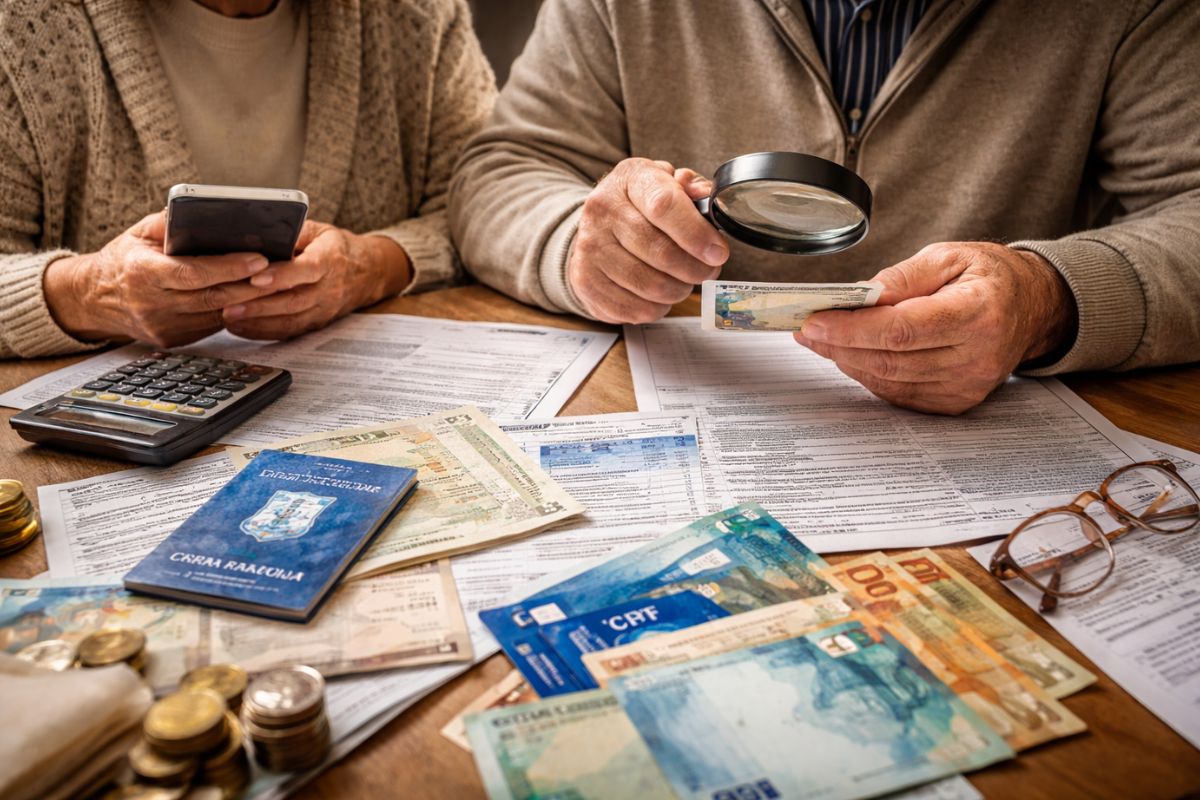

With Automated Life Proof Since 2023, INSS Crosses Public Databases and Decides the Continuation of Benefits Without Queueing at an Agency. When It Does Not Find Recent Signs, the Notification Arrives via Meu INSS, via 135 or via the Bank. CPF, Address, and Links Become Critical Points in Periodic Reviews.
In Brazil, life proof has ceased to be an annual counter ritual, but that does not mean the process has become invisible. When INSS cannot find recent records to support the insured’s existence, benefits come under validation radar, and the notification may appear unexpectedly, including on Meu INSS.
The change, in effect since January 2023, shifted the focus to cross-reference databases and the quality of registration. What protects benefits, in practice, is maintaining consistent data and documents between systems: CPF, address, links, and medical information, when applicable, need to communicate without noise.
Automated Life Proof Changes the Game and Changes the Risk
Since 2023, life proof is verified automatically:
-
Brazil to Issue “Panda Bonds” in China, Aiming to Raise Up to 5 Billion Yuan at Lower Interest Rates Than Dollar Debt
-
NATO Faces Internal Tensions as U.S. Pushes for Increased Defense Spending, Targeting 5% of GDP by 2035, with Warnings for Countries Near 2% Level

-
Brazil to Introduce B16 Diesel with Increased Soybean Oil Content for Trucks by 2026
-
Brazil’s July Bolsa Família Payments May Include Extra $150 and $50 for Families with Children, Pregnant Women, and Updated CadÚnico Registration


INSS seeks evidence in daily activities and administrative records, such as using Meu INSS, banking operations with biometrics, recorded vaccinations, participation in elections, updates in CadÚnico, issuance or renewal of documents, and filing of tax returns.
This model reduces travel, but creates a sensitive point: if a person spends long periods without interactions that generate traces in these databases, INSS may not locate sufficient evidence.
The absence of a record is not proof of irregularity, but it can trigger checks and place benefits under summons.
Where the Notification Appears and Why It Arrives
When INSS does not identify recent signs for life proof, the notification tends to arrive through digital and institutional channels.
The communication may occur on Meu INSS, through Central 135, or via a message mediated by the bank responsible for the payment of benefits.
In practice, the trigger is the lack of compatibility or updates between registrations.
A CPF with discrepancies, an address that has changed without registration, or a benefit that depends on health conditions without updated documentation can generate enough noise for INSS to request confirmation through other means.
Eight Documents That Must Be Ready Before the Summons
INSS’s logic is to validate identity, address, contribution history, and, when applicable, the condition that gives rise to benefits.
Therefore, the basic set revolves around eight items that cover most situations of review, updating, and summons.
Official document with photo, for identity verification.
CPF, to link the registration between databases and avoid duplicities.
Updated proof of residence, especially after a change of address.
Work card, useful for checking links and declared periods.
Proof of links and contributions, when there is a need to verify history.
Birth or marriage certificate, common in benefits with dependents.
Updated medical report, in cases of retirement or disability assistance.
Power of attorney and documents of the legal representative, when the insured is represented by third parties.
The central point is not to collect paper, but to reduce contradictions. If CPF, residence, and links appear one way in the bank and another in the public registration, the risk of INSS questioning increases and the benefits may be exposed to freezes until validation.
What Often Goes Wrong and How It Leads to Payment Delays
A common mistake is treating life proof as a topic resolved forever.
Automated life proof depends on the data ecosystem, so a period without official movements combined with outdated registration can produce statistical silence, even with the person active in daily life.
Another problem lies in the banking chain.
Since operations with biometrics can serve as evidence, changes in banks, registration failures, or low overlap of identification data can interrupt the flow of confirmation.
When the system does not see the person, INSS tends to ask the person to make themselves seen, and this may mean presenting CPF, proof of residence, and a photo ID.
How to Organize Data Without Relying on a Single Database
A simple strategy is to focus checks on three fronts, without waiting for the next notification from INSS.
The first is Meu INSS, where notifications and pending issues may arise; the second is the paying bank, as biometrics and registration are part of the life proof circuit; the third is the alignment of address and documents, with a consistent CPF in all registrations used in everyday life.
The goal is to reduce friction when there is a summons. Instead of rushing to gather documents under pressure, the insured already knows what they have and what is missing.
This is especially relevant for the elderly and pensioners, who may rely on third parties: in this case, the power of attorney and the legal representative’s documents must be as organized as the titular CPF to preserve benefits.
INSS has automated the life proof but has not eliminated the duty of registration consistency.
Benefits continue to be linked to signs of life in public databases and to the alignment between CPF, identity, address, and documents that support each type of benefit.
If you have ever needed to regularize benefits due to lack of confirmation, what was the point that caused the most delay: Meu INSS, the bank, or the lack of any document like CPF and proof of residence?







