






 Portuguese
  Spanish


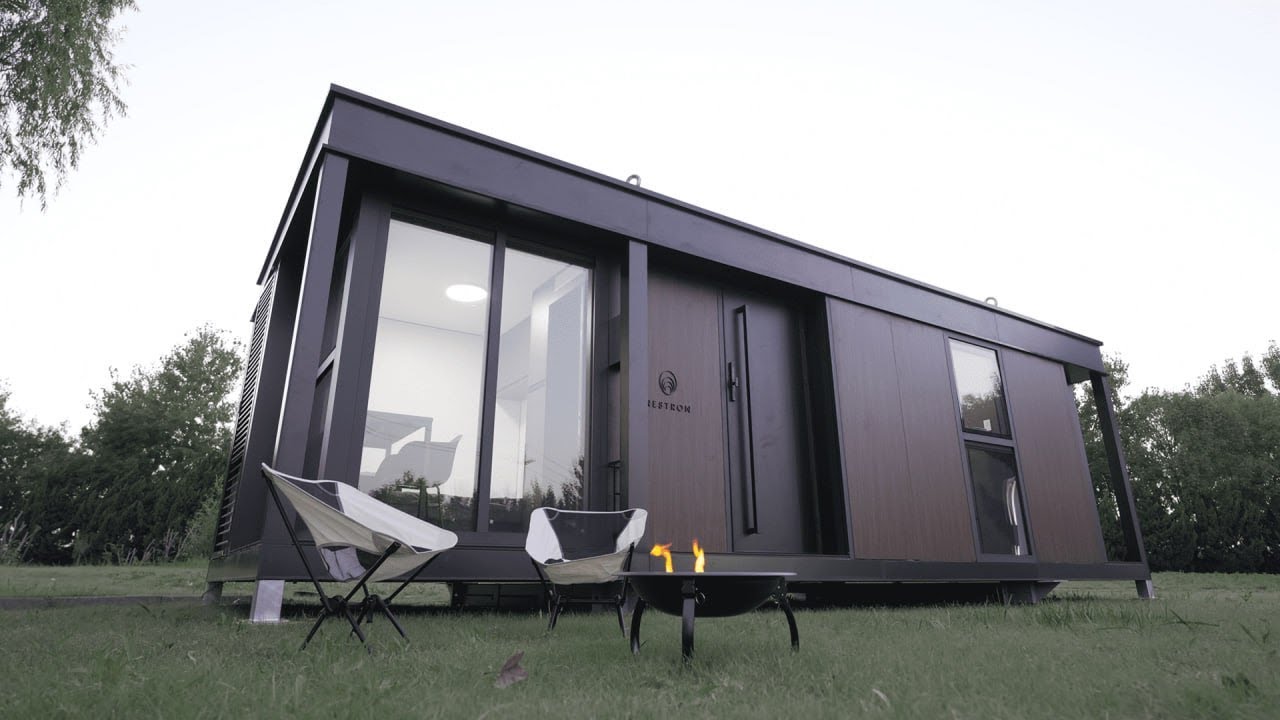

Nestron bets on prefabricated smart homes delivered ready-to-move-in, with furniture, automation, and quick installation.
The idea of buying a house almost in the same way someone buys a car has started to gain traction in different parts of the world. One of the companies that has attracted the most attention in this market is Nestron, which focuses on futuristic tiny houses delivered practically ready-to-move-in, with built-in furniture, home automation, and a modular structure manufactured in an industrial environment.
The differential that went viral in international videos and reports is precisely the “ready-to-live” proposal. According to the company itself, the units already leave the factory with much of the infrastructure completed, including furniture, lighting, bathroom, equipped kitchen, and integrated smart systems. The promise is to drastically reduce dependence on long construction projects on site.
With a look reminiscent of futuristic science fiction capsules, Nestron’s houses aim to occupy an increasingly competitive space in the global market: that of industrialized compact dwellings that combine modular construction, automation, and accelerated installation.
-
U.S. City Builds Tiny Home Village on Water Company Land to House 136 Homeless People: Inside the Social Housing Units

-
Woman Turns Shipping Container into Home, Embraces Rural Life to Cut Monthly Expenses to Just Over $330
-
France Revamps 530 Social Housing Units with Large Balconies and Glass Facades Without Demolishing Existing Buildings

-
Facing high rent, couple transforms parents’ garage into a fully functional apartment, creating a complete home at a fraction of the market cost.




Nestron’s smart homes arrive ready-to-move-in and aim to eliminate months of traditional construction
Nestron’s main proposal is to transform the house into an industrialized product. Instead of erecting walls directly on site for months, the company produces almost the entire structure in a factory and sends the practically completed module to the client.
According to the company, the units are delivered in a “ready-to-live” model, a concept that includes built-in furniture, lighting, bathroom, kitchen, and smart systems integrated into the structure. This significantly reduces traditional civil construction stages, such as interior finishing, furniture installation, and basic infrastructure assembly.
The idea is that, after positioning on the land and connecting the main utilities, the house will be practically ready for use in a few hours or a few days, depending on local legislation and infrastructure.
Futuristic design transformed Nestron’s tiny houses into a phenomenon on social media and architecture websites
Much of Nestron’s repercussion came from the units’ extremely futuristic look. The houses use curved lines, large glass surfaces, integrated lighting, and minimalist finishes that resemble science fiction movie sets.


The Cube Two X model, for example, gained prominence on international websites for combining compact architecture with an advanced technological appearance. The facades use galvanized steel, reinforced panels, and panoramic windows to increase natural lighting and the feeling of internal spaciousness.
This aesthetic helped differentiate the company from old prefabricated houses associated with simple and unsophisticated structures.
Integrated smart system controls lighting, temperature, curtains, and home devices
Another central element of the project is home automation. Nestron states that its units function as complete smart homes, integrating various digital systems within the residence.
The models include features such as voice-controlled lighting, motion sensors, digital locks, automated curtains, and integration with platforms like Alexa and Google Home. The company also develops its own artificial intelligence system called “Canny”, focused on home automation.
The proposal is to transform the tiny house into a highly connected residence, reducing the need for subsequent installations made by the owner.
Compact structures aim to utilize every internal centimeter with built-in furniture and modular solutions
As the houses have relatively compact dimensions, internal utilization has become a fundamental part of the architectural project. The furniture is integrated into the house’s structure to maximize circulation and storage.

Some models include an integrated queen bed, built-in wardrobes, a complete compact kitchen, a functional bathroom, and even small work areas. Large windows help visually expand the internal space and increase natural light.
This concept follows the global trend of tiny houses, which try to combine smaller areas with a sense of comfort and functionality.
Nestron modular homes also focus on energy efficiency and recyclable materials
The company also uses a discourse strongly linked to sustainability. According to information released by Nestron and specialized websites, the modules use recyclable materials, reinforced thermal insulation, and a galvanized steel structure designed for greater durability.
The company also states that the industrialized process reduces material waste and water consumption when compared to traditional construction. Some models can also receive off-grid systems, including solar panels and alternative sanitation.
This environmental argument has become important at a time when civil construction is facing increasing pressure to reduce waste emissions and environmental impact.
Smart tiny houses grew after a global rise in real estate and civil construction costs
The growth of companies like Nestron accompanies important changes in the global real estate market. The increase in property prices, the scarcity of labor, and the rising cost of traditional construction have led to increased interest in industrialized and compact solutions.
Tiny houses then began to be seen not only as an alternative living style but also as a faster and potentially more accessible option in certain regions. Nestron entered precisely this international movement of housing industrialization.

At the same time, the futuristic visual appeal helped transform these homes into highly shareable objects on social media.
Models range from compact units for one person to larger versions for small families
Nestron works with different models and configurations. Some versions are designed for individual occupancy, while others have larger layouts capable of accommodating couples or small families.
The Cube One, for example, has a compact area of approximately 156 square feet, while the Cube Two X reaches close to 377 square feet in some configurations disclosed by the company.
Despite the reduced dimensions compared to conventional houses, the designs try to compensate for this with internal integration, natural lighting, and multifunctional furniture.
Smart prefabricated homes try to change the logic of traditional civil construction
Nestron’s model represents an important shift in mindset. Instead of treating construction as a slow, artisanal process carried out on-site, the company works with an industrial logic similar to the manufacturing of automobiles or technological equipment.
Much of the complexity of the work is transferred to specialized factories, reducing execution time at the installation site. This allows for greater quality control, standardization, and predictability of the production process.

The proposal aims precisely to transform housing into a modular product ready for transport and connection.
Nestron’s futuristic homes show how technology and modular construction are starting to blend
Perhaps the most impressive aspect is precisely the fusion between civil construction and smart technology. Nestron units don’t just try to replace traditional masonry; they try to transform the very idea of a home into something closer to a connected technological product.
Automation, artificial intelligence, integrated furniture, industrialized modules, and accelerated installation are all part of the same proposal. This helps explain why these tiny houses have gained so much international attention in recent years.
Ultimately, Nestron shows how part of the industry believes that the future of housing may involve fewer construction sites full of cement and more factories capable of delivering homes almost ready for use, connected, and transportable.









