






 Portuguese
  Spanish
  3 min of reading
  0 comments


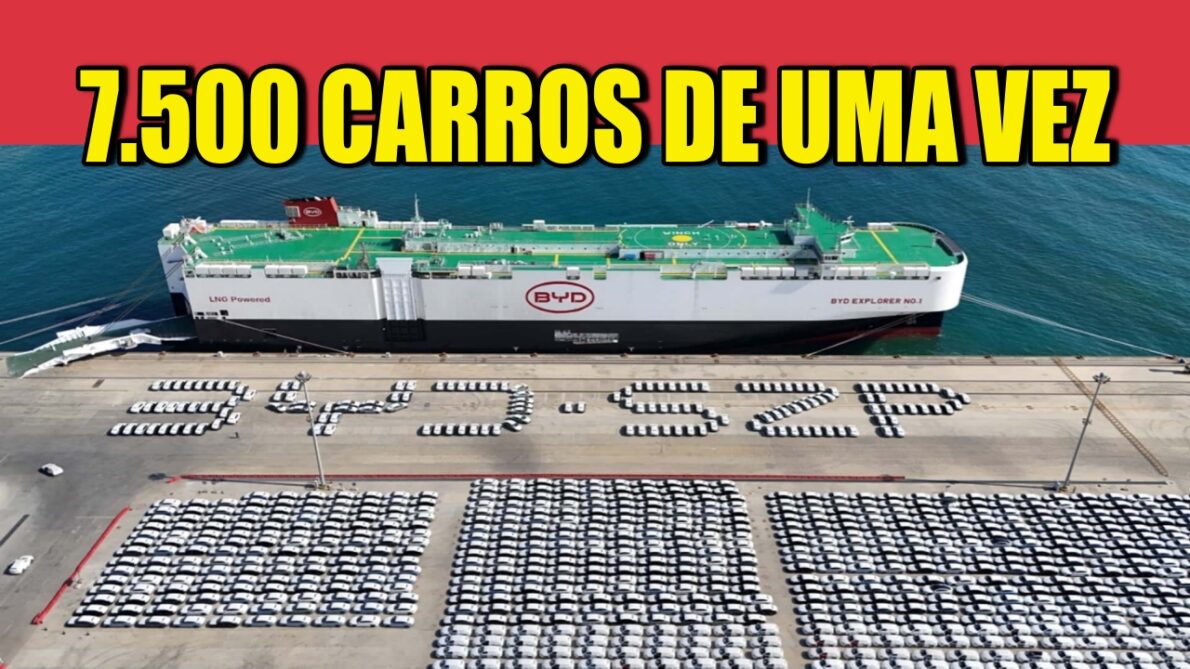
China Wants to Spread Its Cars Around the World: BYD Will Have a Fleet of At Least 8 Ships Just to Export Its Cars. The First One Has Already Been to Brazil and the Second Has Just Completed Construction
The ambitious investment by China to spread its cars around the world: The second ship from BYD, built at the Guangzhou Shipyard International, is ready to be tested before starting operations, expanding the company’s fleet, which already has one cargo ship in operation. BYD, which is expanding its activities with a dedicated fleet of RoRo ships for vehicle transport, plans to have a total of eight vessels focused on exporting its cars, with the first ship of the fleet having already been to Brazil and the second just being completed.
The new vessel has been named Hefei, in honor of the capital of Anhui province, where BYD maintains a factory. With a length of 199.9 meters, the ship can carry up to 7,500 vehicles in a single trip. Additionally, it can reach a maximum speed of 34 km/h (equivalent to 18.5 knots), using both liquefied natural gas (LNG) and fuel oil to power its engines.
Although the construction of Hefei has already been completed, the ship will still need to undergo rigorous safety and performance tests before it begins operations, which is common in the maritime sector. These tests will ensure that the vessel is prepared to face the conditions of international maritime transport.
-
Bolivian Female Construction Workers Form Association to Combat Discrimination and 38% Pay Gap in the Industry

-
Uber Faces Shareholder Scrutiny as Board Accused of Ignoring Safety, Compliance, and Harassment Warnings Amid Over 3,500 U.S. Lawsuits
-
Ferrari’s First Electric Car Divides Fans, Priced at $630,000, Amid Concerns Over Limited Editions; Brand Clarifies It’s Not Just for Future Perks
-
Near Amsterdam, residents buy land and discover they must also build streets, manage drainage, handle waste, and grow food on half their plot.


BYD Will Add Ships to Its Fleet with Capacity to Carry Up to 9,500 Vehicles
In recent years, the growth of Chinese car exports has put enormous pressure on maritime logistics. Only in 2023, the costs of chartering ships reached US$ 115,000 (equivalent to R$ 628,300), representing a significant increase of 576% compared to 2019 values.
To safeguard against this price increase and ensure the efficiency of its operations, BYD commissioned the construction of four RoRo ships in 2021, with an estimated unit cost of US$ 64 million (R$ 350 million). In addition, the company plans to add four more vessels to its fleet, and these ships will have the capacity to transport up to 9,500 vehicles. The aim of these investments is to ensure that the growing demand for its cars is effectively met.
This strategy of investing in a private fleet is not exclusive to BYD. A notable example is Hyundai, which in 2001, during the expansion of its sales, founded Hyundai Glovis, a logistics operator responsible for its fleet of ships. Currently, Hyundai has 96 vessels, of which 60 are dedicated to car transport and 36 are used for containers.
BYD Intensified Its Investments in Brazil
In the past year, BYD intensified its investments in Brazil, gaining a significant share of the hybrid and electric car market. This growth in sales resulted in a corresponding increase in the volume of vehicles imported to the country.
Starting this year, there has been a gradual increase in the tax on imported electrified vehicles, which led BYD to anticipate its imports before the new taxes took effect. This measure ended up putting pressure on maritime transport and created competition with other companies that also rely on importing goods.
With another ship arriving in its fleet, BYD will have more flexibility to handle its export investments and will be able to send a larger quantity of vehicles in a single shipment. The Explorer 01, the first vessel in the fleet, has already been to Brazil, and it is expected that Hefei will also pass through Brazilian ports in the coming months, further expanding the brand’s logistical capacity in the international market.
China Invaded Brazil: The BYD Ship Docked and Spread Thousands of Electric Cars in Brazilian Lands






-

1 person reacted to this.