






 Portuguese
  Spanish


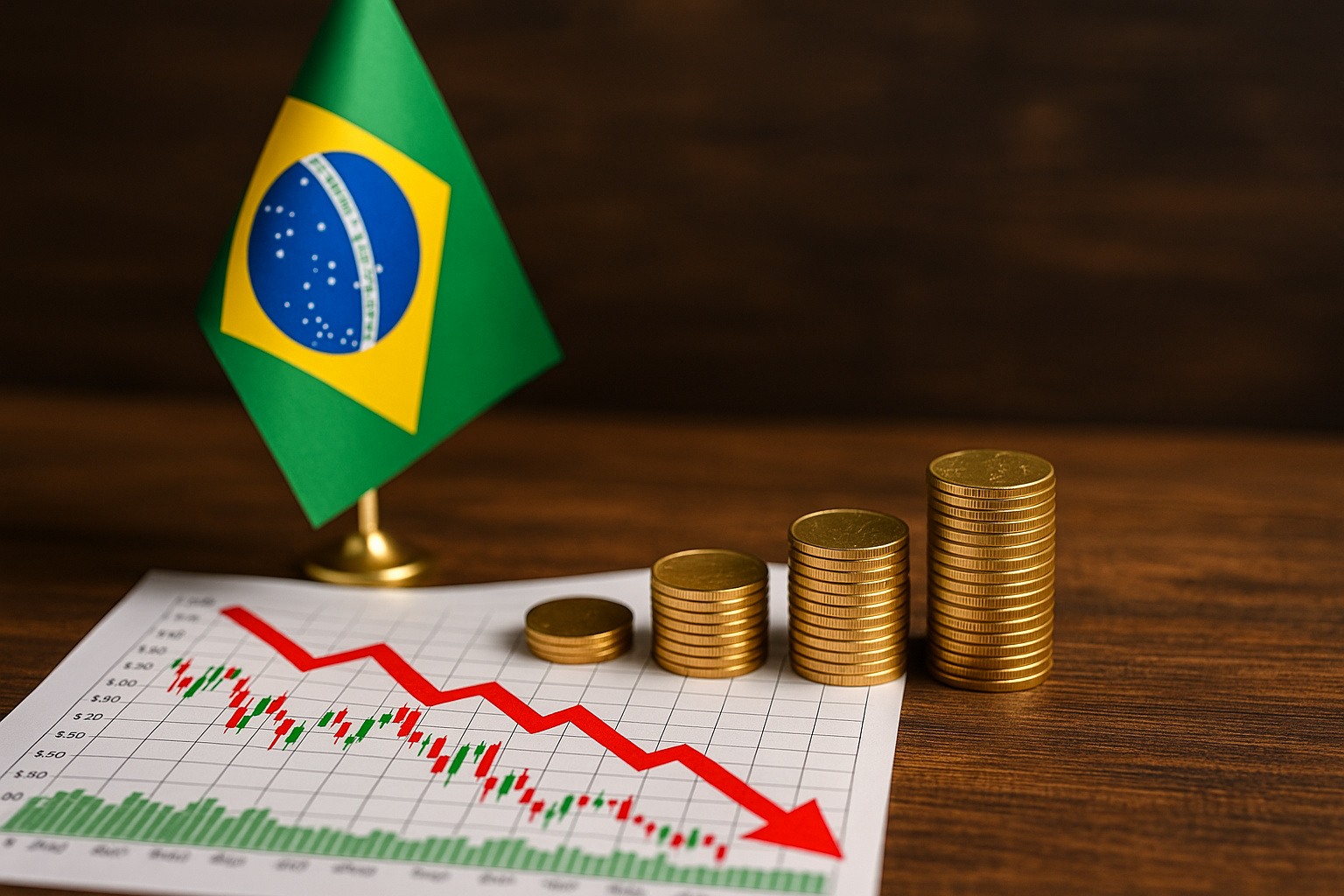


IPCA Falls 0.11% in August, Lowest Result Since 2022, Says IBGE. Deflation Leads Accumulation to 5.13% and Affects the Economy.
The Broad Consumer Price Index (IPCA), the main inflation measure in Brazil, showed a decrease of 0.11% in August, according to data released by the Brazilian Institute of Geography and Statistics (IBGE) this Thursday (11).
The result is the lowest since September 2022, when the index fell by 0.29%. The recorded deflation reinforces the trend of economic slowdown in the Brazilian economy, with a direct impact on consumers’ wallets.
Deflation in 2025 and Comparison with 2022
For the month of August, the rate was also the lowest since 2022, a year in which deflation reached 0.36%. In August of last year, 2024, the IPCA recorded a more modest drop of 0.02%.
-
Brazil to Issue “Panda Bonds” in China, Aiming to Raise Up to 5 Billion Yuan at Lower Interest Rates Than Dollar Debt
-
NATO Faces Internal Tensions as U.S. Pushes for Increased Defense Spending, Targeting 5% of GDP by 2035, with Warnings for Countries Near 2% Level

-
Brazil to Introduce B16 Diesel with Increased Soybean Oil Content for Trucks by 2026
-
Brazil’s July Bolsa Família Payments May Include Extra $150 and $50 for Families with Children, Pregnant Women, and Updated CadÚnico Registration


Now, with the result from August 2025, the inflation decline trend is confirmed, bringing relief in consumption sectors and opening space for new debates on monetary policy management.
12-Month Accumulation Shows New Contraction
In addition to the monthly decline, the IBGE survey revealed that the accumulated rate over 12 months has decreased for the second consecutive month. The index dropped from 5.23% in July to 5.13% in August.
This level is the lowest since February 2025, when the accumulation was marked at 5.06%. The reading reinforces that inflation remains under control, although still above the official target set by the Central Bank.
Impacts of Deflation on the Brazilian Economy
Deflation, when average prices fall, can generate different effects on the economy. For consumers, there is a perception of increased purchasing power, as products and services become more accessible. However, if prolonged, the trend may indicate a cooling of economic activities, with reduced investments and impacts on the labor market.
Experts highlight that the drop in prices in sectors such as fuel and electricity was decisive for the August result.
At the same time, other segments, such as dining out, showed resilience and maintained positive variations.
Historical Context and Relevance of the Result
The behavior of the IPCA in 2025 draws attention as it occurs in a scenario of economic adjustments and high sensitivity in the financial market. Since 2022, when the index showed a significant deflation of 0.36% in August, such a substantial drop had not been observed in the same month.
According to the IBGE, this type of movement needs to be analyzed cautiously, as it does not always reflect merely an improvement in the population’s purchasing power, but also structural changes in administered prices and the global economic context.
Expectations for the Coming Months
With inflation slowing down, expectations around the Central Bank’s decisions regarding the basic interest rate, the Selic, are increasing. The fall in the IPCA reinforces the possibility of maintaining or even gradual cuts in interest rates, which could stimulate investments and credit.
On the other hand, analysts warn that external factors, such as exchange rate fluctuations and international tensions, might reverse part of the observed price relief.
Thus, the trajectory of the index until the end of 2025 will depend not only on the internal scenario but also on pressures from the global market.







