Portuguese
  Spanish


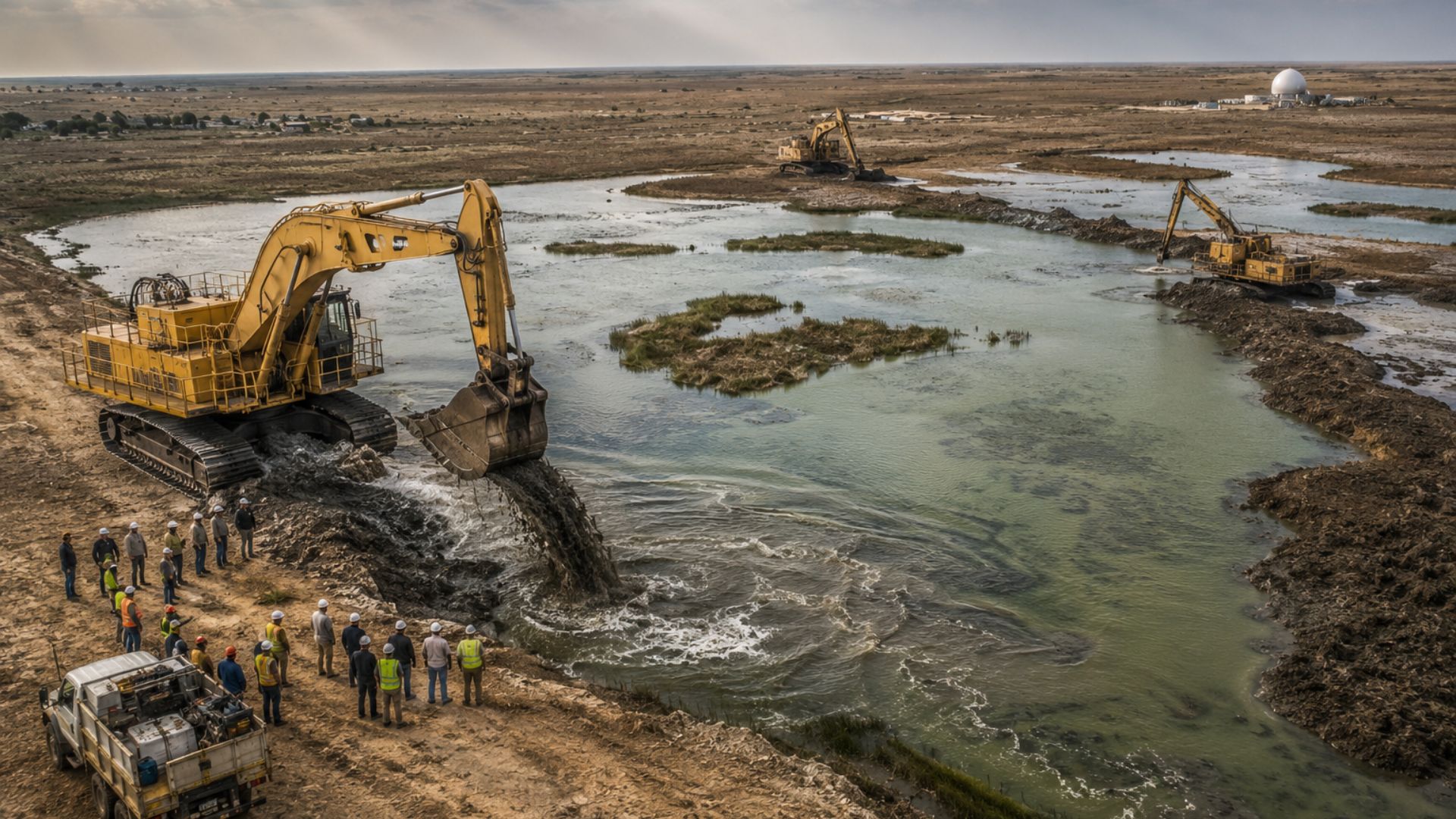

Recovery of Iraq’s historic marshes returns water to abandoned regions, boosts residents’ return, and makes biodiversity reappear after years of extreme drought. High volume in the Tigris and Euphrates rivers also expands the country’s water reserves and strengthens areas associated with ancient Mesopotamia.
The historic marshes of southern Iraq have received water again after years of severe drought, in a recovery that has raised the submerged area to between 32% and 36%, compared to a maximum of 8% in the last five years.
The change is occurring in the Chibayish and Ishan Hallab regions, supplied by the Tigris and Euphrates rivers, where canoes, buffaloes, and pastures are reappearing in areas that had been abandoned by herders and fishermen.
Return of water transforms landscape in Iraq’s marshes
In Dhi Qar province, channels that had remained dry for years are once again receiving boats, while buffaloes cross flooded areas and new patches of vegetation begin to alter the landscape that had been abandoned by some residents.
-
Cold War Secret Plane Lost Engine Mid-Flight, Forcing Six to Parachute in Darkness; Wreckage Remains in Death Valley Mountains 73 Years Later

-
Opened in 1980, Shopping Recife was Pernambuco’s first mall and helped transform Boa Viagem into a bustling and sought-after district in southern Recife.
-
Tired of Monthly Water Supply, South African Villagers in Limpopo Connect Mountain Spring to Taps, Bringing Water to 5,000 People with $700 Initiative

-
Rare Case of Neurocysticercosis in Spain: 60-Year-Old Man’s Suspected Brain Cancer Turns Out to Be Tapeworm Cysts, Avoiding Invasive Cancer Treatments





“Some time ago, all our cattle died and there was no water at all,” said Haidar Qassem, a buffalo herder in the central marsh, reporting that many families left the region during the most severe period of drought.
With the gradual recovery of water levels throughout this year, some of the herds have begun to be rebuilt, which has also encouraged the return of residents who directly depend on fishing, buffalo farming, and the flooded areas to survive.
Heavy rains and water management aid river recovery
According to Iraqi water resources authorities, more intense seasonal rains, combined with more efficient dam management, have contributed to raising reservoirs and improving the water supply to marshy areas in the south of the country.
With more water stored, the government began to increase releases to the marshes, boosting the flow in the Tigris and Euphrates rivers and allowing water to reach regions that had completely dried up in recent years.
According to the Ministry of Water Resources, Iraq’s strategic reserves have grown by about 6 billion cubic meters this year, a scenario that expands the country’s capacity to manage supply during the hotter months.
Region linked to the Garden of Eden comes back to life

The Ishan Hallab area, which is part of the Iraqi marshes, completely dried up between 2021 and 2025, according to expert Jassim al-Assadi, forcing herders to leave the site.
The region is part of the Southern Iraqi Ahwar, a complex recognized by UNESCO in 2016 as a World Heritage site, consisting of four marsh areas and three archaeological sites linked to ancient Mesopotamia.
Some associate these marshes with the biblical Garden of Eden, although this identification belongs to the historical-cultural and religious field, not a scientific confirmation.
Biodiversity reappears after years of extreme drought
In addition to the recovery of water volume, the region’s biodiversity is also beginning to show gradual signs of recovery, especially in areas where vegetation had practically disappeared due to the prolonged drought.
The increased levels favor fish reproduction, the growth of native plants, and the expansion of reeds used by residents in building traditional houses erected along the flooded areas.
For thousands of years, the so-called Marsh Arabs have maintained livelihoods linked to fishing, buffalo breeding, and the direct use of natural resources present in the wetlands of southern Iraq.
Even with recent improvements, residents are still demanding new water releases, as the accumulated effects of years of drought, river damming, and climate pressure continue to affect part of the region.

Historical drainage reduced flooded areas in southern Iraq
For decades, the Iraqi marshes covered an area of over 9,500 km², but underwent extensive drainage in the 1990s, a period when Saddam Hussein’s government promoted interventions that profoundly altered the region.
After Saddam’s fall in 2003, part of the wetlands underwent a gradual process of reflooding led by the Iraqi government, allowing the progressive return of about 250,000 Marsh Arabs.
For residents like buffalo breeder Raheem Abdul Zahra, the recent recovery has once again changed the routine of communities that had lived for years with dry canals, loss of vegetation, and difficulty in maintaining their herds. “The land was dry, but now it is alive again,” he stated.