






 Portuguese
  Spanish


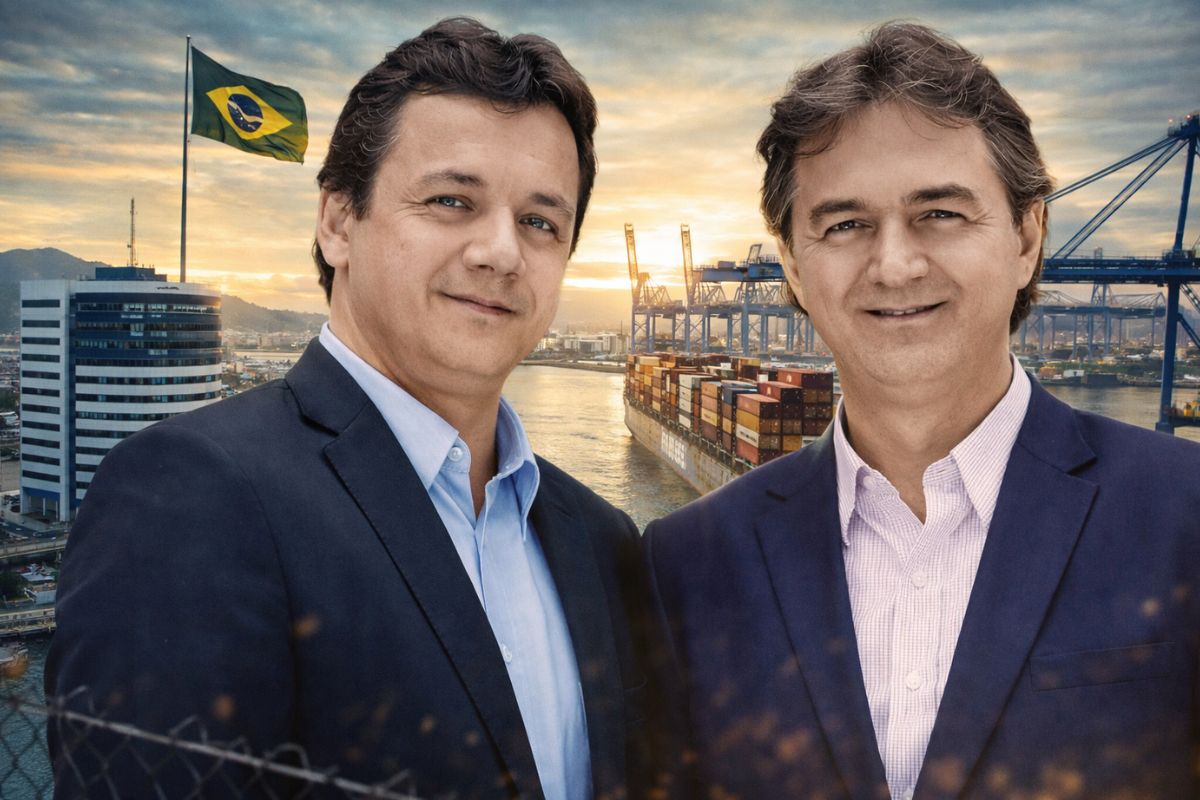

With a Provisional Contract Since October 2024, JBS Terminals, Controlled by the Batista Brothers, Publicly State They Are Working to Compete for the 30-Year Concession of the Leased Area at the Port of Itajaí; After Investing R$ 220 Million, the Terminal Handled 430,000 TEUs in 15 Months and 384 Ships in 2025.
The Batista Brothers, Joesley and Wesley, signaled that they want to permanently remain in charge of operations in the leased area of the Port of Itajaí, aiming for the auction that will determine who will manage the asset for 30 years. This intention was reaffirmed by JBS Terminals’ CEO, Aristides Russi Junior, who stated that the focus is on “staying in the long-term auction”.
The movement comes after a period of operational recovery and investment, with indicators of movement and structure gaining centrality in the competition. At the same time, the regulatory process is still going through decisive stages: the Ministry of Ports and Airports completed the document and forwarded it to the Federal Court of Accounts (TCU), which has not yet commented.
What’s at Stake in the 30-Year Auction at the Port of Itajaí

When the Batista Brothers express interest in a 30-year concession, the focal point is not merely “to stay” or “to leave,” but to assume long-term commitments in a terminal that relies on predictability to plan capacity, construction, technology, and hiring. In such concessions, the design of the bid usually establishes investment rules, performance targets, service levels, and oversight mechanisms, which increases the weight of the outcome for the local logistics chain.
-
At 14 years old, she worked in a factory in Hong Kong, studied economics abroad, and then entered the Chinese real estate market, which helped change the landscape of Beijing.

-
While NATO secured more than $10 billion in missiles and space surveillance at a single forum, Brazil still spends 1.1% of its GDP on defense and is stalling its own anti-aircraft system.

-
Corn ethanol attracts R$ 23 billion in 21 new plants and prepares for a nearly 50% jump in Brazilian production by 2027, even with high interest rates.
-
A newly opened terminal in the middle of the Amazon has begun transporting soy and corn through Amapá, eyeing the queue of ships that is congesting the ports in the South.


In practice, a 30-year competition tends to reorganize expectations of shipowners, exporters, importers, and land operators regarding routes, frequency, and reliability. Therefore, the debate becomes an economic issue for Santa Catarina: the Port of Itajaí influences deadlines, costs, and competitiveness of sectors that use containers, especially when there are regular loads and consistent routes.
From Provisional Management to Definitive Bid: The Path to the TCU
The current operation occurs under a provisional/emergency contract, established following the publication of a bid that allowed for the resumption of activities. The Batista Brothers, through JBS Terminals, took over the management in October 2024, and the subsequent period has functioned as an operational showcase: it is when performance, investments, and flow organization become relevant arguments before the definitive award.
Meanwhile, the definitive bid for the 30-year concession is being prepared. According to the Superintendency of the Port of Itajaí, the Ministry of Ports and Airports has already completed the document and forwarded it to the TCU, which has not yet commented. This stage is sensitive as it involves control and validation of model assumptions, which may influence schedules and participation conditions.
What the Movement Numbers Say: TEUs, Lines, and Calls
The Batista Brothers arrive at this stage with recent numbers used as a barometer of recovery. In 2025, the first full year under JBS Terminals management, the terminal handled nearly 390,000 TEUs, a volume 11% higher than recorded in 2022, before operations were halted. TEU is the unit equivalent to a 20-foot container and serves as a standard measure for comparing movement in container terminals.
In addition to the annual snapshot, the accumulated operation also appears as a sign of traction: since October 2024, JBS claims to have exceeded 430,000 TEUs in 15 months, serving about three thousand customers. These indicators gain even more context when combined with the navigation network: the described structure allows for operating 10 regular lines and maintaining seven weekly calls, which, in logistics, helps stabilize supply of windows and predictability of shipments.
Investments and Infrastructure: 125t Cranes, Reefers, and Reversible Gates
The core of the Batista Brothers’ argument for permanence relies on investment and modernization. About R$ 220 million were invested in technology and infrastructure, including two mobile cranes MHC Konecranes Gottwald ESP.9, with a capacity of 125 tons. In terminals, equipment of this size tends to be decisive for productivity at the dock, especially when there is a diversity of loads and the need to maintain operation cadence across different types of ships.
Another relevant technical point is the infrastructure for refrigerated containers. The terminal has 1,708 connections for reefers, which are temperature-controlled containers, essential for supply chains such as animal protein and other sensitive products. Additionally, there are eight reversible gates to optimize land flow, a detail that often directly impacts queues, entry and exit cadence, and integration with trucks and yards, especially during peak periods.
Area, Dock, and Berths: How the Physical Configuration Supports Operations
The operational base presented includes 180,000 square meters of area, 1,030 meters of dock, and four berths with 14 meters of depth. These physical parameters help explain why the discussion about the long term matters: expansion and organization of the yard, docking cadence, and productivity at the dock depend as much on equipment as on operational design, and structural changes are rarely “quick” in a port environment.
In 2025, the terminal received 384 vessels, particularly for loads of meats, wood, plastics, prepared animal feeds, and high-value machines. The diversity suggests an operation that is not limited to a single profile and requires yard planning, segregation, inspections, and routines compatible with different logistical demands. This mosaic of loads also tends to amplify indirect economic impact, as it involves multiple segments of foreign trade and associated services.
Jobs, TPAs, and the Effect on Santa Catarina’s Competitiveness
In the work component, the operation sustains 345 direct jobs and mobilizes around 600 Casual Port Workers (TPAs). TPAs are professionals who operate in port activities on an ad-hoc basis, and their mobilization is an important indicator of operational intensity, as it reflects demand for labor in shifts and specific dock and yard operations.
The permanence advocated by the Batista Brothers is presented by the company as being associated with the consolidation of the terminal as a strategic asset in the South of the country, with reflections on competitiveness in Santa Catarina for foreign trade. Still, the decisive point will be the design of the bid and the auction results: it is there that rules, concessions, and selection criteria will determine whether the continuity of an operator translates into verifiable goals and efficiency gains that reach the end-user of the logistics chain.
With the definitive bid under review and the 30-year competition on the horizon, the Batista Brothers enter a moment where numbers and infrastructure become part of the argument, but the final decision depends on the auction rules and institutional controls, including the TCU’s comments. Between investment, TEU movement, physical capacity, and employment, the Port of Itajaí returns to the center of a discussion that combines logistics, regional economy, and long-term governance.
And, looking at the practical impact, the question remains: in your view, does a 30-year concession tend to improve efficiency and reduce bottlenecks, or does it increase the risk of concentration and less competition? Who works with foreign trade, transportation, or industry in SC has already felt a difference with the recent resumption of the terminal?
What type of concession do you consider essential in such a large auction: more investment, productivity goals, tariff transparency, or employment guarantees?







