Portuguese
  Spanish


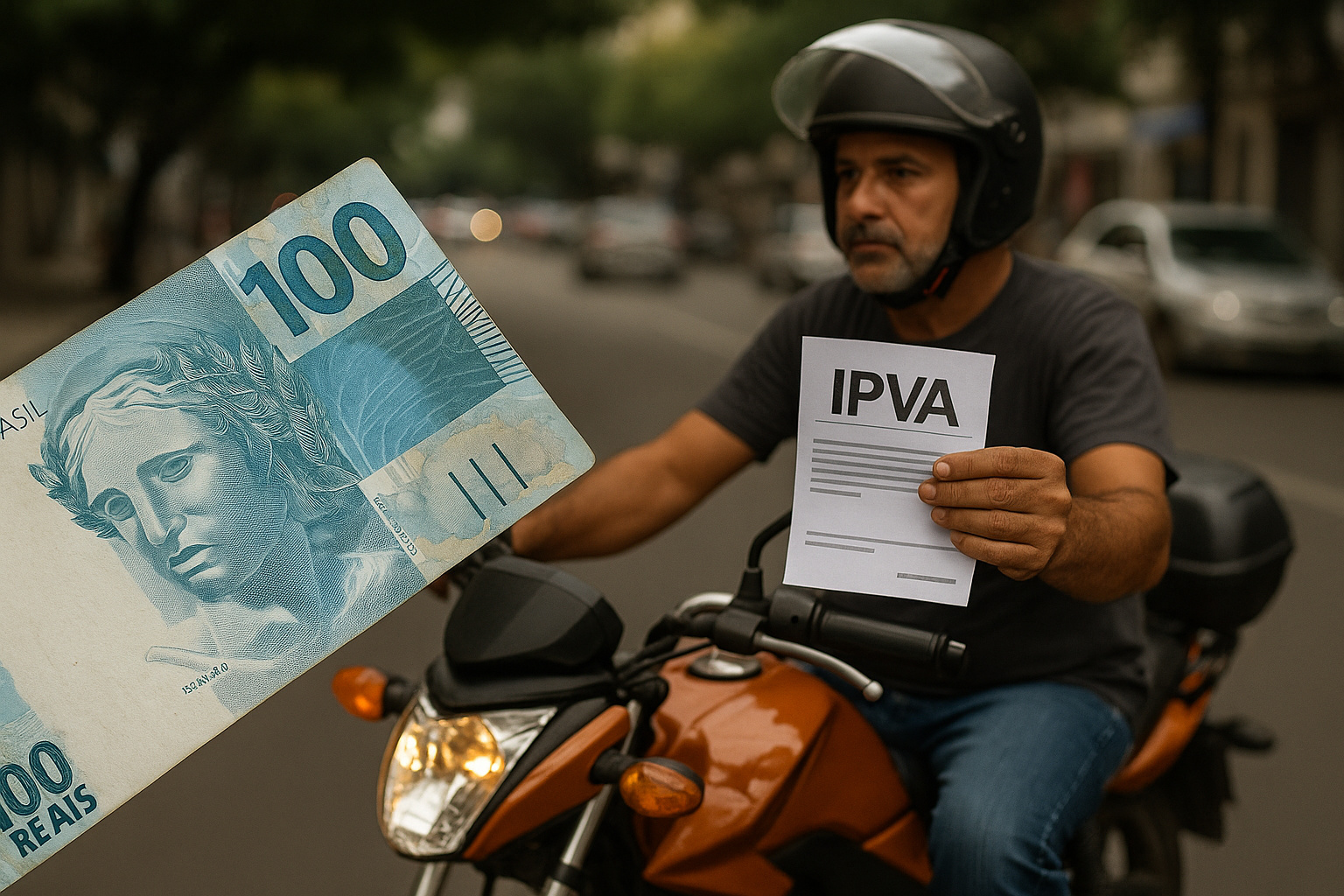

The IPVA Exemption for Motorcycles in 2026 Expands, Reaches New States, and Increases Access to Mobility with Specific Regional Policies
The IPVA exemption for motorcycles progresses across the country and, therefore, consolidates itself as a relevant measure for workers who use motorcycles as essential transportation. The change, authorized by Resolution PRS 3/2019, allows states to adopt a zero rate for motorcycles of up to 170 cm³, which has opened up space for their own legislation and distinct models.
Growth of Exemption Among States
The discussion on the subject strengthened after federal regulation, as it enabled each state government to adjust its rules according to its economic reality. The trend of expansion since 2023 shows that, although there is no national obligation, several states adopted specific policies to alleviate costs.

Paraíba Establishes National Reference
Paraíba has become the first Brazilian state to grant full exemption for motorcycles of up to 170 cm³. The policy, which benefits approximately 320,000 owners, also includes vehicles over fifteen years old, ensuring automatic exemption and payment only of licensing. This model, therefore, has become a social reference in the country.
-
A city with 8,000 inhabitants will receive R$ 25 billion to host the largest single-stage pulp mill in the world, with a production of 3.5 million tons per year and a cost of R$ 45 million.

-
He left India for Oman in 1976, entered through the door of luxury finishes, and took Sobha to the premium real estate market in the Middle East.

-
China wants to impress the world once again with a mega canal featuring giant locks, deep waters, and space for the largest ships, in a project aimed at shortening journeys, reducing queues, and rivaling the Panama Canal in global trade.

-
Brazil saved US$ 32.4 billion in 2025 by switching from fossil to renewable energy and only ranked behind China and the United States on the IRENA global podium.




Paraná Expands the Scope of the Measure
Paraná implemented the exemption in 2025 and thus provided financial relief for approximately 732,000 motorcyclists. The policy mainly benefits delivery workers, freelancers, and residents of small municipalities, where IPVA represents a significant cost in the annual budget. The state follows the national evolution by reducing permanent expenses of workers.
Santa Catarina Adopts the Most Comprehensive Model
Santa Catarina has one of the broadest legislations in Brazil, as it exempts motorcycles of up to 200 cm³, provided the owner has no infractions in the previous year. Moreover, the state includes exemption for vehicles over thirty years old, combining economic benefit and encouragement for good conduct in traffic, with automatic application.
Sergipe Prioritizes Social Impact
Sergipe adopts specific rules through the Rode Bem program, which covers national motorcycles from 50 to 165 cm³ and is directed at workers with an income of up to two minimum wages who own only one motorcycle. Registration in the state system is mandatory, and the program has already benefited over fifteen thousand owners since its inception.
Acre Restricts the Benefit to One Vehicle Per Citizen
Acre also offers automatic exemption for motorcycles of up to 170 cm³, but establishes a limit of one motorcycle per owner. The state focuses the benefit on families from classes C, D, and E who depend on motorcycles for daily commuting and work activities.
Amazonas Uses a Criterion Based on the Tax Value
Amazonas adopts a different model: the exemption applies when the calculated IPVA is equal to or less than R$ 420. This mechanism significantly broadens the scope of the measure, allowing between seventy-five and eighty percent of registered motorcycles in the state to qualify for the zero rate.
Federal District Discusses Its Own Proposal
As states expand their policies, the Federal District is evaluating full exemptions or progressive discounts for registered app drivers and delivery workers. The project includes criteria such as good conduct in traffic, defensive driving courses, and regularized operation on transportation or delivery platforms.
Paths for the Coming Years
The trend observed since 2023 indicates a continuous growth of state policies for IPVA exemption for motorcycles. Even without national obligation, new states are exploring joining the model, while regions like the Federal District are assessing proposals aimed at specific categories.
With so many changes underway, the IPVA exemption for motorcycles will continue to evolve in the coming years — and you, will you benefit from any of these rules in 2026?