





 Portuguese
  English
  Spanish
  5 min of reading
  0 comments


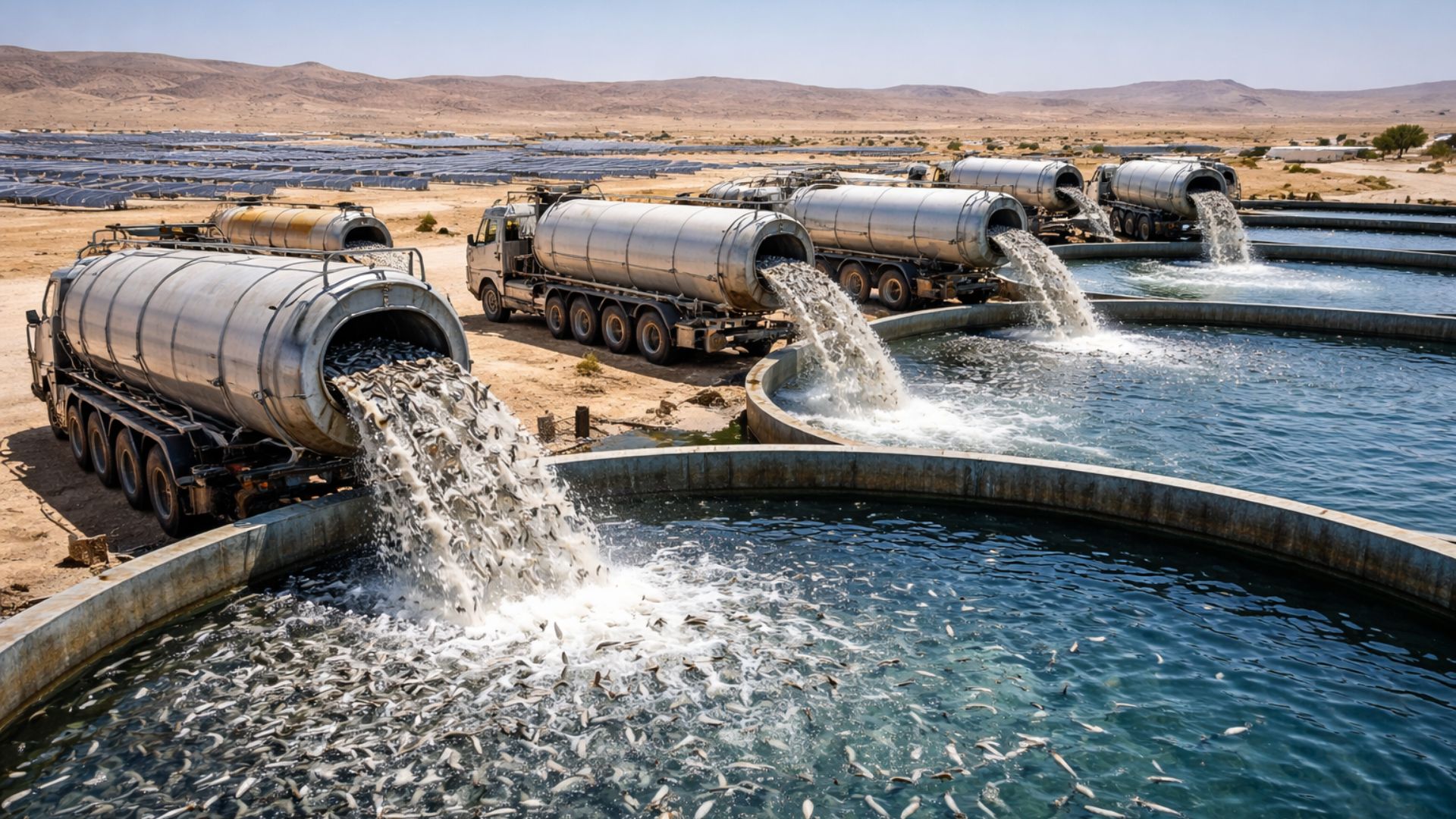
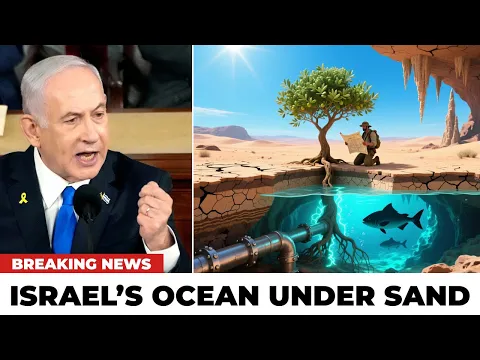
Deep Drilling in the Desert Revealed Ancient Hot Saline Water That Seemed Useless for Human Consumption, but Ended Up Boosting an Unexpected Agricultural Model in Southern Israel, Combining Aquaculture, Nutrient Recycling, Irrigation of Salt-Tolerant Crops, and Solar Energy Generation in Arid Environments.
A drilling of about 700 meters in the Negev Desert, in southern Israel, revealed saline and heated groundwater, unsuitable for human consumption, but valuable for aquaculture and for irrigating salt-tolerant crops.
From this source, local farms started to raise tropical fish, reuse wastewater in agriculture, and integrate solar energy into their operations.
Although the figure of “1 million fish” has become popular in outreach narratives on the topic, there is no consolidated public data, from a technical or institutional source that can be easily verified, that supports this number as official record of the system in the Negev.
-
Neymar is out, Vinicius Júnior holds on, and Brazil shrinks in the ranking of the world’s highest-paid athletes, which now features Cristiano Ronaldo and the NBA as major protagonists.

-
Without wheels, iron, or machines, teams of up to 32 men would have dragged 2.3-ton blocks over wet sand up a ramp embedded in the pyramid itself, raising the structure in 20 to 27 years, according to a new computer model that reignites a millennia-old debate.

-
Billion-dollar megaproject will transform Turkey into a railway bridge between Europe and Asia
-
The Soviet Union designed a tank to fight after the nuclear apocalypse, the Object 279, a nearly 60-ton machine with a flying saucer shape and four tracks, capable of not overturning even in the face of the shockwave of an atomic bomb.



What the available literature clearly describes is the logic of the model: use geothermal saline water to produce protein and reduce water waste in arid areas.
Fossil Water Hidden Under the Negev Desert
The water extracted in the Negev is often classified as “fossil”, as it is stored in deep aquifers that are minimally recharged on a human scale, in contrast to groundwater renewed by recent rains.
In desert regions, this type of resource tends to appear with high salinity and high temperature, which limits traditional uses.
In practice, the combination of moderate salinity and natural heat, close to 40 °C in some spots, transformed an obstacle into an input for aquaculture, as it eliminates the need for artificial heating for much of the year.
A technical report from the FAO describes farms in the Negev with nurseries supplied by geothermal saline water around 40 °C, coming from deep wells.
Aquaculture in the Desert with Heat-Adapted Species
Instead of directing the effort solely to make the water potable, researchers and producers sought species capable of thriving in warm, slightly saline water, reducing costs and operational risks.
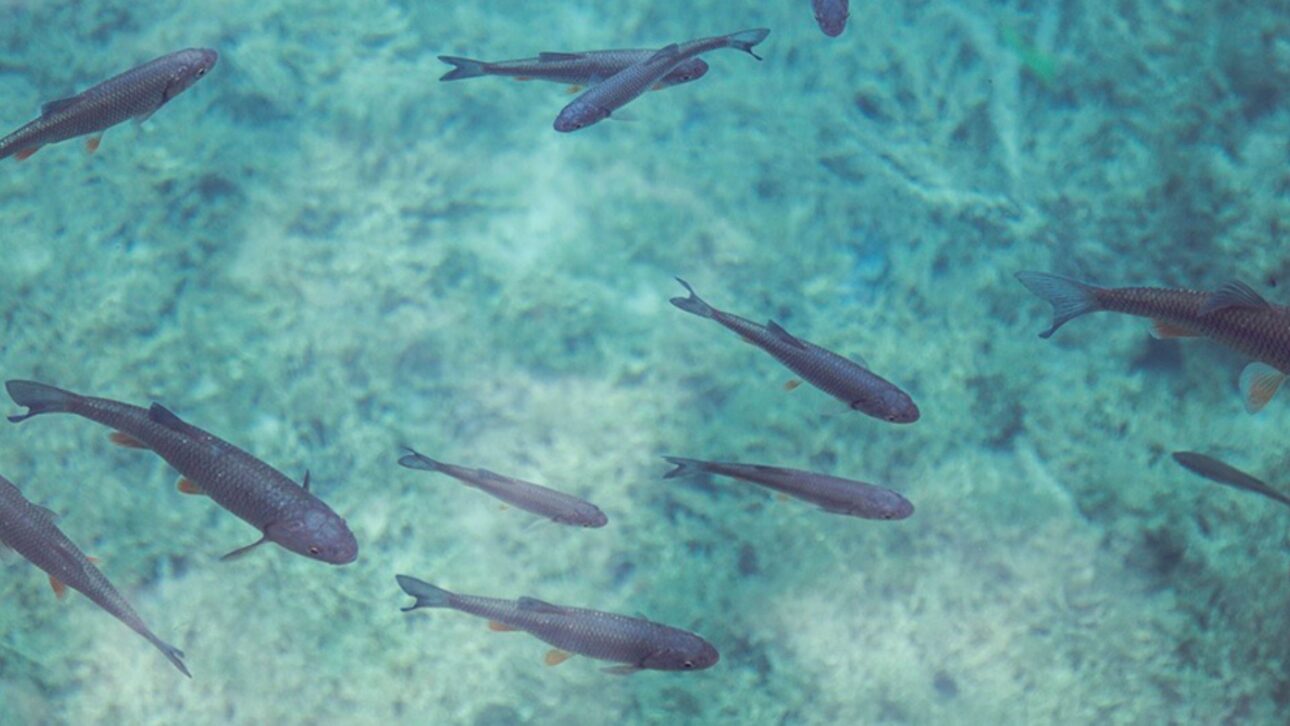
The barramundi, also known as Asian seabass, is among the species cultivated in the Negev, alongside tilapias and other fish, according to technical surveys cited by the FAO.
Production in the desert environment advanced through nursery structures, tanks, and recirculation systems, with controlled water renewal, which helps maintain quality parameters.
Journalistic and technical reports about the region describe that the geothermal water, with salinity below one-tenth of that of seawater, proved compatible with warm climate fish and business operations in kibbutzim.

Aquaculture Waste Turned into Natural Fertilizer
In intensive systems, the main environmental and productive pressure is the accumulation of nitrogen compounds and organic matter, which can compromise the survival of the animals if not treated.
In the Negev, the response described in technical documents was to integrate aquaculture with agricultural use, treating and reusing the water instead of discarding it on a large scale.
The same FAO report notes, for example, that recycled water from nurseries was used in the final stages to irrigate crops such as jojoba, olive trees, and melons, connecting fish production and agriculture in a recycling cycle.
The proposal is that the effluent, rich in nutrients, reduces the need for external fertilization and decreases the consumption of fresh water.
Solar Panels Help Maintain Farms in the Desert
The integration with solar energy appears as a component of viability, especially for reducing electricity costs in hot and remote areas, where pumping and circulating water are ongoing.
An Israeli company operating in the Negev describes the use of geothermal water at 37 °C and states that it uses a photovoltaic system to supply the operation, in addition to reusing part of the discharged water to irrigate nearby olive trees.
The concept of combining photovoltaic generation and aquaculture has also gained its own name in the international technical debate, in analyses that describe cohabitation models between panels and tanks, aiming for area and energy efficiency.
This type of solution is studied as a response to typical challenges of arid environments, such as the need for stable electricity for aquaculture systems and careful water management.
Water Economy Transformed into Food Production
The expansion of a system in the desert depends less on “miracle” and more on a calculation that adds up: lower quality water for drinking, but useful for production, can gain value when connected to a chain that utilizes natural heat, recycles water, and transforms waste into input.
In a report republished by the aquaculture sector, biologist Samuel Appelbaum, associated with research in the Negev, recounted the initial difficulty of convincing audiences that it made sense to “grow fish in the desert.”
In the same account, Appelbaum argued that arid areas with groundwater should be seen as regions with opportunities, especially for food production, as they present low competition for land and space.
The cited experience involves farms in kibbutzim and initiatives that, over decades, tested combinations of species, infrastructure, and markets, including export at specific times.
What Studies Confirm About the Negev Model
The most well-documented elements are the presence of geothermal saline water used in farms in the Negev, the depth of wells cited in technical sources, and the integrated use of recirculation and agricultural irrigation with effluents.
There are also records of initiatives that report support from solar energy as part of the productive infrastructure in arid regions.
However, the total number of fish “released” as a closed number does not appear, with the same clarity, in accessible technical documents detailing aggregate volume of animals in a specific event.






-

1 person reacted to this.