Portuguese
  Spanish


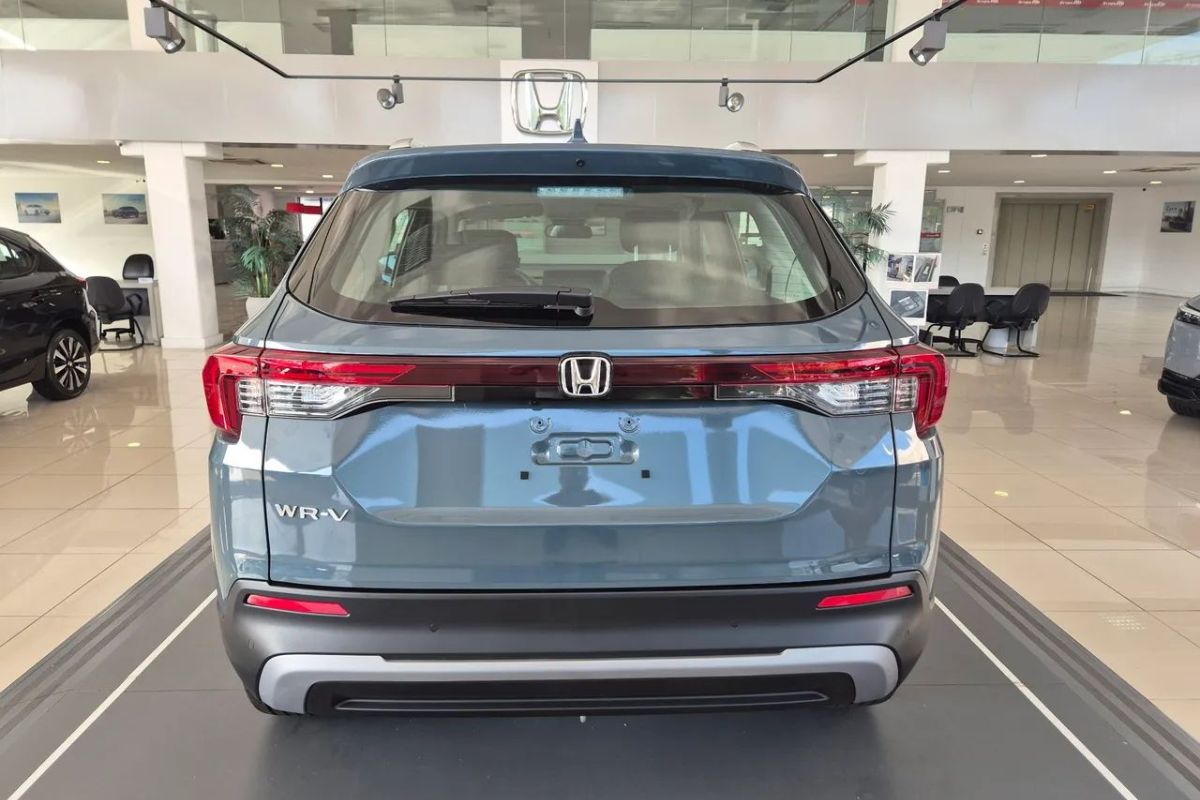

The Honda WR-V EX 2026 delivers a 1.5 flex aspirated engine with 126 hp, a trunk of 458 liters, the Honda Sensing package with autonomous braking and adaptive cruise control, a 6-year warranty with no mileage limit, and a CVT for R$ 144,900, surpassing more expensive rivals in space and standard equipment.
The new Honda WR-V has landed in Brazil with a package that surprised the market. The SUV features a 1.5 flex aspirated engine with 126 horsepower, a trunk of 458 liters, the complete Honda Sensing package with autonomous braking and adaptive cruise control as standard, all for R$ 144,900 in the EX version. These numbers give the model a direct advantage over rivals that cost more and deliver less in space and safety. The cherry on top is the 6-year warranty with no mileage limit, something no other SUV in the segment offers in this price range.
The WR-V 2026 has grown in all dimensions compared to the previous generation and is now larger than direct competitors such as the Hyundai Creta and Fiat Pulse. With a length of 4.32 meters and a wheelbase of 2.65 meters, the 1.5 aspirated engine powers an SUV that has not sacrificed interior space to fit into a smaller category. The driving position is high, visibility is wide, and the design has become more robust, with a large front grille and narrow LED headlights that give identity to a car that does not look like it costs R$ 144,900.
The 1.5 aspirated engine that Honda chose instead of following the turbo trend

While most competitors bet on 1.0 turbo engines, Honda has kept the 1.5 flex aspirated four-cylinder engine in the WR-V.
-
End of an era in Brazil: beloved sedan by Brazilians is discontinued despite having a 2.0 engine with 151 hp, CVT transmission, 466-liter trunk, and up to 650 km of range.

-
New Law Proposal in Brazil Could Heavily Penalize Drivers: Dangerous Overtaking May Become a Serious Offense with Fines Increased Tenfold and a 12-Month License Suspension; Update on 2026 Progress

-
Electric Revolution: Watts W125 Motorcycle Offers 160 km Range, 90 km/h Speed, and Affordable Price Starting at $3,000
-
General Motors Replaces Over a Thousand Workers with 50 Cobots at Electric Vehicle Plant, UAW Union Criticizes Move Amid Industry’s Automation Push



This engine delivers 126 horsepower at 6,200 rpm and torque of 15.8 kgfm with ethanol or 15.5 kgfm with gasoline at 4,600 rpm, numbers that may seem modest compared to the competition’s turbos but make sense when combined with the CVT that simulates seven gears and the historical reliability of Honda’s aspirated engines.
The advantage of the aspirated engine over turbos is predictability: the throttle response is linear, maintenance is simpler, and repair costs are lower in the long run. The official consumption from Inmetro records 12.0 km/l in the city and 12.8 km/l on the highway with gasoline.
With ethanol, the engine delivers 8.2 km/l in the city and 8.9 km/l on the highway. The 44-liter tank provides reasonable autonomy for those who drive in urban daily life and make occasional trips.
The trunk of 458 liters that embarrasses more expensive SUVs

The most impressive number in the WR-V’s technical specifications is not the engine. It’s the 458 liters of trunk space, a volume that surpasses that of SUVs costing R$ 200,000 or more and gives the Honda an absurd advantage over direct rivals like the Fiat Pulse, which offers about 370 liters, and the Hyundai Creta, with approximately 422 liters.
For those who use the car daily with family, shopping, and luggage, 458 liters is space that makes a real difference.
The 2.65-meter wheelbase of the WR-V also contributes to the interior space of the rear seat, providing comfort for adult passengers on long trips.
The combination of a generous trunk and a 1.5 engine that doesn’t consume like a heavy SUV creates a balance that few models in the segment can replicate. The WR-V is not just big on the outside. It’s big where it matters: on the inside.
The Honda Sensing package that comes standard and rivals charge as optional
The highlight in safety technology of the WR-V is the Honda Sensing package, included as standard in the EX version.
The system offers adaptive cruise control (ACC), automatic emergency braking, lane-keeping assist, and automatic high beam adjustment, features that in many competitors only appear in top-of-the-line versions or as paid options. Having all of this as standard for R$ 144,900 changes the cost-benefit equation of the segment.
The Honda Sensing transforms the WR-V into one of the safest SUVs in its price range, with 6 airbags completing the protection package. The engine may be naturally aspirated and the transmission may be CVT, but the level of driving assistance that the WR-V offers is comparable to cars that cost twice as much.
For those who frequently drive on highways, adaptive cruise control and autonomous braking are features that measurably reduce fatigue and collision risk.
What the WR-V offers in technology and comfort beyond the engine and safety
The interior of the WR-V EX 2026 delivers equipment that justifies the value proposition. The 7-inch TFT digital display replaces the analog instrumentation, and the 10-inch multimedia center offers wireless Apple CarPlay and Android Auto, eliminating the need for cables to mirror the smartphone.
The digital automatic air conditioning with vents for the rear seats ensures comfort for all passengers.
The keyless entry with start button, rear parking sensors, rearview camera, and 17-inch alloy wheels complete the WR-V package. The power-folding mirrors and body-stabilizing seats are details that showcase the level of finish that Honda has put into the entry-level version of the model.
For those used to seeing stripped-down entry-level versions, the WR-V EX surprises with the generosity of its package.
The 6-year warranty that no WR-V rival with a 1.5 engine can offer
Honda offers a complete 6-year warranty with no mileage limit, something that no other manufacturer in the segment replicates in the same price range.
This warranty is a decisive argument for those who use the car as a work tool or drive above-average distances, as it eliminates the risk of unexpected repair costs during the first six years of use. A rideshare driver who drives 50,000 kilometers a year would be covered by the entire warranty without having to worry about mileage.
For the average buyer, the 6-year warranty of the WR-V with a 1.5 engine also protects resale value. A car that still has years of remaining warranty is more attractive in the used car market than a competitor whose coverage has expired.
Honda bets that the reliability of the naturally aspirated engine and the durability of the mechanical set sustain this warranty without generating excessive costs in technical assistance.
What do you think of the package that the Honda WR-V delivers for R$ 144,900: does the 1.5 naturally aspirated engine convince you, or do you prefer a turbo? Do the 458 liters of trunk space make a difference in your choice? Let us know in the comments. A new SUV in this price range always divides opinions, and the WR-V has arrived to stir the debate.