






 Portuguese
  Spanish
  5 min of reading
  0 comments


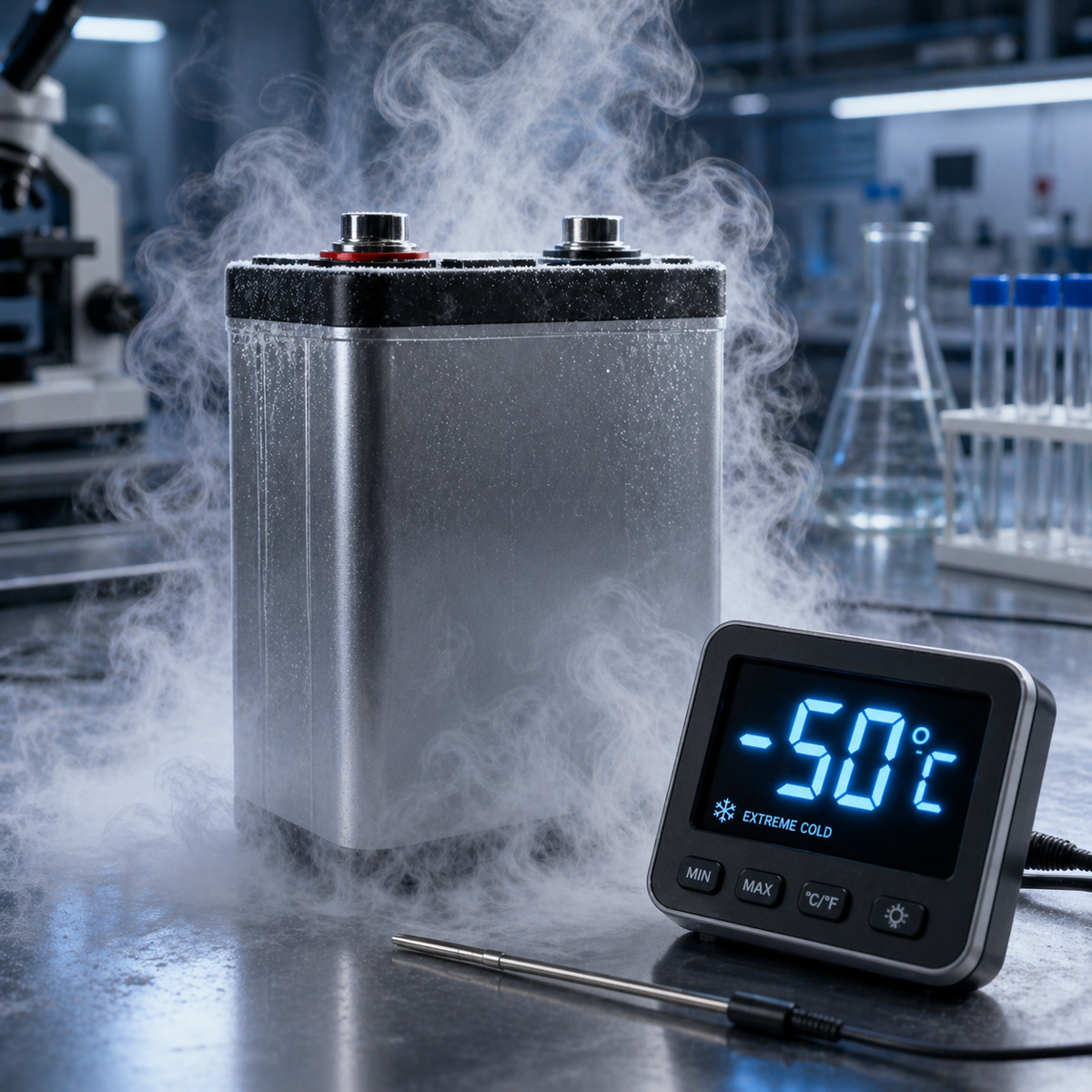
Lithium battery technology created by Chinese scientists ensures high efficiency in extreme cold and can extend the range and reliability of electric vehicles globally
Chinese scientists have achieved a breakthrough that could change the course of global electric mobility. A new lithium battery has been developed with the capacity to operate in extreme temperatures down to −50 °C, maintaining stable performance and range. This result directly addresses one of the biggest problems faced by electric vehicles: the loss of efficiency in cold environments.
According to a study published in the scientific journal Nature in February, the technology presents an unprecedented solution for maintaining stable energy conduction in severe conditions. This means that electric vehicles can operate reliably even in regions where intense cold previously made their use unfeasible.
The immediate impact is clear. Range is no longer an issue in extreme climates, paving the way for wider adoption of electric mobility in strategic global markets.
-
Helicopter Drops 180 Tons of Sand and Gravel on Swedish River to Revive Ecosystem Damaged by Decades of Exploitation

-
Brazilian Company Launches Retro Smartphone with 48 MP Camera, T9 Keyboard, and Privacy Features for Social Media-Free Use

-
Self-Taught Chinese Farmer Builds 5-Ton Submarine from Scrap, Launches It in Anhui River
-
Invisible Induction Technology Enables Wireless Power for Blenders, Coffee Makers, and Air Fryers, Reducing Countertop Cables





How the new lithium battery maintains stable performance in extreme cold
The innovation by Chinese scientists is directly linked to the chemical composition of the electrolyte. The new lithium battery uses an ethyl acetate-based material, which prevents freezing or excessive viscosity increase at very low temperatures.
In traditional batteries, cold drastically reduces the mobility of lithium ions, compromising efficiency. In this new model, ion flow remains fast and stable, even at −50 °C. This ensures that electric vehicles receive power continuously and safely.
In addition to the electrolyte, the internal structure of the battery has also been redesigned. Researchers optimized the architecture to reduce charge transfer resistance, allowing for more efficient energy circulation.
Among the main technical differentials are:
- Continuous operation even at temperatures of −50 °C
- Ultra-fast ion transport in extreme conditions
- Significant reduction in internal resistance
- Greater chemical stability throughout use
This set of improvements positions the new lithium battery as a promising solution to enhance the reliability of electric vehicles in any climate scenario.
Chinese scientists tackle the biggest historical challenge for electric vehicles
Cold has always been one of the biggest obstacles for electric vehicles. In negative temperatures, conventional batteries can lose about 40% to 50% of their operational capacity. This happens because the electrolyte becomes denser, hindering ion movement.
Chinese scientists have managed to overcome this problem with the new lithium battery, which maintains over 90% efficiency even at −20 °C and continues to operate functionally at −50 °C. This technological leap is significant and could redefine industry standards.
In practice, this means drivers no longer face situations such as sudden charge loss, performance failures, or excessive system heating.
Among the most noticeable gains for the user are:
- No more sudden drops in range on frosty mornings
- Greater reliability on long journeys during winter
- Reduced energy consumption for battery heating
- Less component wear over time
With this, electric vehicles become more predictable and safer, regardless of weather conditions.

Technical differences between traditional batteries and the new lithium battery
The comparison between technologies highlights the progress achieved by Chinese scientists. While conventional batteries face severe limitations below −20 °C, the new lithium battery maintains high performance even in extreme conditions.
In traditional models, efficiency can drop to approximately 45% at temperatures of −20 °C. In the new technology, however, tests indicate performance exceeding 90% in the same scenario.
Another important point is durability. The new structure reduces thermal stress on the cells, which contributes to a longer and more stable lifespan.
This technical evolution not only improves immediate performance but also reduces maintenance costs and increases the reliability of electric vehicles over time.
When the new lithium battery from Chinese scientists might hit the market
Despite promising laboratory results, the transition to large-scale production still requires industrial adjustments. Experts suggest that the technology from Chinese scientists could start appearing in premium electric vehicle models within approximately two years.
China already has one of the largest battery production chains in the world, which facilitates the adaptation of the new lithium battery for commercial use. Investment in infrastructure and innovation also accelerates this process.
Initially, the technology is expected to be applied in high-end vehicles before becoming more accessible to the general public. This is a common pattern in automotive sector innovations.
Applications beyond electric vehicles expand the impact of the new lithium battery
Although the main focus is on electric vehicles, the technology created by Chinese scientists has the potential to transform various sectors.
The new lithium battery can be used in environments where extreme cold compromises critical equipment. This includes applications in remote areas, polar regions, and high-altitude operations.
Among the most promising uses are:
- Aerospace equipment exposed to extreme temperatures
- Medical devices used in cold regions
- Environmental sensors for climate monitoring
- Rescue drones in mountainous areas
This versatility reinforces the impact of the innovation, showing that it goes far beyond the automotive sector.
A new global scenario is emerging for electric vehicles
The contribution of Chinese scientists with the new lithium battery can accelerate the global adoption of electric vehicles. Regions that previously faced severe limitations, such as northern Europe, Canada, and parts of Asia, now have a viable solution.
Furthermore, reducing reliance on heating systems improves the energy efficiency of vehicles. This translates into lower consumption and greater sustainability.
The technology also strengthens China’s position as a leader in the global energy transition, consolidating its influence in the battery market.
What changes in practice with this technological innovation
The advance by Chinese scientists is not just technical, but also strategic. The new lithium battery redefines limits that previously seemed insurmountable for electric vehicles.
In practice, this means more confidence for consumers, greater efficiency for manufacturers, and new opportunities for markets previously considered challenging.
With autonomy preserved even at −50 °C, electric vehicles cease to be a solution restricted to moderate climates and become a real global alternative.
This advance represents an important step for the future of sustainable mobility, bringing the world closer to a broader, more efficient, and reliable energy transition. And you, do you believe this new lithium battery can finally eliminate the main challenges of electric vehicles in extreme cold?




Be the first to react!