






 Portuguese
  Spanish
  3 min of reading
  0 comments


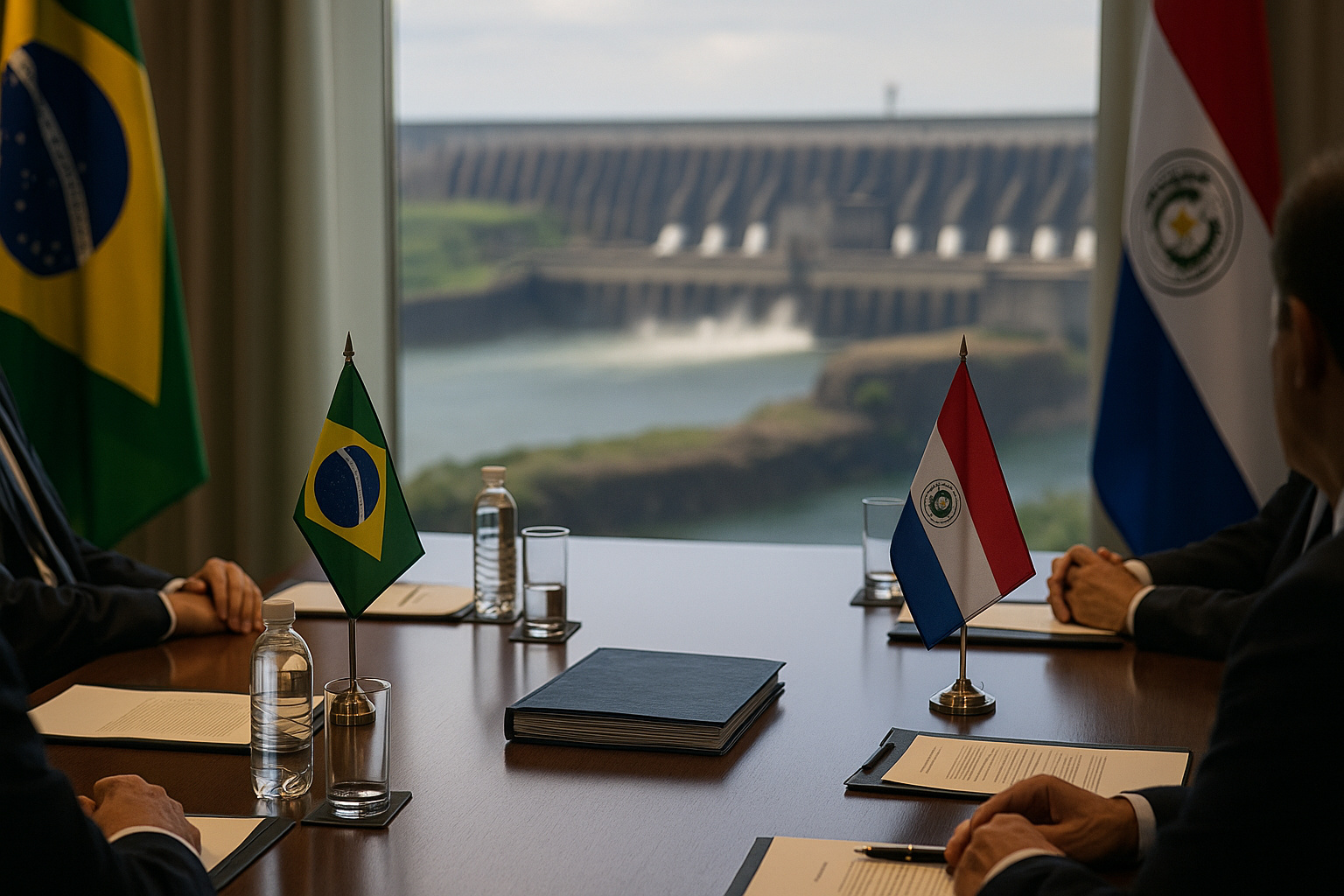
Brazil and Paraguay Resume Negotiations About Itaipú in December and Reveal New Details That Could Change Energy Generation.
Brazil Intensifies Talks About Itaipú and Sets Resumption of Negotiations for December
Brazil has decided to accelerate negotiations about Itaipú and confirmed on Monday (17) that the foreign ministers of both countries will resume discussions in the first half of December regarding Annex C of the treaty.
The announcement, made in a joint statement, explains what will be discussed, who leads the process, when it all starts, where the diplomatic meeting took place, how the dialogue will progress, and why the topic has become strategic for Brazil, Paraguay, and even Venezuela in the field of Energy Generation.
The discussions involve Brazilian Foreign Minister Mauro Vieira and Paraguayan Foreign Minister Rubén Ramírez Lezcano. They met in Brasília to review the bilateral agenda and align points considered essential to unlock the Negotiations about Itaipú.
-
USP researcher creates thesis to attract international funds for the country’s electric energy sector

-
Trafigura receives authorization from ANEEL to trade electricity in Brazil and expands its operations in the largest energy market in Latin America.
-
Mobile solar panels promised to share space with corn crops, but the 20% to 25% shade reduced production by an average of 7.7% and opened a new dispute between energy and food.
-
More than 80 million kilometers of wires need to be replaced by 2040: the energy transition doesn’t just depend on panels and electric cars, but on a colossal race for copper, aluminum, transformers, and recycling of old cables.


Itaipú at the Center of Brazil and Paraguay’s Energy Decisions
The Itaipú hydroelectric plant remains one of the pillars of Energy Generation in the region, which explains Brazil’s urgency in advancing the talks. Thus, the foreign ministers decided to reestablish dialogue based on the Bilateral Understanding signed in April 2024, a document that will serve as a guide for the next steps.
Moreover, the topic has gained even more relevance because it directly impacts strategic decisions involving consumption, export, and energy security between the two countries.
Meeting Brings Confidential Report and Diplomatic Tension
During the meeting, Mauro Vieira delivered to his Paraguayan counterpart a confidential report requested by the Paraguayan government. The document provides clarifications on actions taken by the Brazilian Intelligence Agency (Abin) carried out in Paraguayan territory between June 2022 and March 2023.
The Itamaraty itself highlighted the original statement in the official note:
“It was recalled that President Lula’s government rendered the operation ineffective as soon as it became aware of it. While lamenting the impact of this episode on the bilateral relationship, it assured that the Brazilian government is taking all measures to enable the identification of those involved and their judicial accountability.”
With this, Brazil seeks to reduce any diplomatic friction to prevent the episode from interfering with the Negotiations about Itaipú.
Why Itaipú is Back on the Regional Radar
The debate on Itaipú arises at a time of increasing regional attention to energy issues. In addition to Brazil and Paraguay, Venezuela is monitoring the situation as changes in bilateral energy agreements in the Southern Cone may influence new energy policies on the continent.
Therefore, Itaipú becomes a key piece for decisions that go beyond the Brazilian border, affecting investments, electricity generation, and new partnerships.
Negotiations Aim for a New Cycle for Itaipú
The talks scheduled for December are expected to determine sensitive issues, including tariffs, energy distribution, and new financing models. Thus, Brazil seeks to ensure predictability in supply, while Paraguay aims to increase its energy autonomy.
On the other hand, both recognize that the agreement needs to reflect current consumption, the economic landscape, and the priorities of each government.
What to Expect From the Next Steps
The expectation is that the dialogue will progress more quickly following the formal resumption in December. Vieira and Ramírez Lezcano agree that the topic can no longer be delayed and advocate for technical decisions that strengthen cooperation between the countries.
Additionally, the foreign ministers will continue to monitor the investigation regarding Abin to avoid new diplomatic misunderstandings that could hinder the progress of the talks.
Conclusion: Itaipú Returns to the Center of Political and Energy Game
Movements show that Itaipú will be one of the main themes of energy diplomacy at the end of 2025. Brazil seeks security, Paraguay seeks balance, and the region watches closely each advancement.
Thus, the resumption of the Negotiations creates a new decisive chapter for Brazil, Paraguay, and the future of Energy Generation on the continent.




Be the first to react!