Portuguese
  Spanish


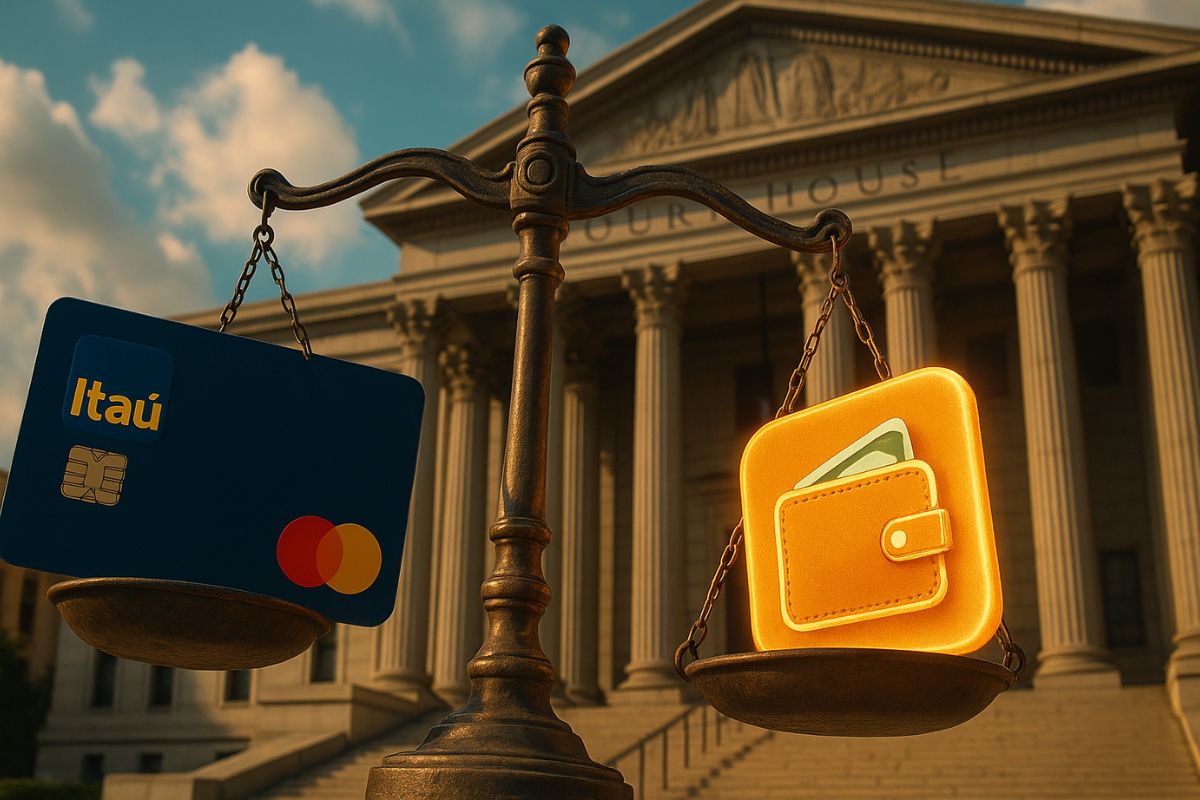

Itaú and Mastercard Are Taken to Court for Measures Against Digital Wallets. Court Dispute Revives Debate on Competition in the Payments Sector and Impact on Brazilian Consumers.
The Itaú and Mastercard Are Taken to Court following allegations of practices that would hinder the use of digital wallets, such as PicPay and Mercado Pago. The lawsuit was filed by the Brazilian Internet Association (Abranet), which accuses the institutions of imposing barriers and increasing the cost of using this type of service, which is becoming increasingly popular in Brazil, according to Valor Econômico.
The disputes have reached the Cade (Administrative Council for Economic Defense) and also the courts in Rio de Janeiro. For consumer advocacy groups, these practices limit innovation and harm those seeking more accessible and digital payment methods.
Why Are Itaú and Mastercard at the Center of the Controversy?
According to Abranet, Itaú has allegedly denied or complicated operations made with credit cards in digital wallets. Mastercard has been accused of increasing interchange fees by up to 62% in 2024, which would make these platforms less competitive.
-
Corn ethanol attracts R$ 23 billion in 21 new plants and prepares for a nearly 50% jump in Brazilian production by 2027, even with high interest rates.

-
A newly opened terminal in the middle of the Amazon has begun transporting soy and corn through Amapá, eyeing the queue of ships that is congesting the ports in the South.
-
Tesla injected an additional $250 million into the German factory, doubled the battery cell target, and opened its own production line for startups.
-
A 180-meter ship with a deck the size of a football field was christened to carry 25,000 tons of giant energy modules around the world.


From the financial institutions’ side, the argument is different. Itaú claims that 73% of transactions in digital wallets were approved in 2023, and that rejections are linked to higher risks of default. According to the bank, the delinquency rate in these cases can be five times higher than in traditional purchases.
Impact on Consumers and Fintechs
The court decision preventing Itaú from imposing barriers takes immediate effect, but the bank has announced it will appeal. For fintechs like PicPay and Mercado Pago, the measure is seen as essential to ensure a more equitable competitive environment and to expand customers’ freedom of choice.
On the other hand, Itaú maintains that the restriction is necessary to prevent losses exceeding R$ 300 million per year, in addition to protecting consumers from overindebtedness, as many use digital wallets to pay off overdue bills.
What Authorities Say
The Central Bank acknowledges that transactions in digital wallets can indeed pose a greater risk than regular purchases, allowing card issuers to apply differentiated rules. Meanwhile, Cade is examining the case from a competition perspective, assessing whether practices affect free competition in the payments sector.
In the meantime, the dispute continues in the Federal Regional Court of the 1st Region and in the courts of Rio de Janeiro. The outcome may define not only how banks and card networks deal with digital wallets but also the future of the payments ecosystem in Brazil.
The fact that Itaú and Mastercard Are Taken to Court illustrates how the dispute between traditional banks and fintechs is intensifying. For consumers, the decision could represent more freedom in the use of digital wallets — but it also raises questions about security and the risk of delinquency.
And what do you think, are the banks protecting themselves against fraud and defaults or just trying to curb competition from digital wallets? Share your opinion in the comments.