Portuguese
  Spanish


Giant suspension structure connects Japanese islands over turbulent waters with engineering designed to withstand extreme wind, intense seismic activity, and constant maritime traffic in one of the country’s most challenging stretches.
The Akashi Kaikyo Bridge connects Kobe, on Honshu island, to Awaji island via a 3,911-meter suspension structure, positioned over one of Japan’s most complex maritime stretches for large-scale interventions.
With a 1,991-meter central span and towers nearly 300 meters tall, the bridge was designed to operate under severe conditions, including intense winds, strong ocean currents, constant vessel traffic, and high seismic activity.
Located in the Akashi Strait, between Osaka Bay and the Seto Inland Sea, the crossing occupies a maritime strip about 4 kilometers wide, where depth, navigation, and water dynamics pose simultaneous engineering challenges.
-
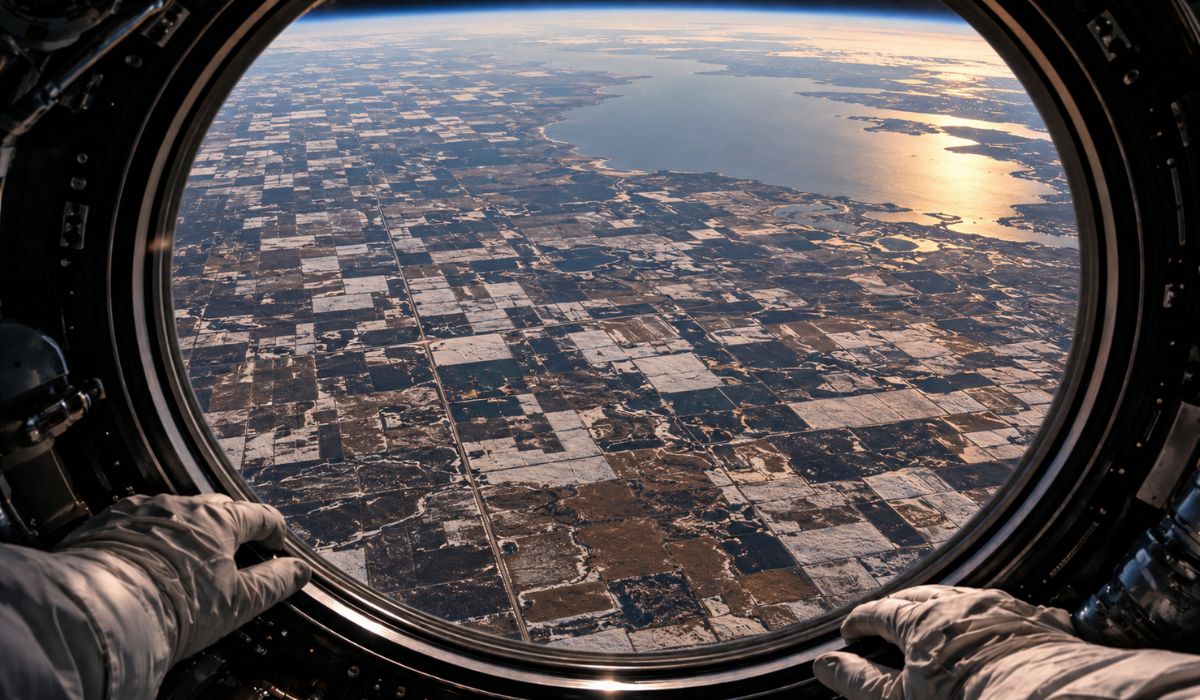
Seen from space, an astronaut captures in Canada a geometric carpet of crops drawn over the backdrop of a ghost lake that disappeared 12,000 years ago, was once larger than all the Great Lakes combined, and left a scar of fertile mud that still sustains agriculture.

-
Billionaire says the most valuable skill will help overcome job elimination caused by AI, following Bill Gates’ fears

-
A Dutchman created a ‘box’ that makes trees grow in the desert almost without water and without irrigation: the invention has already brought seedlings to dozens of countries and achieves up to 90% survival where common planting did not exceed 10%.

-
Abandoned warehouse hid a giant collection of rare computers, with over 2,000 artifacts from the 1930s to the 1980s.



In this scenario, tidal currents can reach approximately 4.5 meters per second, equivalent to about 9 knots, a condition that directly influences both the structural behavior of the bridge and the strategies adopted during its construction.
According to the Honshu-Shikoku Bridge Expressway Company Limited, approximately 1,400 vessels cross the strait daily, which required a solution that kept the channel clear and ensured safety for continuous maritime traffic.

Given this context, a suspension bridge with a large clear span was chosen, allowing ships to pass without structural interference in the main section and ensuring the functionality of the maritime route throughout its operation.
Engineering to Conquer the Akashi Strait
Designed with three main spans, the structure combines two 960-meter side spans with a 1,991-meter central span between the towers, a configuration that distributes loads and allows for crossing without intermediate supports in the navigation area.
This structural solution balances efficiency and safety, while reducing impacts on maritime traffic and ensuring stability against the combined forces of wind, self-weight, and constant water movement.
For years, the Akashi Kaikyo Bridge held the record for the longest central span among suspension bridges in the world, remaining a global benchmark even after the inauguration of the 1915 Çanakkale Bridge in Turkey in 2022.
More than imposing visual elements, the towers, approximately 300 meters tall, play a fundamental role in supporting the main cables, controlling the structure’s geometry, and ensuring the deck’s stability along the extensive central span.
Strong Current and Depth Challenged Construction
In open sea and subject to intense currents, the execution of the foundations represented one of the most complex stages of the work, requiring specific techniques to ensure stability in an environment with high depth and restricted operational conditions.

In these areas, the water depth reached tens of meters, while the force of the currents limited working time and methods, making the use of solutions adapted to the strait’s dynamics indispensable.
Any instability in the base would compromise the entire structure, which is why the project prioritized systems capable of supporting both the weight transmitted by the towers and the dynamic loads imposed by the maritime environment.
The scale of the undertaking is also reflected in the quantity of material used, as the tower, cables, and deck together total 193,200 tons, distributed among 46,200 tons in the towers, 57,700 tons in the cables, and 89,300 tons in the main girder.
Earthquake during construction altered project
Construction began in May 1988 and was completed in April 1998, a period marked by technical challenges and the occurrence of the earthquake on January 17, 1995, known as the Great Hanshin-Awaji Earthquake.
At the time, with the towers already completed and the cables still under construction, the ground displacement caused changes in the distances between supports, requiring revisions to the original design.
Even in this scenario, technical analyses indicated that structural impacts were limited, allowing construction to continue with adjustments to component lengths and the positioning of elements connected to the cable system.

This episode highlighted the need for flexibility in the design, which managed to absorb structural variations without compromising the overall safety of the bridge.
Bridge designed for extreme winds and earthquakes
Considering its location in a region subject to typhoons and intense seismic activity, the bridge was designed to withstand winds of up to 80 meters per second and large-magnitude earthquakes.
In addition to structural resistance, the aerodynamic behavior of the deck was carefully analyzed, as wind-induced oscillations can compromise stability in bridges with such extensive spans.
In this context, the project incorporated solutions capable of reducing vibrations and ensuring safe performance even under adverse atmospheric conditions and sudden load variations.
Its integration into the Honshu-Shikoku system solidified the bridge as a strategic part of the connection between Japanese islands, enhancing mobility and strengthening the country’s transportation infrastructure.
Continuous maintenance ensures structural durability
After its inauguration, operation began to include a continuous maintenance program aimed at preserving the structure for over 200 years, with regular inspections and constant monitoring of key components.
Among the measures adopted, the injection of dry air into the main cables stands out, a technique used to reduce internal humidity and minimize the risk of corrosion in an environment strongly influenced by sea spray.
This strategy contributes to prolonging the lifespan of materials and maintaining structural performance over decades, even with continuous exposure to wind, salinity, and climatic variations.
Viewed from afar, the Akashi Kaikyo Bridge impresses with the apparent lightness of its silhouette over the sea, although its technical complexity reveals a solution designed to operate daily under extreme conditions of wind, water, and seismic activity.