Portuguese
  Spanish


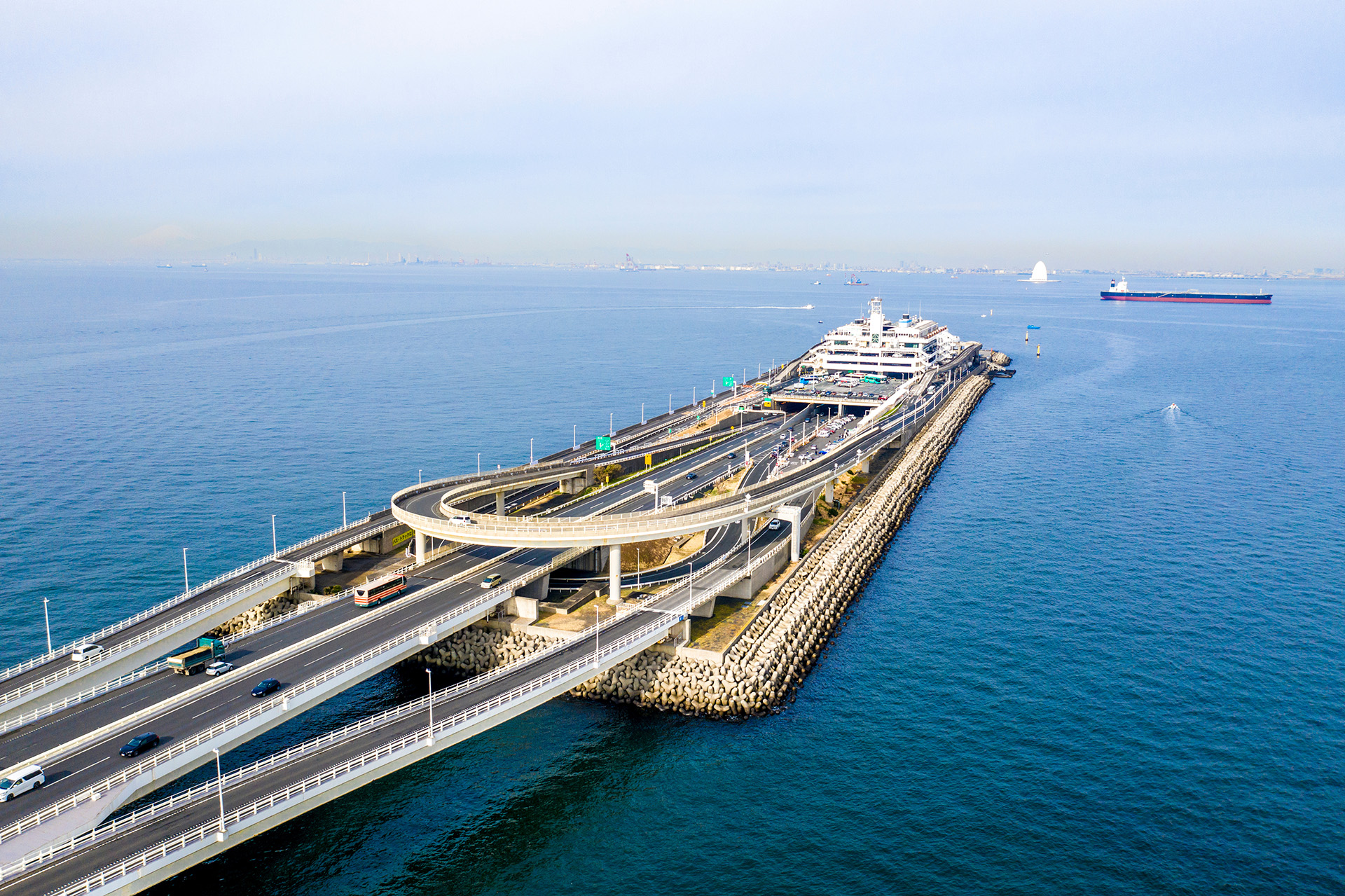

Tokyo Bay Aqua-Line has 9.6 km of tunnel under the sea, bridge, and artificial island in the middle of the bay to reduce travel time in Japan.
In 1997, the Japanese government inaugurated one of the most complex engineering works ever executed in the country: the Tokyo Bay Aqua-Line, a road connection that crosses Tokyo Bay combining an underwater tunnel, elevated bridge, and an artificial island in the middle of the route. The project was developed by the East Nippon Expressway Company (NEXCO East Japan) and Japanese infrastructure authorities with the aim of drastically reducing travel time between the cities of Kawasaki, in Kanagawa Prefecture, and Kisarazu, in Chiba Prefecture.
According to institutional information from the Umihotaru complex itself and technical data widely published by Japanese agencies, the total structure is about 15.1 km long, with approximately 9.6 km in an underwater tunnel beneath the bay bed and about 4.4 km in an elevated bridge. This combination creates a unique crossing, where vehicles literally enter the sea, travel kilometers underwater, and emerge again in an elevated structure.
The practical impact of this work is direct: the journey that previously could take up to 90 minutes or more via routes around the bay has been reduced to about 15 to 30 minutes, depending on traffic.
-
Brazil to Convert 80 Public Properties into 11,000 Affordable Homes Across 44 Cities to Address Housing Shortage

-
Brazilian Company Develops Wall Panels from Recycled Refrigerator Foam with Comparable Thermal and Acoustic Performance

-
Brazil’s São Paulo Region Unveils Latin America’s Largest Timber Shopping Mall, Built in 7 Months, Capturing Carbon and Preventing 900 Tons of Emissions
-
Danish Island Uses Seaweed for Durable, Centuries-Old Roofing Solution


Why Japan decided to build a road at the bottom of the bay
The Tokyo metropolitan area is one of the densest and busiest in the world, concentrating millions of people and one of the largest economic activities on the planet. Tokyo Bay, although a central hub of this region, also represents a significant geographical barrier.
Before the construction of the Aqua-Line, crossing between the west and east sides of the bay required a long detour through congested land routes. This increased logistical costs, transport time, and environmental impact.


The solution found was to create a direct connection across the bay. However, due to the intense maritime traffic in the region, it would not be feasible to build just a continuous bridge. Large ships use this area, which required a hybrid solution.
This necessity led to the combination of an underwater tunnel and a bridge, creating one of the most innovative structures in modern engineering.
How the 9.6 km underwater tunnel – Tokyo Bay Aqua-Line works
The most impressive section of the Tokyo Bay Aqua-Line is the underwater tunnel of approximately 9.6 km, which extends beneath the bay’s bed. Unlike tunnels excavated in rock, this section was built using advanced techniques adapted to the geological and maritime conditions of the region.
The excavation involved the use of giant tunnel boring machines (TBM), capable of precisely boring the soil beneath the seabed with millimeter accuracy. The process required strict pressure control to prevent water infiltration and ensure the stability of the structure.
Additionally, the tunnel was designed with highly efficient ventilation systems, essential for removing exhaust gases from vehicles and maintaining safe circulation conditions.
Another critical point is the drainage and monitoring system. Sensors installed along the structure continuously monitor pressure, temperature, infiltrations, and structural integrity.
This combination of technology allows thousands of vehicles to pass daily through an environment completely isolated from the sea above.
The artificial island Umihotaru in the middle of the ocean
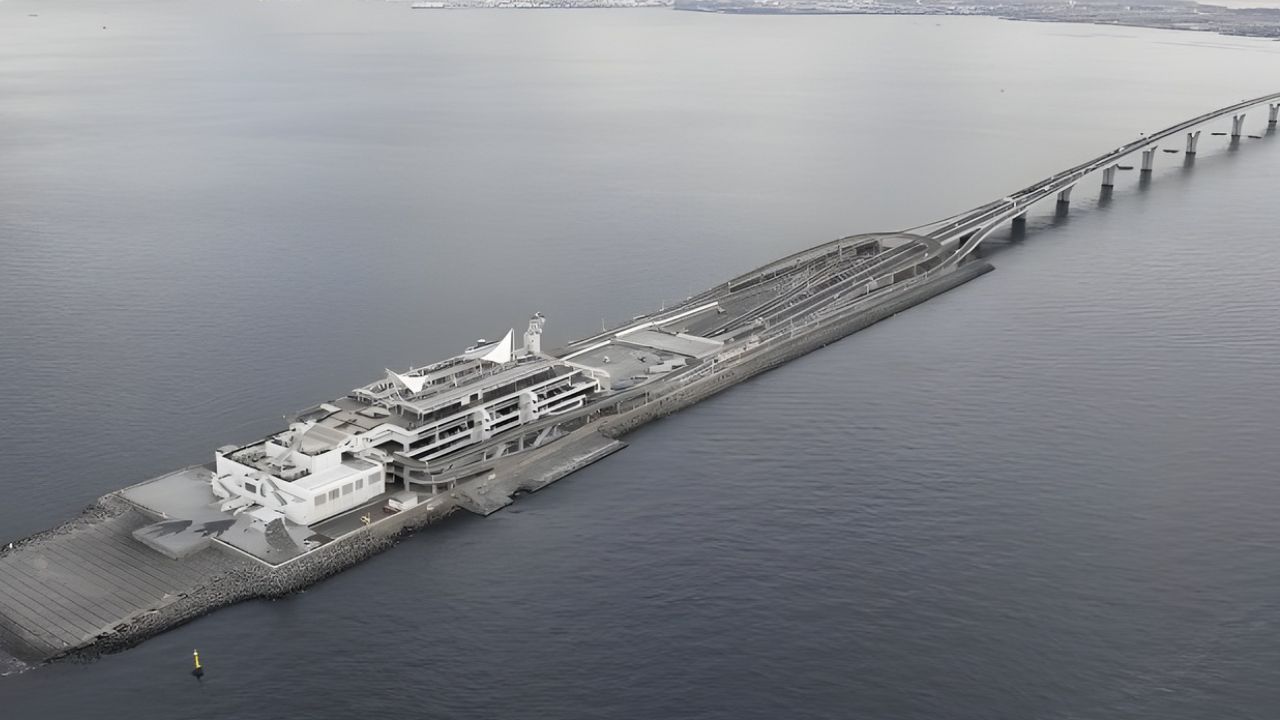
One of the most iconic elements of the Aqua-Line is the artificial island Umihotaru, located at the transition point between the tunnel and the bridge. Built on a concrete and steel base, this structure serves as a rest area, parking lot, shopping center, and tourist attraction.
The island was designed not only as technical support but also as a public space. It offers restaurants, shops, observation areas, and complete infrastructure for drivers and visitors.
From an engineering perspective, Umihotaru also performs essential functions, such as tunnel ventilation, maintenance access, and emergency point.
The idea of placing a “functional island” in the middle of an underwater highway is one of the elements that makes this work unique in the world.
The bridge that completes the crossing and the artificial island in the middle of the sea
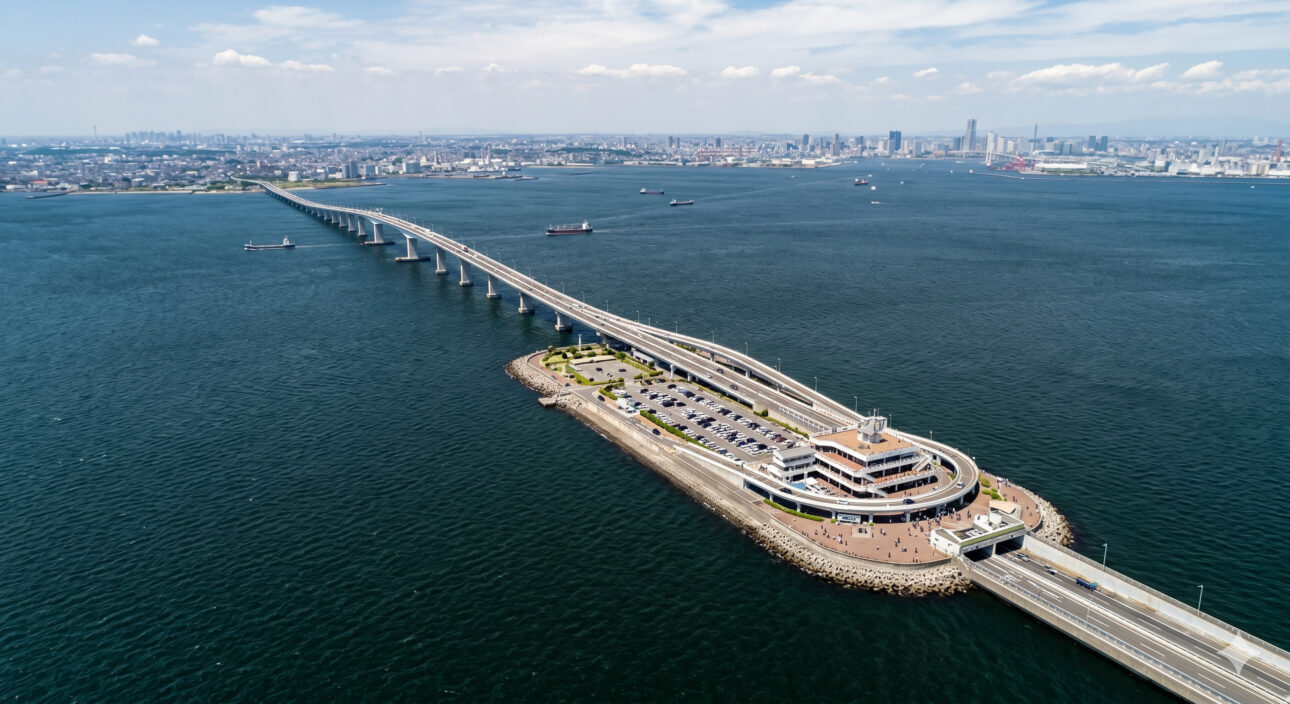
After exiting the tunnel at Umihotaru, vehicles continue across a bridge of approximately 4.4 km, which connects the island to the city of Kisarazu. This bridge was designed to withstand severe maritime conditions, including strong winds, salinity, and seismic activity.

The choice to use a bridge in this section was strategic. By emerging from the tunnel before areas with higher maritime traffic, the structure avoids interfering with the navigation of large vessels.
This combination of tunnel and bridge allows for cost optimization, risk reduction, and maintaining the functionality of the bay as a maritime transport route.
Engineering designed to withstand earthquakes
Japan is located in one of the most seismic regions on the planet, which requires extremely rigorous engineering standards for any major infrastructure project.
The Tokyo Bay Aqua-Line was designed to withstand high-magnitude earthquakes. This includes the use of flexible materials, special structural joints, and seismic energy absorption systems.
In addition, the structure is constantly monitored by sensors that allow for real-time assessment of its behavior. This data is crucial for preventive maintenance and rapid response in case of extreme events.
The ability to operate safely even in a seismic environment is one of the greatest challenges overcome by this project.
Economic and logistical impact of the Tokyo Bay Aqua-Line
The reduction in travel time between Kanagawa and Chiba has brought significant impacts to the regional economy. Companies have started to operate with greater logistical efficiency, reducing transportation costs and increasing productivity.
Additionally, the Aqua-Line contributed to the development of previously less accessible areas, stimulating investments and urban expansion. Tourism also benefited, especially with the popularization of Umihotaru as a visitation point.
The construction of the Tokyo Bay Aqua-Line took about three decades from planning to execution, starting in the 1960s and completed in 1997. The total cost of the project exceeded the equivalent of billions of dollars.
Among the main challenges were the conditions of the seabed, the need to maintain active maritime traffic during the construction, and seismic risks. Additionally, the project required coordination among multiple companies, government agencies, and specialists in various engineering fields.
An example of engineering that combines multiple solutions
The Tokyo Bay Aqua-Line is often cited as an example of integrated engineering, where different solutions are combined to solve a complex problem.
Instead of opting for a single approach, the project united a tunnel, bridge, and artificial island into a unique structure. This strategy allowed for overcoming technical limitations and creating an efficient solution.
This type of hybrid approach has been replicated in other megaprojects around the world.
What this project reveals about the future of infrastructure
The Aqua-Line shows that natural barriers such as seas and bays can be overcome with increasingly sophisticated engineering solutions. At the same time, it highlights the importance of long-term planning and investment in technology.
Similar projects continue to be studied and implemented in different countries, especially in regions with high population density and geographical challenges.
The Tokyo Bay Aqua-Line represents one of the most impressive forms of integration between engineering, mobility, and geography. By transforming the seabed into a transportation route, Japan created a solution that impacts millions of people daily.
In light of this, do you believe that this type of infrastructure could become more common in other regions of the world?