Portuguese
  Spanish


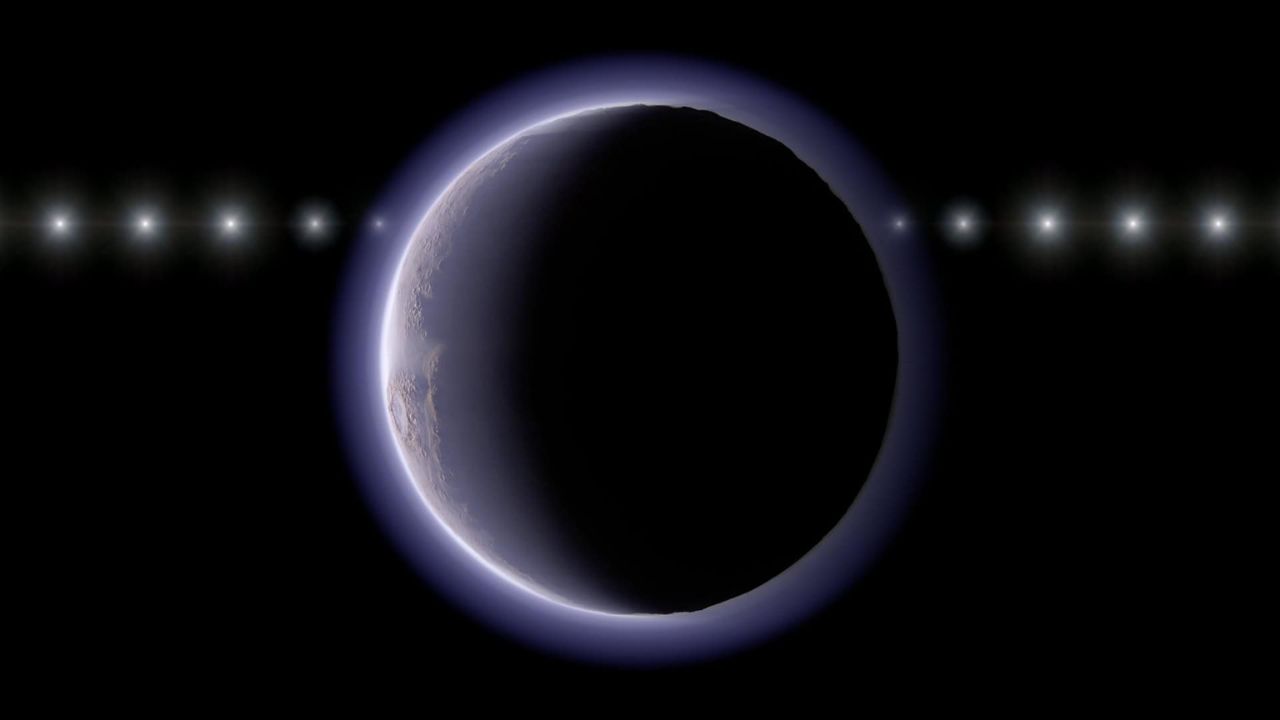


Discovery of gases around asteroid 2002 XV 93 intrigues science. At just 500 km, the object defies gravity and suggests hidden geological activity.
How can such a small celestial body maintain a layer of gas without it being lost in the vacuum? This is the question that mobilizes astronomy after the confirmation that asteroid (612533) 2002 XV 93 possesses a tenuous atmosphere.
Located in the frigid regions beyond Neptune, this object, just 500 kilometers in diameter, defies theoretical predictions: due to its low gravity, any gas should disappear in less than a thousand years.
The discovery, published in the journal Nature Astronomy, suggests that the outer Solar System harbors worlds much more active than the “dead rocks” scientists previously described.
-
A Japanese governor single-handedly stalled the construction of the world’s fastest train for nine years, and only now has he agreed to allow a tunnel excavated at a depth of 1,400 meters.

-
Almost 1 billion euros, two gigafactories, and a million-dollar public investment, Chinese company aims to turn Spanish city into Europe’s new battery hub.

-
Advancement in the industry: Brazilian company creates ultralight material comparable to steel and paves the way for hydrogen cylinders up to 70% lighter, with a direct impact on logistics, the energy industry, and national competitiveness – learn about Forza Composites

-
In Brazil’s backyard: Tesla, by Elon Musk, announces official operations in Uruguay, where electric vehicles already make up 20% of new cars but still leaves out the largest market in the region.





Hypotheses for the phenomenon on the trans-Neptunian asteroid
The existence of this atmosphere suggests that the asteroid has undergone drastic changes recently.
As the James Webb Telescope did not detect exposed ice on the surface that could evaporate and form this haze, researchers are working with alternative theories to explain the origin of the gases.
One of the strongest possibilities is the occurrence of internal geological activity, such as an earthquake, which would have released volatile substances trapped underground.
Another avenue being investigated is that of a recent impact; a comet or other smaller body could have collided with 2002 XV 93, leaving behind a temporary cloud of gaseous debris.
According to research coordinator Ko Arimatsu, this discovery proves that trans-Neptunian bodies can undergo changes on extremely short timescales.

The eclipse that revealed the cosmic secret
The detection of this space air did not occur through direct photography, but through a high-precision indirect method.
On January 10, 2024, the asteroid performed a stellar occultation, passing in front of a distant star and blocking its view from Earth.
What caught the attention of experts in Japan was the way the star’s brightness diminished:
- In objects without air: The star’s light extinguishes abruptly and instantly.
- In the case of 2002 XV 93: A progressive and gentle dimming occurred.
- The conclusion: This slow transition can only be caused by a layer of gas that absorbs light before the total blockage by the rock.
Technical data and the role of Japanese astronomy
The study was led by a coalition of observatories in Japan, including the Ishigakijima Astronomical Observatory (NAOJ), combining the efforts of professional scientists and amateur astronomers.
The asteroid in question is about 500 km, a small measurement compared to Pluto’s 2,377 km, which until then was the main reference for an object with an atmosphere in that zone.
Thus, the discovery sets an important precedent. If a body with a diameter of just 500 km can exhibit such characteristics, thousands of other smaller objects in the Kuiper Belt may hide similar phenomena.
With information from Olhar Digital